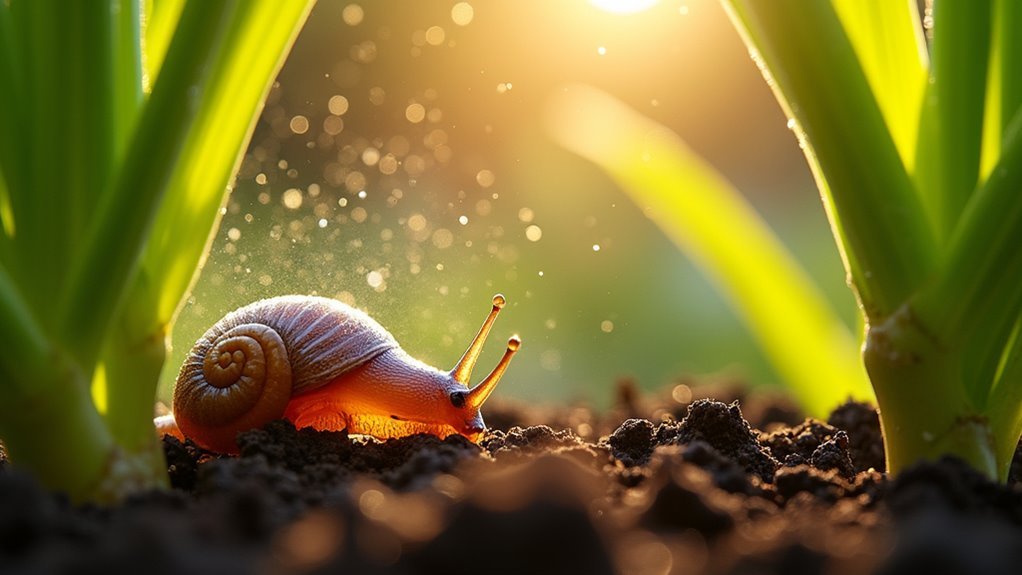
You can create a devastating garlic spray by boiling two garlic bulbs in two liters of water for 15 minutes, then crushing and straining the mixture. The allicin released disrupts slugs’ slime production, impairing their movement and feeding abilities. Mix two tablespoons of this concentrate with five liters of water and apply weekly from February through October, targeting both plant leaves and surrounding soil. This natural solution’s antimicrobial properties protect your entire garden ecosystem while eliminating multiple pests beyond just slugs.
Why Garlic Is the Ultimate Slug Deterrent
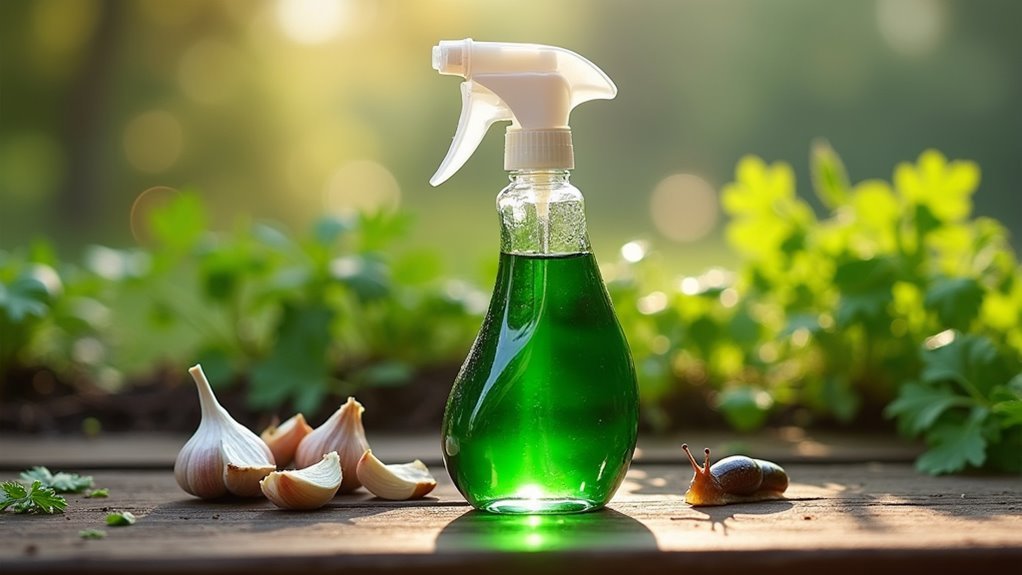
Three powerful mechanisms make garlic your garden’s most effective weapon against slugs. When you crush garlic, it releases allicin, a potent compound that disrupts slime production in slugs. Without their protective slime, these pests can’t move efficiently and find your plants unappealing.
The pungent odor acts as a natural repellent, deterring slugs and snails before they reach your precious plants. Unlike chemical pesticides, garlic spray won’t harm beneficial insects or pollute your garden ecosystem.
Garlic’s natural scent creates an invisible barrier that repels slugs while protecting beneficial garden insects from harmful chemical exposure.
You’re creating a healthier environment where good bugs thrive while keeping destructive pests away. Weekly applications guarantee allicin’s sustained presence on your plants, maintaining protection throughout slug season.
This non-toxic approach gives you peace of mind while effectively solving your slug problem naturally.
Understanding Allicin: The Secret Weapon Against Garden Pests
You’ll discover that allicin, garlic’s most powerful compound, becomes your garden’s secret weapon the moment you crush or chop fresh garlic cloves.
This potent chemical doesn’t just smell strong—it actually disrupts slug slime production and interferes with their ability to move and feed on your plants.
Beyond slugs, allicin’s pungent aroma effectively repels aphids, caterpillars, and other destructive garden pests that threaten your crops.
What Is Allicin
Garlic’s powerful punch against garden pests comes from allicin, a sulfur-containing compound that forms when you crush or chop fresh garlic cloves. This remarkable compound creates garlic’s characteristic pungent aroma that you’ve smelled countless times in your kitchen.
When released, allicin becomes a formidable weapon against slugs and snails by disrupting their essential slime production, which they need for movement. The compound’s overwhelming odor repels many insects while leaving beneficial garden organisms unharmed.
Allicin also possesses antimicrobial properties that protect your plants from harmful pathogens while maintaining a healthy garden ecosystem. This natural defense mechanism makes garlic-based sprays incredibly effective pest deterrents without synthetic chemicals.
How Allicin Works
Everything changes the moment you crush a garlic clove in your hands.
You’re releasing allicin, a powerful compound that transforms your ordinary garden into a fortress against slugs and snails. This remarkable substance doesn’t just mask odors—it actively disrupts the biological processes these pests depend on for survival.
When slugs encounter allicin, their ability to produce essential slime becomes compromised. Without adequate slime production, they can’t glide smoothly across surfaces to reach your precious plants.
You’re fundamentally cutting off their transportation system, leaving them stranded and unable to feed effectively.
The beauty of allicin lies in its targeted approach. While it creates an inhospitable environment for destructive pests, it won’t harm beneficial insects that support your garden’s ecosystem.
Allicin Pest Targets
While slugs remain allicin’s primary target, this potent compound extends its protective reach across multiple garden threats. You’ll find that garlic’s active ingredient creates an effective barrier against numerous pests through its pungent odor and disruptive properties.
| Pest Type | Primary Effect | Secondary Impact | Duration |
|---|---|---|---|
| Slugs/Snails | Disrupts slime production | Impairs movement/feeding | 7-10 days |
| Aphids | Odor deterrent | Reduces colony establishment | 5-7 days |
| Mosquitoes | Repels adults | Prevents egg laying | 3-5 days |
| General insects | Creates hostile environment | Protects beneficial species | Variable |
Regular garlic spray application guarantees consistent allicin delivery to your plants. This targeted approach maintains protection throughout the growing season while preserving beneficial insects and wildlife, creating a balanced garden ecosystem.
Essential Ingredients for Maximum Effectiveness
When creating an effective garlic spray to eliminate slugs, you’ll need fresh garlic as your foundation since it contains allicin, the compound that repels these pests and disrupts their slime production.
For best results, combine several cloves of garlic with water and blend thoroughly. Add a small amount of natural liquid soap to help your garlic solution adhere better to plant surfaces.
Include cayenne pepper in your mixture – it’s safe for plants and humans while providing additional slug deterrent properties.
Allow the mixture to steep for several days before straining to enhance its potency. Regular application every few days maintains effectiveness against slugs and other garden pests throughout the growing season.
Step-by-Step Garlic Spray Preparation Method
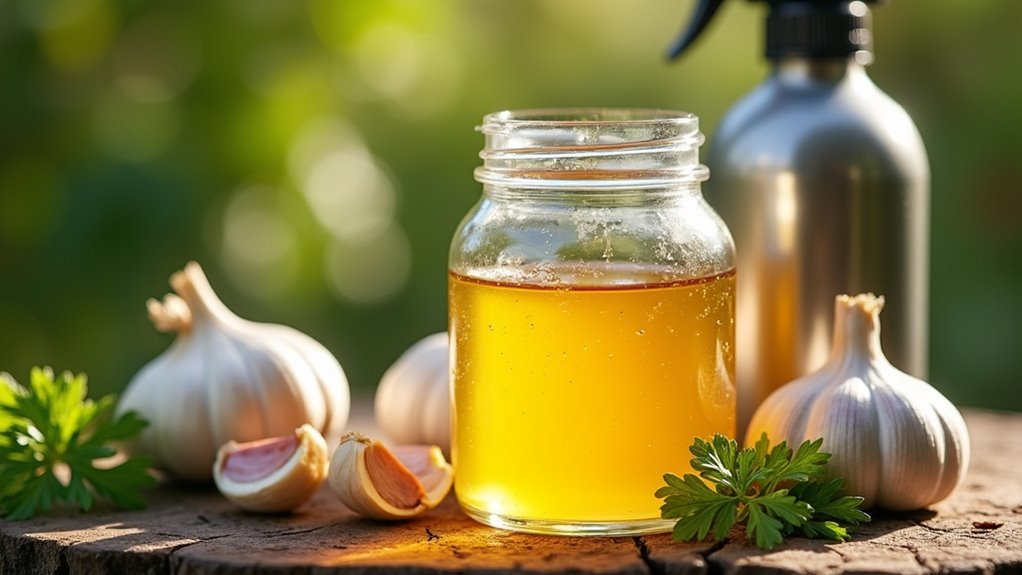
Creating your potent garlic spray requires a systematic approach that maximizes the extraction of allicin compounds. Start by boiling two whole garlic bulbs in two liters of water for exactly 15 minutes. This process extracts the powerful allicin that effectively repels slugs and snails.
Once boiled, use a potato masher to thoroughly crush the garlic, releasing additional natural juices. Strain the mixture completely to remove all solids, leaving you with a cloudy liquid concentrate.
Mash the boiled garlic thoroughly to extract maximum natural juices, then strain completely for a pure concentrate.
Let this garlic spray solution cool completely before transferring it to a spray bottle.
When you’re ready to use your garlic spray, mix two tablespoons of concentrate with five liters of water. Apply weekly from February through October, thoroughly covering both plant leaves and surrounding soil.
Proper Straining Techniques to Prevent Clogging
After blending your garlic mixture, you’ll need to strain it through multiple stages to prevent spray nozzle clogs.
Start with a fine mesh strainer or cheesecloth to remove larger particles, then follow up with a coffee filter to catch smaller debris that could block your sprayer.
This two-step process protects your nozzle and guarantees smooth, consistent application when targeting slugs in your garden.
Multiple Straining Stages Required
Three distinct straining stages will transform your chunky garlic mixture into a smooth, sprayable solution that won’t jam your equipment.
- Initial coarse straining – After blending garlic and water, pour the mixture through cheesecloth or a fine mesh strainer to remove larger solids. This creates a smoother liquid consistency and eliminates chunks that would immediately block your spray nozzle.
- Fine particle removal – Re-strain the liquid through a coffee filter to catch tiny particles that escaped the first round. These microscopic pieces can accumulate and disrupt spray flow over time.
- Clean transfer – Use a small funnel to pour your twice-strained solution into the spray bottle without spills. This maintains cleanliness and prevents contamination that could affect your garlic spray’s effectiveness against slugs.
Coffee Filter Final Step
The coffee filter serves as your final defense against microscopic particles that can turn your smooth garlic spray into a clogged mess.
After your initial cheesecloth straining, you’ll need this extra step to catch those stubborn fine debris pieces that escaped the first round.
Secure your coffee filter with a funnel to prevent spills during the pouring process. This setup makes transferring your garlic solution much easier and cleaner.
Don’t rush this stage—let the liquid sit in the coffee filter for several minutes to guarantee complete filtration.
You’ll notice the difference immediately. The resulting clear liquid flows smoothly through spray nozzles without obstruction.
Store your perfectly strained garlic spray in a cool, dark location to maximize its shelf life and pest-fighting effectiveness.
Nozzle Protection Methods
Since even the finest particles can wreak havoc on your spray equipment, you’ll need to implement multiple protective barriers beyond basic coffee filtration.
These nozzle protection methods guarantee your garlic spray maintains consistent performance while keeping pests at bay.
Essential Protection Strategies:
- Double-strain your mixture – First through fine mesh, then cheesecloth to capture stubborn particles that standard filtering misses.
- Use a small funnel during transfer – This prevents spills and contamination while filling your spray bottle, maintaining the purity of your filtered solution.
- Clean nozzles regularly during application – Check and clear blockages immediately to guarantee even distribution across affected areas.
Your garlic spray’s effectiveness depends entirely on smooth, uninterrupted flow through clean equipment.
Dilution Ratios for Different Garden Applications
Different pest scenarios call for varying concentrations of your garlic spray to maximize effectiveness.
Your standard dilution ratios start with mixing two tablespoons of garlic solution per five litres of water for general slug and snail control. When you’re dealing with heavy infestations, double the concentration to four tablespoons per five litres for stronger results.
For particularly stubborn pests, you’ll want a concentrated approach—mix one cup of garlic solution with just one litre of water and apply directly to problem areas.
After rainfall washes away your spray, reapply using the standard two-tablespoon ratio, ensuring you cover both leaves and soil thoroughly.
Maintain weekly applications from February through October for consistent protection.
Timing Your Spray Applications for Best Results
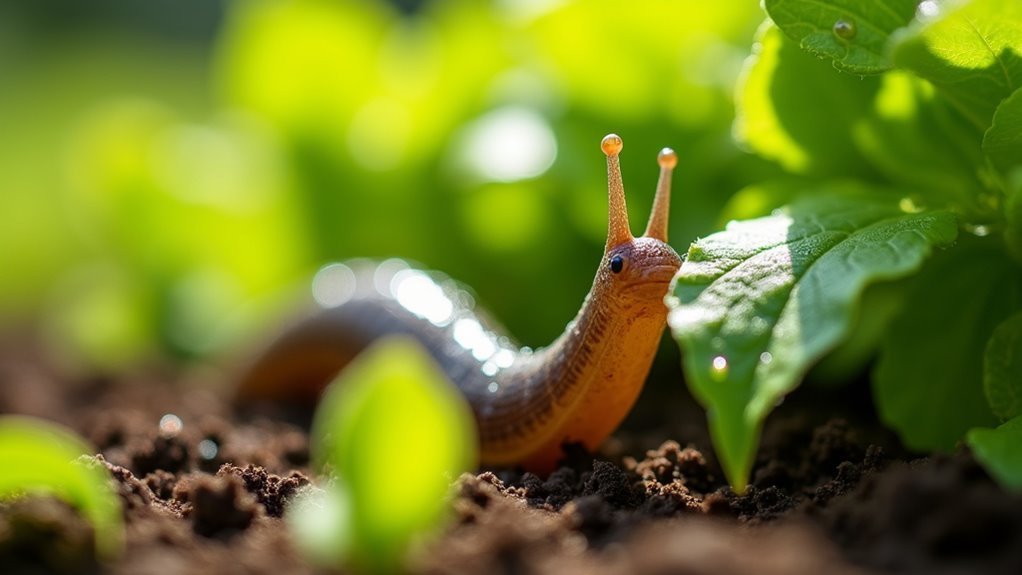
While proper dilution ratios set the foundation for effective slug control, applying your garlic spray at the right time determines whether it’ll actually work.
Timing your spray applications for best results requires understanding slug behavior and environmental factors that affect spray effectiveness.
Success depends on matching your spray schedule to when slugs are most active and environmental conditions are optimal.
Here’s your strategic application schedule:
- Apply weekly from February to October – This maintains a consistent barrier during peak slug activity periods when your plants need maximum protection.
- Schedule early evening applications – Since slugs emerge at night, spraying in early evening ensures the garlic coating is fresh when pests encounter it.
- Reapply after heavy rainfall – Rain washes away your protective barrier, so monitor weather conditions and spray again within 24 hours of significant downpours.
Target both plant leaves and surrounding soil for thorough coverage.
Target Areas: Where to Apply Garlic Spray
Knowing when to spray sets you up for success, but where you apply garlic spray makes the difference between scattered protection and complete slug defense. Target every surface where these garden pests travel and hide. Spray directly onto plant leaves and stems, covering both tops and undersides thoroughly. Saturate the soil beneath your plants since slugs seek refuge there during dry periods.
| Target Area | Application Focus | Why It Matters |
|---|---|---|
| Leaf surfaces | Top and underside coverage | Slugs feed on foliage |
| Plant stems | Direct application | Travel routes for pests |
| Soil zones | Thorough saturation | Hiding spots during day |
| Damaged areas | Heavy concentration | Active feeding sites |
| Seedling beds | Complete protection | Most vulnerable plants |
Focus especially on areas showing nibble damage and vulnerable seedlings where slug activity concentrates.
Frequency and Maintenance Schedule
Success with garlic spray depends on consistent timing rather than random applications. Your frequency and maintenance schedule should follow a structured approach to keep slugs consistently deterred from your garden.
Consistent garlic spray timing creates reliable slug deterrence—structured scheduling prevents garden damage more effectively than sporadic applications.
Here’s your essential application timeline:
- Weekly Applications: Apply garlic spray once weekly from February through October for continuous protection against slug invasions.
- Post-Rainfall Boost: Increase application frequency immediately after heavy rainfall since water washes away the protective barrier, leaving plants vulnerable.
- Evening Treatment: Schedule all applications for evening hours when slugs become most active, maximizing the spray’s repelling effectiveness.
Maintain thorough coverage by saturating both foliage and surrounding soil during each treatment.
This maintenance schedule guarantees slugs can’t establish feeding patterns or return to damage your young plants.
Weather Considerations and Reapplication Tips
Weather plays an essential role in your garlic spray’s effectiveness, as rainfall can wash away the solution and reduce its pest-deterring power.
You’ll need to monitor local weather patterns closely and increase application frequency after heavy downpours to maintain consistent slug protection.
Timing your seasonal applications from February through October guarantees you’re targeting peak slug activity periods when they’re most likely to damage your plants.
Rainfall Impact Management
While garlic spray creates an effective barrier against slugs, rain can quickly wash away this protective coating and leave your plants vulnerable to attack.
Effective rainfall impact management requires strategic timing and consistent monitoring to maintain your garden’s protection.
You’ll need to reapply garlic spray immediately after heavy downpours to restore the deterrent barrier.
Here’s your action plan:
- Monitor weather forecasts – Plan applications for dry days when solutions can properly adhere to plant surfaces without immediate washoff.
- Increase application frequency – During wet seasons, boost your spray schedule to compensate for rain dilution and guarantee continuous coverage.
- Time evening applications – Apply during rainy periods in the evening when slugs are most active and solutions can dry overnight.
Seasonal Application Timing
Once you understand the rainfall challenges, timing your seasonal garlic spray applications becomes essential for maintaining consistent slug control throughout their active period.
Your seasonal application timing should span February through October, when slugs and snails are most active and vulnerable to garlic’s deterrent effects.
Apply the spray weekly during warm, damp conditions when pests thrive. Evening applications work best since slugs are nocturnal creatures.
During dry spells, maintain consistent applications as slugs retreat to soil and dark hiding spots but remain present.
If you’re still seeing pest activity, increase frequency to every few days. This addresses newly hatched slugs that weren’t affected by previous treatments, ensuring your garlic barrier remains effective throughout the entire active season.
Additional Pests Eliminated by Garlic Spray
Beyond its slug-slaying capabilities, garlic spray transforms into a multi-purpose weapon that’ll tackle several other garden troublemakers. The allicin compound doesn’t just repel slimy invaders – it creates an intense aroma that makes your plants unpalatable to various insects.
Garlic spray’s allicin compound creates a powerful multi-purpose defense system that deters slugs while making plants unpalatable to various garden pests.
You’ll effectively control these additional pests with regular garlic applications:
- Aphids and Whiteflies – The spray disrupts their feeding habits while the strong scent deters new infestations.
- Caterpillars – Allicin suffocates tiny caterpillar larvae before they can cause significant damage.
- Ants – The pungent garlic odor overwhelms their scent trails, forcing them to relocate.
This natural approach reduces your reliance on chemical pesticides while protecting multiple plant species.
You’ll maintain healthier garden resilience through this non-toxic pest management solution.
Storage and Shelf Life of Homemade Garlic Solution
Although your freshly made garlic solution packs maximum punch against slugs, its potency won’t last forever without proper storage techniques.
You can store homemade garlic solution in a cool, dark place for up to two weeks, but you’ll get ideal results within the first week. Transfer unused solution to an airtight container to minimize light and air exposure, which degrades effectiveness.
Consider making smaller batches you’ll consume quickly to guarantee maximum potency with each application. Always strain thoroughly to prevent spray nozzle clogging during storage.
If your solution develops an off-smell or changes appearance, discard it immediately and prepare a fresh batch for best results.
Troubleshooting Common Application Problems
Even with proper storage and fresh garlic solution, you might encounter issues that prevent your spray from working effectively.
These common application problems can sabotage your pest control efforts if you don’t address them promptly.
Here are three key troubleshooting steps:
- Strain your mixture thoroughly – Solid particles will clog your spray nozzle, making application impossible. Use cheesecloth or fine mesh to remove all debris from your garlic solution.
- Time your applications correctly – Apply spray during evening hours when slugs are most active. This timing maximizes contact and deterrent effectiveness.
- Reapply after rainfall – Heavy rain washes away protective properties, leaving your plants vulnerable. Check weather forecasts and maintain your weekly application schedule from February through October.
Frequently Asked Questions
Does Garlic Spray Keep Slugs Away?
Yes, you’ll find garlic spray effectively keeps slugs away. It contains allicin, which disrupts their slime production and creates an unpalatable environment. Apply weekly from February to October for best results.
What Happens if You Spray a Slug With Vinegar?
When you spray vinegar on a slug, the acetic acid disrupts its cellular functions and moisture balance, causing dehydration. The acid irritates its soft body, creating a painful reaction that’ll ultimately kill it.
What Is the Most Effective Slug Killer?
You’ll find garlic spray’s the most effective slug killer. It contains allicin, which disrupts their slime production that’s essential for movement and feeding. You should apply it weekly from February through October for best results.
What Kills Slugs Instantly?
You’ll kill slugs instantly with salt, which dehydrates them rapidly. Beer traps drown them effectively. Copper strips create electrical reactions that stop them immediately. Iron phosphate pellets also provide quick elimination results.
In Summary
You’ve now got the ultimate weapon against slugs destroying your garden. Your homemade garlic spray won’t just eliminate slugs—it’ll tackle aphids, spider mites, and other pests too. Remember to reapply after rain and store your solution properly for maximum effectiveness. Don’t let weather discourage you; timing’s everything. With consistent application and proper preparation, you’ll transform your slug-infested garden into a thriving, pest-free paradise that’ll make your neighbors jealous.


Leave a Reply