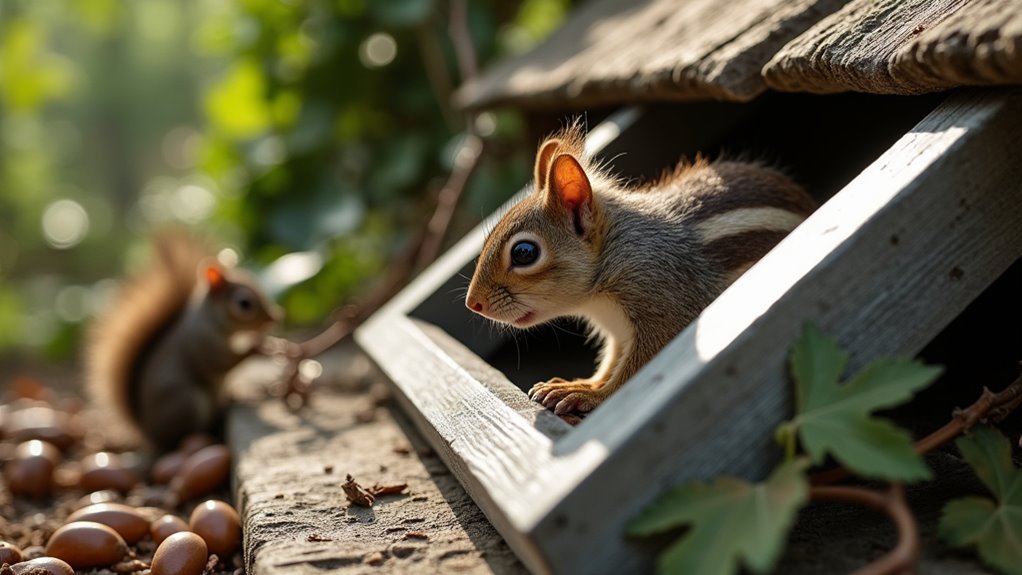
You can keep squirrels away from your attic by using strong-scented deterrents like chili flakes, garlic, and peppermint, which they find unpleasant. Combine these with disruptive sounds from radios tuned to talk stations and bright motion-detection lights to make your attic uncomfortable. Seal entry points with metal flashing, trim tree branches 6-8 feet from your roof, and store pet food in airtight containers. These extensive strategies will help you discover the most effective long-term solutions.
Signs That Squirrels Have Invaded Your Attic
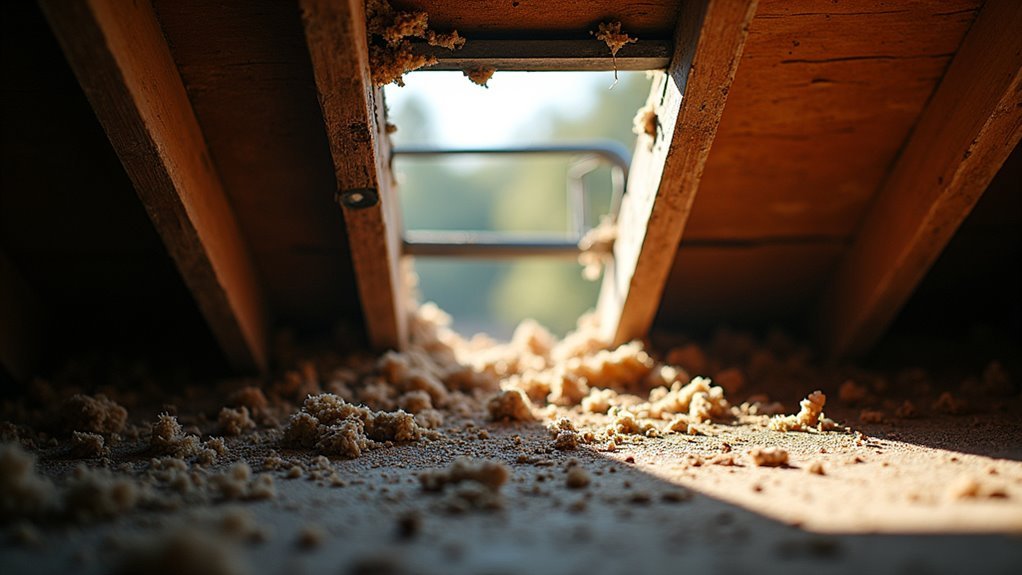
Detecting a squirrel invasion early can save you from costly repairs and health hazards.
If you hear scurrying or scratching sounds during daylight hours, you’ve likely got squirrels in your attic since they’re active throughout the day.
Look for small, round droppings and urine stains that indicate they’ve settled in.
Small, dark droppings scattered around your attic along with yellow staining clearly signal that squirrels have moved in permanently.
You’ll notice chewed wires, damaged insulation, or gnawed structural materials, as squirrels constantly chew to keep their teeth sharp.
Check your home’s exterior for entry points – damaged shingles, fascia, and eaves with visible teeth marks show where they’ve gained access.
An unpleasant odor from your attic space, especially near nesting materials, confirms their unwelcome presence.
Understanding Why Squirrels Choose Attics as Their Home
| Attraction Factor | Why It Appeals to Squirrels |
|---|---|
| Shelter & Safety | Protection from predators and weather |
| Nesting Materials | Insulation and stored items available |
| Food Access | Pet food, birdseed, and stored edibles |
Their chewing behavior maintains growing teeth while damaging your property.
Natural Scent-Based Deterrents to Repel Squirrels

Now that you understand what draws squirrels to your attic, you can use their sensitive noses against them with natural scent-based deterrents.
Strong odors like chili flakes, black pepper, garlic, and rosemary effectively repel squirrels who can’t tolerate these pungent scents. You’ll also find success with homemade repellents combining hot sauce and dish soap, creating unpleasant aromas that discourage intrusion.
Strong-smelling spices and homemade hot sauce mixtures create powerful natural barriers that make squirrels seek shelter elsewhere.
Surprisingly, sweeter scents like cinnamon and peppermint work equally well since squirrels prefer savory smells.
Coffee grounds offer dual benefits – they repel squirrels while providing non-toxic fertilizer for your property.
For attic treatment, soak rags in apple cider vinegar and place them strategically. The strong smell encourages squirrels to relocate elsewhere, making your attic less appealing.
Using Sound and Noise as Squirrel Deterrents
While scent-based deterrents target squirrels’ sensitive noses, sound and noise methods exploit their natural wariness and need for quiet nesting environments.
These sound deterrents can effectively scare them away from your attic without requiring professional pest control services.
Here are four effective noise-based strategies:
- Place a radio in your attic – Tune it to a talk station to simulate human presence, which naturally frightens squirrels.
- Create loud disturbances – Bang on ceilings or play loud music to disrupt their comfort zone.
- Install bright lights – Combine illumination with sound to maximize their feeling of vulnerability.
- Use motion-detection lights – Add surprise elements that trigger when squirrels move through the area.
Combining these methods with entry point sealing enhances overall effectiveness.
Bright Lighting Solutions to Discourage Squirrel Activity
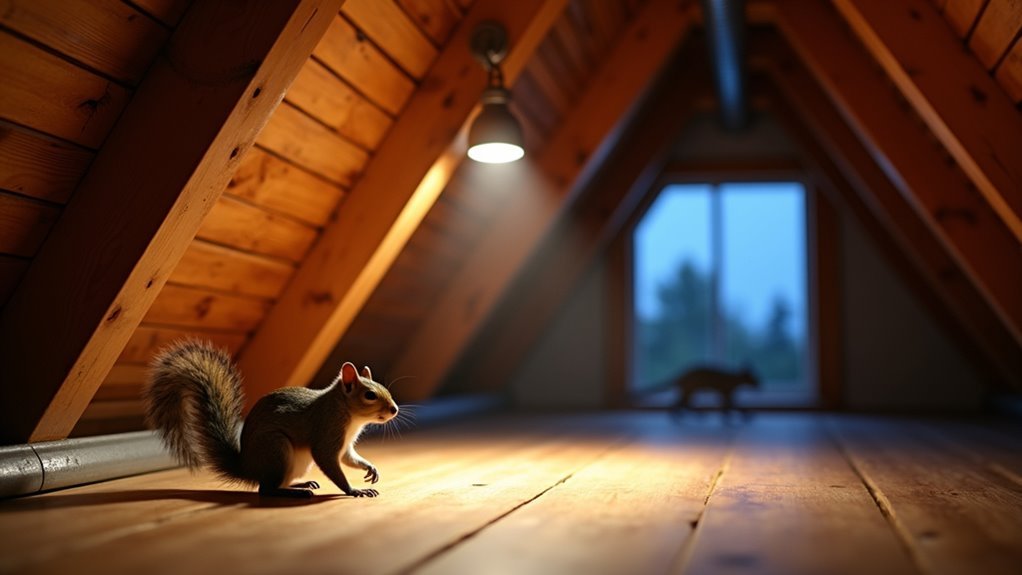
You’ll find that bright lighting creates an uncomfortable environment for squirrels who prefer dark, secluded spaces for nesting.
Motion-activated systems work exceptionally well because they startle approaching squirrels while conserving energy when the area’s unoccupied.
Strategic placement of these lights near entry points and throughout your attic provides continuous protection that disrupts their natural behavior patterns.
Strategic Light Placement
- Install motion-detection lights near entry points – These startle squirrels attempting to enter through holes or gaps.
- Place continuous lighting in nesting areas – Focus on corners and quiet spaces where squirrels typically settle.
- Combine lighting with other deterrents – Use sounds or strong odors alongside illumination for maximum effectiveness.
- Maintain consistent brightness levels – Keep lights on regularly to prevent future squirrel activity.
This lighting approach disrupts their preferred environment, making your attic an unwelcoming space for these unwanted visitors.
Motion-Activated Lighting Systems
Motion-activated lighting systems serve as powerful deterrents that capitalize on squirrels’ natural fear of sudden illumination.
These systems effectively prevent squirrels from approaching your attic by creating an environment that feels unsafe and vulnerable. Since squirrels prefer darker, confined spaces for nesting, bright lights disrupt their activity patterns, particularly during nighttime hours when they’re most active.
Install motion-sensitive lights near potential entry points like eaves and attics to maximize effectiveness. The sudden illumination startles squirrels and makes them less likely to remain in the area.
You’ll achieve better results by combining these lighting systems with other deterrent methods such as strong odors or sound devices, creating a multi-layered defense approach.
Regular maintenance guarantees your motion-activated lighting systems remain functional and consistently effective against squirrel infestations.
Continuous Illumination Benefits
Bright, continuous illumination transforms your attic into an unwelcoming environment that squirrels instinctively avoid. These nocturnal creatures prefer dark, secluded spaces for nesting, making well-lit attics highly unappealing.
You’ll create a persistent deterrent that works around the clock, especially effective during their peak activity hours.
Key advantages of continuous lighting include:
- Constant exposure – Squirrels feel vulnerable without shadows and hiding spots
- Enhanced visibility – You can easily spot new activity or damage
- Multi-pest protection – Well-lit attics discourage various unwanted invaders
- Strategic placement – Position lights near known nests for maximum impact
Deterring squirrels becomes more effective when you combine continuous illumination with sealed entry points.
This dual approach addresses both immediate discomfort and prevents future access, creating thorough protection for your attic space.
Removing Food Sources That Attract Squirrels
You’ll need to eliminate the food sources that draw squirrels to your property in the first place.
Start by securing your bird feeders with squirrel-proof designs and relocating them at least 15 feet from your house.
Don’t forget to store pet food indoors in sealed containers and clean up any fallen fruit from trees around your yard.
Secure Bird Feeders
Bird feeders often serve as the primary magnet that draws squirrels close to your home, making your attic an attractive target for these persistent rodents.
To secure bird feeders effectively and eliminate this major food source, you’ll need to implement strategic changes.
Here’s how to make your bird feeding station squirrel-resistant:
- Install squirrel-proof designs with external cages or baffles that block access while allowing birds to feed freely.
- Relocate feeders at least 10-12 feet away from your house to reduce the likelihood of squirrels reaching your attic.
- Choose less appealing birdseed like safflower seeds, nyjer thistle, or white proso millet that squirrels typically avoid.
- Clean up spilled seeds regularly to eliminate ground-level food that might attract squirrels to your property.
Store Pet Food
Pet food represents another significant attractant that can draw squirrels directly to your home’s perimeter, increasing the chances they’ll discover entry points to your attic.
To store pet food effectively, you’ll need airtight containers that prevent scent from escaping and reduce attraction. Keep all pet food indoors rather than leaving it in garages or porches where squirrels can detect it.
Clean up spilled food and crumbs immediately around feeding areas. If you must feed pets outdoors, use squirrel-proof feeders designed to restrict access to non-target animals.
Implement scheduled feeding times instead of leaving food available all day. This limits food availability and decreases the likelihood of attracting squirrels.
These storage practices help keep squirrels away from your property entirely.
Clean Fruit Debris
Fallen fruit creates an irresistible buffet that draws squirrels directly to your property and encourages them to explore nearby structures, including your attic.
When you don’t clean fruit debris regularly, you’re fundamentally inviting these persistent rodents to set up camp near your home.
Effective methods to eliminate this attraction include:
- Daily collection – Pick up fallen apples, pears, and other fruit immediately after they drop.
- Regular raking – Clear nuts, berries, and decomposing fruit from under trees weekly.
- Proper disposal – Place collected debris in sealed trash bags, not compost piles.
- Tree maintenance – Harvest ripe fruit promptly before it falls naturally.
These simple steps considerably reduce the food sources that attract squirrels to your yard and prevent them from viewing your property as their personal dining establishment.
Sealing Entry Points and Structural Vulnerabilities
While squirrels are surprisingly agile climbers and persistent chewers, you can effectively block their access to your attic by systematically sealing entry points around your home’s exterior.
Focus on gaps and holes in roofing using metal flashing and heavy-duty screening. Regularly inspect for chew marks and other vulnerabilities that indicate weak spots needing attention.
Your extensive strategy should include blocking vents, chimneys, and openings around plumbing or electrical penetrations. Use high-quality caulk and durable materials to seal cracks and seams in roof and siding areas. These efforts greatly reduce intrusion likelihood.
Consider engaging professional wildlife removal services for thorough inspections. They’ll identify structural vulnerabilities you might miss and provide secure sealing solutions to maintain your squirrel-free environment effectively.
Pruning Trees and Eliminating Access Routes
Since squirrels are natural acrobats who’ll leap impressive distances to reach your roof, eliminating their aerial highways becomes essential for protecting your attic.
Pruning tree branches strategically cuts off their main access points and forces them to find alternative routes away from your home.
Here’s how to block squirrels effectively:
- Trim branches 6-8 feet from your roof – This distance prevents squirrels from making successful jumps to your house.
- Remove dead or diseased limbs – These create unnecessary climbing routes while compromising tree health.
- Install squirrel-proof barriers – Metal flashing or plastic mesh around tree trunks stops climbing attempts.
- Inspect trees regularly – Monitor for new growth that might create fresh pathways to your roof.
Consistent maintenance keeps these persistent climbers grounded.
Homemade Repellent Recipes Using Kitchen Ingredients
Physical barriers work well, but scent-based deterrents offer another powerful weapon in your anti-squirrel arsenal.
Physical barriers are effective, but scent-based solutions provide a natural and powerful alternative for keeping squirrels at bay.
You can create effective homemade repellent solutions using common kitchen ingredients that keep squirrels away through strong odors they naturally avoid.
Mix hot sauce with dish soap to create a pungent spray that deters squirrels from your attic.
Scatter spices like chili flakes, black pepper, garlic, and rosemary around entry points.
Coffee grounds work double duty as both repellent and fertilizer while remaining safe for pets.
Sweet scents like cinnamon and peppermint also repel squirrels effectively.
For quick results, soak rags in cider vinegar and place them where squirrels are active.
These natural solutions exploit squirrels’ sensitive noses without using harmful chemicals.
Safe Trapping and Relocation Methods
When prevention methods aren’t enough, you’ll need to safely trap and relocate squirrels that have already invaded your attic.
Setting up humane live traps with proper bait positioning gives you the best chance of capturing these persistent intruders without causing harm.
Once you’ve successfully trapped a squirrel, following proper relocation guidelines guarantees both the animal’s welfare and prevents it from returning to your property.
Humane Live Trap Setup
Two essential components make humane live trapping successful: proper trap placement and consistent monitoring.
You’ll need to position your humane live trap strategically near any potential entry points where you’ve noticed squirrel activity.
Follow these steps for effective setup:
- Secure the trap on stable ground to prevent tipping or movement
- Bait strategically using peanut butter, popcorn, or almond extract on bread
- Check daily to prevent overheating or starvation of captured animals
- Relocate squirrels at least three miles from your property once caught
Remember to research local wildlife regulations before beginning any trapping activities.
This guarantees you’re following proper guidelines while maintaining a humane approach to removing unwanted squirrels from your attic space.
Post-Capture Relocation Guidelines
Successfully capturing a squirrel marks only the beginning of the relocation process. Following proper post-capture relocation guidelines guarantees you’re handling the situation ethically and effectively. Check your trap daily to prevent overheating or starvation of trapped animals.
| Relocation Step | Distance | Timing |
|---|---|---|
| Transport safely | 3+ miles away | Within 24 hours |
| Choose habitat | Wooded areas | During daylight |
| Monitor release | Safe environment | Immediately after |
Once you’ve relocated the squirrel at least three miles from your property, they’re unlikely to return. Choose suitable woodland habitat for release. If you’re uncomfortable handling wildlife, contact a professional squirrel removal service. After successful relocation, seal all identified entry points on your property to prevent future infestations and guarantee long-term effectiveness of your humane removal efforts.
Long-Term Prevention Strategies to Keep Squirrels Away
While removing squirrels from your attic solves the immediate problem, you’ll need a thorough prevention strategy to keep them from returning.
Effective pest control requires addressing both access points and attractants around your property.
Implement these long-term prevention measures:
- Seal all entry points – Fill gaps and holes in roofing and siding where squirrels might gain access to your home’s interior spaces.
- Trim nearby branches – Cut tree limbs within six feet of your roof to eliminate jumping paths for these agile climbers.
- Remove food sources – Secure trash cans, relocate bird feeders, and clean up fallen fruit that attracts squirrels to your yard.
- Apply natural repellents – Spread peppermint oil or coffee grounds around your home’s perimeter to discourage squirrel activity.
Frequently Asked Questions
What Can I Put in My Attic to Keep Squirrels Away?
You can place peppermint oil-soaked rags, vinegar-soaked cloths, or coffee grounds throughout your attic. Install bright motion-detection lights and play a loud talk radio station to create an unwelcoming environment that’ll deter squirrels effectively.
What Do Squirrels Hate the Most?
Squirrels hate strong odors most, especially spicy scents like chili flakes and black pepper. They’ll also avoid peppermint, cinnamon, and coffee grounds. You can use these natural repellents effectively around your property.
What Is the Most Effective Squirrel Repellent?
You’ll find homemade hot sauce mixed with dish soap most effective as squirrel repellent. The strong odor deters them better than other methods, and you can easily apply it around problem areas.
Why Do I Keep Getting Squirrels in My Attic?
You’re getting squirrels because your attic offers warmth and shelter. Open gaps, nearby tree branches, and outdoor food sources attract them. They’re seeking safe nesting spots, especially during colder months when shelter’s essential.
In Summary
You’ve got multiple tools at your disposal to keep squirrels out of your attic. Start by identifying entry points and sealing them off. Use natural deterrents like peppermint oil, install motion-activated lights, and trim tree branches near your roof. If squirrels have already moved in, trap and relocate them humanely. Combine these methods for the best results, and you’ll maintain a squirrel-free attic year-round.

Leave a Reply