
You’ll eliminate 80% of pest problems by following seasonal patterns throughout the year. Spring requires sealing entry points and controlling moisture as ants and termites awaken. Summer demands eliminating standing water and covering food to prevent mosquitoes and flies. Fall means preparing for rodents seeking indoor shelter by removing debris and storing firewood away from structures. Winter focuses on maintaining humidity levels and setting traps in basements and attics. This strategic quarterly approach will transform your home into a year-round pest fortress.
Understanding Seasonal Pest Activity Patterns Throughout the Year

As temperatures shift throughout the year, pest behavior follows predictable patterns that directly affect your property’s vulnerability to infestations. Understanding these cyclical changes enables you to implement targeted seasonal pest control strategies.
Spring awakens dormant pests like ants, termites, and spiders from their winter hiding spots. Summer brings peak activity from mosquitoes, flies, and stinging insects during their prime breeding seasons.
Fall triggers rodents and cockroaches to seek indoor shelter as temperatures drop. Winter forces mice and rats to search for warmth inside your home.
Climate change is disrupting traditional patterns, extending breeding seasons and altering invasion timing. Taking preventative measures based on seasonal pest threats helps you address infestations before they become major problems, though professional pest control services remain essential for thorough protection.
Spring Quarter: Awakening Pests and Early Prevention Strategies
Spring awakens overwintering pests like ants and termites, making early prevention your best defense against costly infestations.
You’ll need to focus on three critical areas: identifying emerging pest activity patterns around your property, conducting thorough inspections while sealing entry points, and implementing effective moisture control strategies.
These proactive measures during spring’s temperature rise can save you from expensive pest problems throughout the warmer months.
Emerging Pest Activity Patterns
When temperatures begin to climb after winter’s chill, dormant pests throughout your property start stirring back to life, creating the first major pest management challenge of the year.
You’ll notice emerging pest activity from ants, termites, and spiders as they seek abundant food sources. Understanding these seasonal patterns helps you implement effective pest control strategies before infestations escalate.
Focus your preventive measures on sealing entry points around doors and windows while removing woodpiles near your foundation.
Don’t forget to eliminate standing water, which creates mosquito breeding grounds. You should inspect properties thoroughly for winter damage that creates new vulnerabilities.
Professional help becomes invaluable during this critical period—schedule termite inspections to catch early warning signs before they become costly structural problems.
Critical Inspection and Sealing
The foundation of effective spring pest management lies in systematic property inspection and strategic sealing of potential entry points.
Start your critical inspection by examining cracks and crevices around doors, windows, and your home’s foundation where pests like ants and termites may have sheltered during winter.
Focus on areas where moisture accumulates, as dampness attracts various pest species.
Sealing entry points becomes paramount during spring’s pest awakening. Use caulk, weatherstripping, and expanding foam to close gaps you’ve identified.
Remove woodpiles and mulch from your foundation’s perimeter to eliminate termite-friendly environments.
Schedule a professional termite inspection early in spring to catch potential infestations before they escalate.
Implement moisture management by fixing leaks and maintaining humidity levels below 50% to create an inhospitable environment for emerging pests.
Moisture Control Strategies
As winter’s chill retreats, moisture control becomes your most powerful weapon against spring’s pest invasion.
Keep indoor humidity below 50% using dehumidifiers to dramatically reduce pest activity. You’ll prevent standing water by inspecting and repairing plumbing leaks while ensuring proper foundation drainage.
Regularly clear gutters and downspouts—clogged systems create moisture build-up that attracts shelter-seeking pests.
Seal cracks and crevices around windows and doors with caulk, simultaneously blocking moisture intrusion and pest entry points.
These proactive strategies can reduce infestations by up to 70%, especially vital when pests emerge from winter dormancy.
Effective moisture control eliminates breeding grounds for mosquitoes and termites while creating an inhospitable environment for various spring invaders, making it essential to your quarterly treatments schedule.
Sealing Entry Points and Repairing Winter Damage
You’ll need to conduct a thorough winter damage assessment of your home’s exterior, checking for cracks in foundations, gaps around windows and doors, and holes in roofs that pests can exploit.
Focus on identifying any openings larger than 1/4 inch, as these gaps provide easy access for rodents and insects seeking shelter.
Once you’ve completed your inspection, you can implement strategic sealing methods using caulk for smaller cracks and steel wool for larger openings to effectively block pest entry points.
Winter Damage Assessment
Winter’s harsh conditions create vulnerabilities in your home’s defenses, making a thorough damage assessment essential for effective pest management. Cold weather causes materials to contract and expand, creating new cracks and widening existing gaps that become entry points for winter pest invasions.
Focus your damage assessment on these critical areas:
| Assessment Area | What to Check |
|---|---|
| Exterior walls | Cracks larger than 1/4 inch |
| Windows/screens | Broken glass, torn screens |
| Pipes/roofing | Water leaks, moisture damage |
| Foundation | New gaps, settling cracks |
| Insulation | Compressed or damaged areas |
Rodents exploit compromised insulation and weather stripping to access warm spaces. Address moisture issues immediately, as damp conditions attract multiple pest species seeking winter shelter.
Strategic Sealing Methods
Once you’ve identified vulnerable areas through your damage assessment, strategic sealing becomes your most powerful defense against pest invasions.
Focus on sealing entry points larger than 1/4 inch around windows and doors using steel wool or caulk to create a durable barrier. These pest control methods effectively block rodents and spiders seeking shelter during colder months.
Install weatherstripping under doors and around windows to deter pests seeking shelter while improving energy efficiency.
Regular seasonal inspections help you maintain your pest-proof home by identifying new gaps before they become problems.
These proactive measures reduce pest infestations by up to 70%, making strategic sealing far more effective than reactive treatments after pests have already invaded your space.
Managing Moisture and Eliminating Breeding Grounds
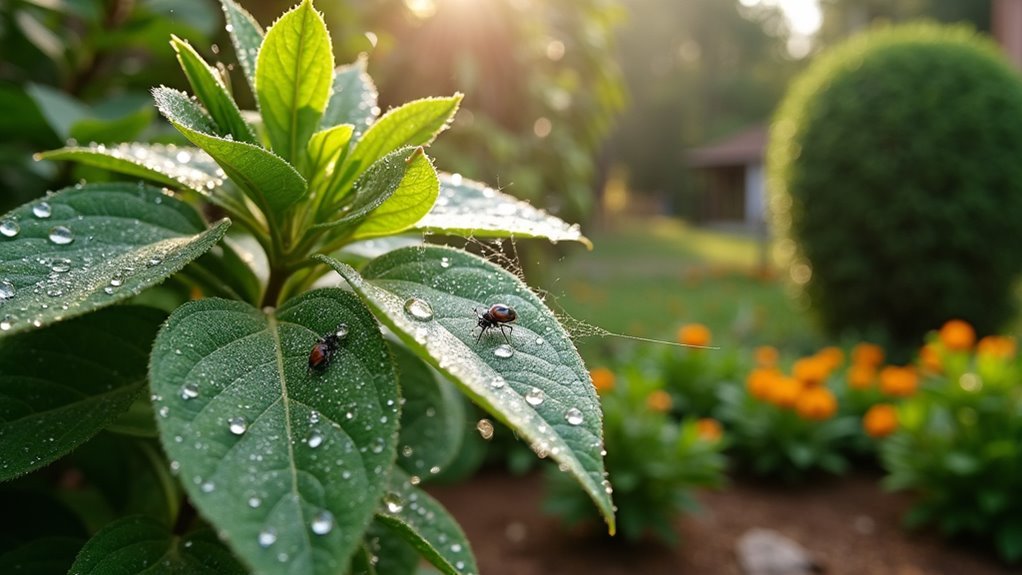
Since moisture creates the perfect environment for pests to thrive and reproduce, controlling humidity levels in your home becomes one of your most effective defense strategies.
Managing moisture starts with keeping indoor humidity below 50% using dehumidifiers, which dramatically reduces pest infestations. Focus on eliminating breeding grounds by regularly inspecting gutters, flowerpots, and bird baths for standing water—even a cup’s worth allows mosquitoes to reproduce.
Fix plumbing leaks and guarantee proper drainage around foundations to prevent water accumulation that attracts cockroaches and ants.
Maintain a clutter-free environment, especially in storage areas, to eliminate hiding spots and moisture sources. Your pest control measures should include seasonal yard maintenance like removing leaf piles and trimming vegetation to reduce outdoor moisture retention.
Summer Quarter: Peak Activity and Heat-Driven Pest Control
Summer’s intense heat transforms your pest control strategy as temperatures soar and insect activity reaches its yearly peak.
Summer pests like mosquitoes, flies, and stinging insects thrive in warm conditions, demanding thorough pest control measures to protect your property.
Start by eliminating standing water around your home—gutters, flower pots, and bird baths become prime mosquito breeding sites.
During outdoor gatherings, keep all food covered to prevent attracting flies and other hungry pests.
Regularly inspect your property for wasp nests, as these aggressive insects pose serious health risks during warmer months.
Create natural defenses by planting pest-deterring plants like lavender and marigolds around your property’s perimeter.
These strategic plantings form effective barriers while adding beauty to your landscape, helping you maintain control throughout summer’s challenging pest season.
Food Storage and Outdoor Activity Protection Methods

Protection hinges on strategic food management and mindful outdoor practices that deny pests the resources they seek. Store food in airtight containers—84% of homeowners with pest issues trace problems to uncovered food sources. During outdoor activities, cover food and drinks to prevent attracting flies and wasps that thrive in summer heat.
| Storage Method | Target Pests | Effectiveness |
|---|---|---|
| Airtight containers | Ants, rodents | High prevention |
| Covered outdoor food | Flies, wasps | Considerably reduces attraction |
| Clean grills | Multiple insects | Eliminates residue attraction |
| Strategic trash bins | Rodents, cockroaches | Decreases food-seeking behavior |
Empty trash bins regularly and position them away from entry points for effective pest control. Clean grills thoroughly after use to maintain a pest-free environment. Plant pest-deterring plants like lavender and marigolds around outdoor areas for natural insect repellent.
Fall Quarter: Pre-Winter Invasion Prevention Tactics
As temperatures drop, rodents and spiders begin their urgent search for warm winter shelters, making fall your critical window for prevention.
Your seasonal pest management strategy should focus on sealing entry points around utility lines and foundation cracks larger than 1/4 inch using steel wool or caulk to prevent pests from entering your home.
Remove leaf piles and debris within 20 feet of your foundation—this eliminates nesting materials and reduces overwintering pest populations by 70%.
Store firewood at least 20 feet from structures to limit rodent access.
Inspect attics and basements for signs of infestation while implementing proper food storage in airtight containers.
These proactive pest control measures create essential barriers protecting your home before rodents and spiders seek indoor refuge.
Winterizing Your Home Against Cold-Seeking Pests
Once winter’s chill settles in, your home becomes a prime target for cold-seeking pests like mice, rats, and cockroaches desperately searching for warmth and shelter.
Homeowners must implement effective seasonal strategies throughout winter to prevent entry. Start by sealing cracks and crevices larger than 1/4 inch around your home’s exterior walls and roof. Inspect for holes or gaps that provide easy access for rodents.
Keep storage areas decluttered to eliminate hiding spots where pests might establish themselves. Set traps in common activity areas like basements and attics to catch winter intruders early.
Maintain indoor humidity between 30-50% to deter moisture-loving cockroaches. These regular pest control measures create an inhospitable environment for cold-seeking pests.
Winter Quarter: Indoor Pest Monitoring and Control
When temperatures drop and outdoor food sources become scarce, indoor pest monitoring becomes your most critical defense strategy.
You’ll need to conduct quarterly inspections throughout winter, focusing on basements, attics, and kitchens where pest activity typically increases. Start by examining food storage areas for droppings or chew marks that indicate rodent presence.
Seal cracks around windows, doors, and utility penetrations to block entry points. Maintain humidity levels between 30-50% to discourage moisture-loving pests like cockroaches.
Set traps in high-activity zones to monitor population levels effectively. Regular monitoring helps you prevent infestations before they establish.
If you discover evidence of pest activity, implement targeted pest control treatments immediately rather than waiting for problems to escalate during cold months.
Year-Round Maintenance Schedules and Inspection Routines
You’ll need a systematic approach to pest prevention that extends beyond seasonal fixes, incorporating quarterly property inspections, monthly maintenance tasks, and weekly monitoring routines.
This thorough schedule guarantees you’re consistently identifying potential problems before they become major infestations.
Quarterly Property Inspections
Although most homeowners address pest problems reactively, establishing a quarterly inspection schedule alters your approach into a proactive defense system that catches issues before they become costly infestations.
During January, April, July, and October changes, you’ll systematically examine your property’s exterior perimeter, foundation, attic, and crawl spaces to identify potential threats like new cracks, moisture problems, and pest activity signs.
These regular assessments let you seal entry points around windows and doors immediately, helping prevent infestations before they start.
Document your findings to track patterns and develop tailored response strategies over time.
Collaborating with pest control professionals during these inspections guarantees expert evaluation of any concerns, creating an effective year-round pest control system that saves money and protects your home.
Monthly Maintenance Tasks
Twelve monthly maintenance tasks form the backbone of effective year-round pest control, building upon your quarterly inspection routine with consistent actions that address evolving seasonal threats.
Your pest control strategy requires ongoing attention between formal assessments to maintain protection.
Execute these seasonal-specific maintenance tasks monthly:
- Seal discovered entry points around windows, doors, and foundation cracks using appropriate materials.
- Monitor and control moisture levels in basements, attics, and crawl spaces through dehumidification.
- Clean and secure storage areas while eliminating potential food sources like crumbs and spills.
- Update your pest management log with observations, completed tasks, and any concerning patterns.
Schedule consultations with professional pest control services quarterly to review your maintenance efforts and adjust strategies based on seasonal changes and documented findings.
Weekly Monitoring Routines
While monthly maintenance tasks provide essential structure, weekly monitoring routines serve as your early warning system against pest invasions and help you catch problems before they escalate into full infestations.
As property owners, you’ll want to establish consistent inspection schedules focusing on high-risk areas like kitchens, basements, and entry points. Keep detailed checklists documenting pest activity, moisture levels, and structural changes to identify troubling patterns.
Use seasonal calendars to align your weekly monitoring routines with peak pest periods, ensuring heightened vigilance when specific threats emerge. Record every sighting and maintenance action—this documentation becomes invaluable when pest control professionals assess potential infestations and develop targeted treatment strategies.
Incorporate preventative practices like debris removal and sealing entry points into these routine inspections.
Warning Signs That Indicate Professional Intervention Needed
How can you tell when your pest problem has escalated beyond what you can handle on your own? Recognizing these warning signs helps you determine when it’s time to seek professional help before a potential infestation spreads throughout your home.
Watch for these critical indicators that require immediate action:
- Multiple pest sightings within days suggest widespread pest activity that demands pest control specialists.
- Unusual sounds like scratching or scurrying in walls indicate hidden infestations requiring expert inspection.
- Property damage such as chewed wires or gnawed wood signals serious pest problems beyond DIY solutions.
- Droppings in food areas, especially kitchens, indicate contamination risks needing professional pest control intervention.
When your DIY pest control methods fail or you’re dealing with dangerous pests, don’t hesitate to contact specialists immediately.
Creating Your Personalized Quarterly Pest Management Calendar
Since effective pest management requires year-round vigilance rather than reactive responses, developing a personalized quarterly calendar guarantees you’ll stay ahead of seasonal pest challenges.
Your pest management calendar should schedule inspections every three months, targeting specific threats like spring ants and fall rodents.
Document each season’s key tasks: seal entry points during winter, focus on eliminating standing water in summer, and remove debris in fall.
Track pest sightings during inspections to identify patterns and adjust your strategies accordingly.
Partner with local pest control services offering customized plans for your region’s specific challenges.
Set seasonal reminders for critical tasks like spring gutter cleaning and winter crack inspections.
This proactive pest management approach transforms reactive scrambling into organized, effective pest control plans.
Frequently Asked Questions
How Much Should I Pay for Quarterly Pest Control?
You should expect to pay $100-$300 per quarterly treatment, totaling $400-$1,200 annually. You’ll save 10-15% with annual contracts and reduce costs compared to treating major infestations later.
Is Quarterly Pest Control Worth It?
Yes, quarterly pest control’s worth it. You’ll prevent costly infestations before they start, reduce pest issues by 70%, and maintain year-round protection. It’s much cheaper than dealing with emergency treatments later.
What Are the 7 Steps to Effective Pest Management?
You’ll need to inspect thoroughly, identify pest species, set action thresholds, prevent entry points, choose appropriate treatments, implement control measures, and monitor results regularly for effective management.
What Is the Hardest Pest to Get Rid Of?
Termites are typically the hardest pest you’ll face. They’ll silently destroy your home’s structure while hiding inside walls, making detection difficult until significant damage occurs, requiring professional intervention.
In Summary
You’ve now got the blueprint for year-round pest protection. Start implementing your quarterly calendar immediately—don’t wait for problems to appear. Stay consistent with inspections, maintain your property’s defenses, and act quickly when you spot warning signs. Remember, prevention’s always cheaper than treatment. Keep your seasonal checklist handy, adapt it to your specific location and pest pressures, and you’ll maintain a pest-free environment throughout every season.


Leave a Reply