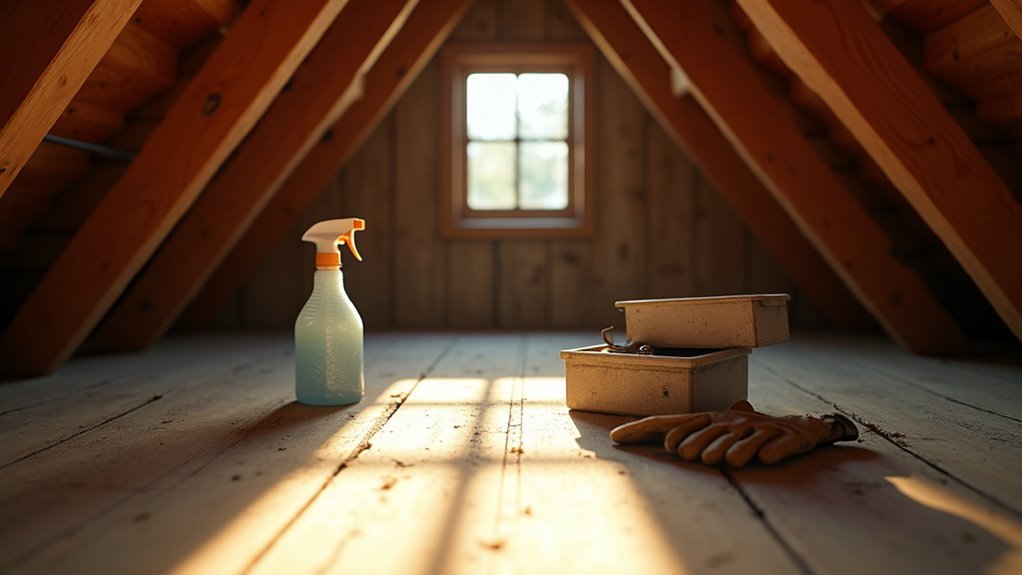
You can effectively control attic rodents by sealing entry points with steel mesh since they squeeze through 15mm openings, removing food sources like stored seeds, and placing traps along walls where rodents travel. Apply peppermint oil as a natural deterrent, schedule twice-yearly inspections for droppings and gnaw marks, and clean contaminated areas with HEPA vacuums while wearing protective gear. Install proper ventilation guards to prevent future access. These thorough strategies will help you discover additional prevention methods.
Seal Entry Points to Prevent Rodent Access
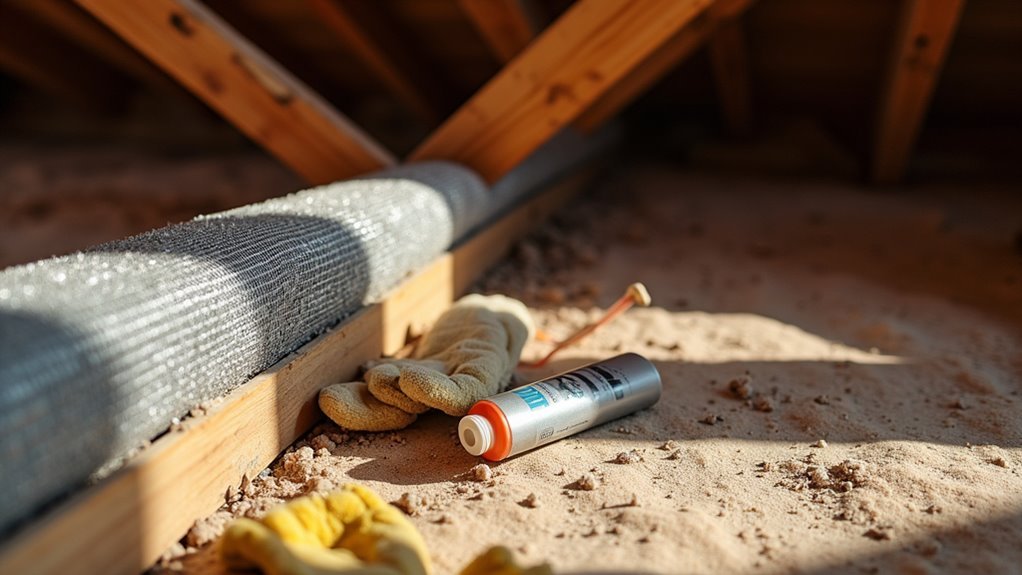
When protecting your attic from rodent infestations, sealing entry points serves as your most critical first line of defense.
You’ll need to inspect and seal gaps around vents, pipes, and electrical lines since rodents can squeeze through openings as small as 15mm. Use stainless steel mesh to cover vents and install roof guards to prevent access to attic spaces effectively.
Rodents can squeeze through openings as small as 15mm, making thorough inspection and sealing of all gaps absolutely essential.
Start by inspecting for cracks and holes throughout your attic structure, then seal them promptly with caulk or foam. This approach doesn’t just target common attic pests—it also improves energy efficiency by reducing drafts.
While you can handle basic sealing yourself, consider professional removal for existing infestations before sealing. Regular maintenance helps prevent future problems and guarantees thorough removal of potential entry points.
Install Proper Ventilation Guards and Barriers
Beyond sealing cracks and gaps, you’ll need to focus on protecting your attic’s ventilation system from rodent intrusion. Installing proper ventilation guards creates effective barriers while maintaining energy efficiency through adequate airflow.
| Guard Type | Benefits |
|---|---|
| Stainless Steel Mesh | Resists gnawing from persistent rodents |
| Secure Fitting Guards | Eliminates gaps larger than 15mm |
| Vapor Barriers | Prevents moisture issues that attract pests |
| Regular Inspections | Identifies compromised entry points early |
| Combined Protection | Maintains insulation while deterring access |
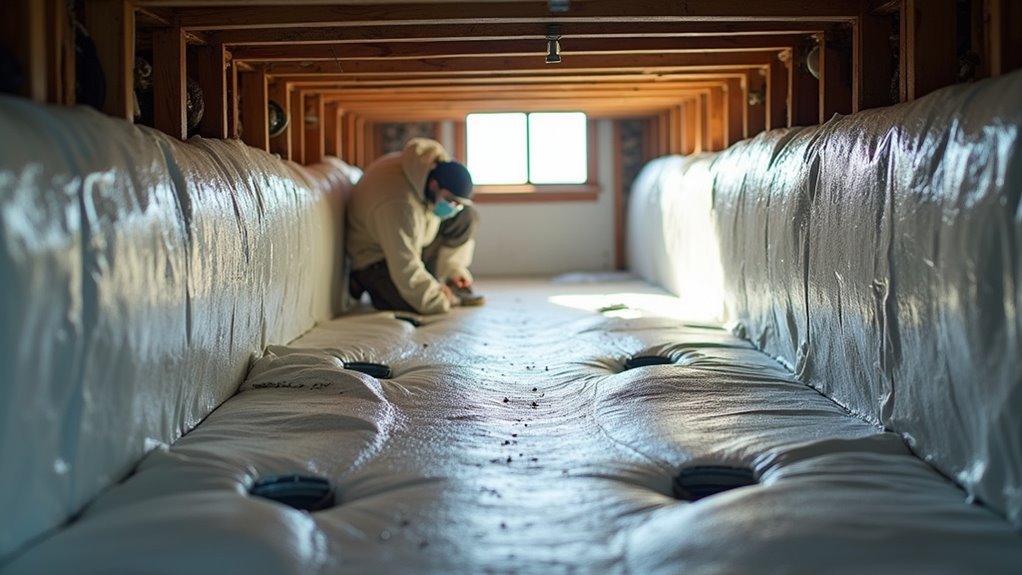
Use stainless steel mesh to cover all vent openings, ensuring secure installation without gaps. This prevents rodents from accessing your attic through the ventilation system. Implement vapor barriers alongside guards to reduce moisture accumulation while preserving insulation effectiveness. Regular inspections help you spot damage before it becomes a rodent highway.
Remove Food Sources and Nesting Materials
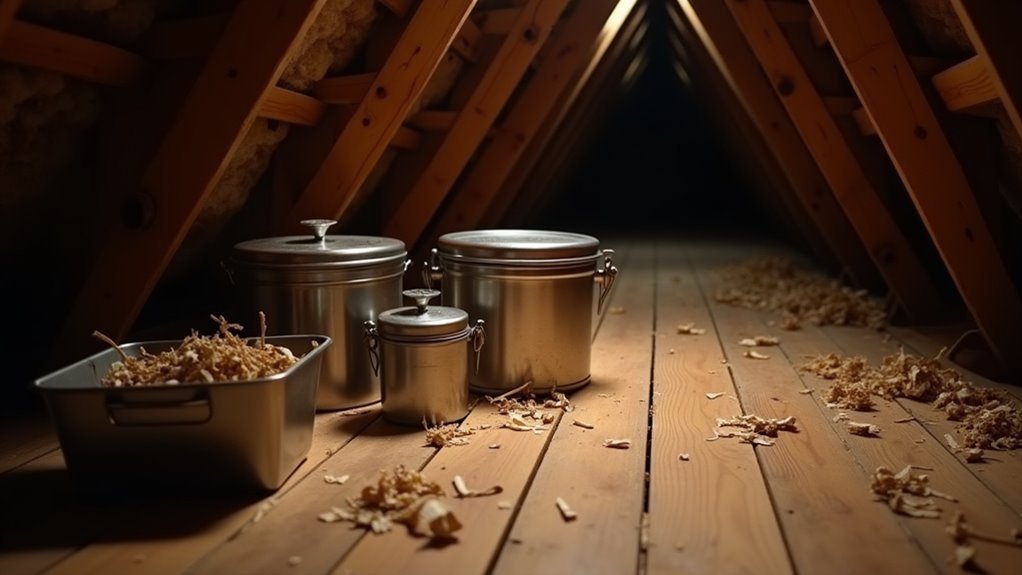
You’ll need to eliminate any food sources that might attract rodents to your attic space.
Remove stored seeds, grains, or other food items, and clean up debris like shredded insulation or paper that rodents use for nesting.
Don’t forget to address nearby attractants like bird feeders or outdoor pet food that could draw rodents toward your home.
Eliminate Food Attractants
One of the most effective strategies for preventing rodent infestations involves removing all food sources and nesting materials from your attic space.
To eliminate food attractants, properly store food items like seeds and acorns in airtight containers. Remove nesting materials including old insulation, shredded paper, and fabric that create ideal conditions for nesting.
Regularly clean your attic to eliminate spills and crumbs that encourage rodent activity. Replace contaminated insulation immediately, as it harbors odors that attract pests.
Seal any gaps or cracks in your attic structure, since even small openings allow entry. Don’t forget to dispose of unsecured waste properly by using sealed trash bins.
These combined efforts will prevent rodents from establishing colonies in your attic.
Clear Nesting Materials
Thorough removal of nesting materials forms the foundation of successful rodent control in attic spaces.
You’ll need to clear nesting materials like insulation, shredded paper, and fabric that encourage rodent infestation. Remove and replace contaminated materials immediately, as even small debris amounts provide shelter.
After clearing your attic space, seal entry points to prevent re-infestation.
Essential steps for effective rodent removal:
- Inspect thoroughly – Check corners, wall cavities, and tight spaces where nesting materials accumulate
- Dispose properly – Bag contaminated materials securely to avoid attracting new pests through scent trails
- Clean completely – Eliminate rodents by removing all traces of nests, droppings, and debris
Consider professional services for extensive contamination, as they’ll safely handle hazardous materials while ensuring complete elimination.
Use Strategic Trap Placement in High-Activity Areas
When dealing with rodent infestations in your attic, strategic trap placement makes the difference between successful elimination and wasted effort.
Focus on high-activity areas where you’ve identified signs of rodent activity like droppings, gnaw marks, or nests. Place traps along walls and corners since rodents prefer running along edges rather than open spaces.
Position multiple traps near food sources such as stored birdseed or other items that attract these pests. Your trap locations should utilize both snap traps and bait stations for a thorough rodent control strategy.
Monitor traps regularly to remove captured rodents promptly, preventing decay and odors that could attract additional pests. This systematic approach maximizes your chances of eliminating the entire population effectively.
Apply Natural Deterrents and Repellents Safely

You can create effective rodent barriers using natural deterrents that won’t harm your family or pets.
Essential oils like peppermint work exceptionally well because rodents can’t tolerate their strong scents, and you’ll need to apply them strategically around entry points and high-activity areas.
Safe application methods involve using cotton balls, spray bottles, or direct surface treatment to establish scent barriers that make your attic uninhabitable for unwanted guests.
Essential Oils That Work
Several essential oils offer powerful natural alternatives to chemical rodent repellents, with peppermint oil leading the pack due to its intense scent that disrupts rodents’ ability to navigate through your attic space.
These essential oils create a healthy environment while effectively deterring unwanted pests through natural pest control methods.
- Peppermint oil – Dilute with carrier oil and apply to cotton balls, placing them strategically around your attic where you’ve noticed rodent activity.
- Eucalyptus and tea tree oils – Mix with water in spray bottles to create effective barriers along potential entry routes.
- Cinnamon oil – Research shows this aromatic option works well in attic spaces when combined with other preventive measures.
Remember to seal entry points and maintain cleanliness alongside using these oils for maximum effectiveness in your rodent control strategy.
Safe Application Methods
Although natural deterrents offer safer alternatives to harsh chemicals, proper application techniques guarantee you’ll protect both your family and pets while maximizing their effectiveness against rodents.
When using peppermint oil, soak cotton balls and place them at entry points where mice typically access your attic. For essential oils like eucalyptus, mix several drops with water in spray bottles, then apply around nesting areas and potential access routes.
Always choose non-toxic, food-grade repellents to minimize health risks. These safe application methods require consistent maintenance—reapply natural deterrents every two weeks or after heavy rainfall since their potency diminishes over time.
Follow manufacturer instructions carefully, as some products need specific dilution ratios. This approach guarantees your attic remains effective against unwanted rodents while keeping your household safe.
Natural Scent Barriers
Three powerful natural scents—peppermint oil, white vinegar, and eucalyptus—create effective barriers that exploit rodents’ sensitive olfactory systems to keep them away from your attic space.
These natural deterrents work by overwhelming rodents’ acute sense of smell, making your attic uninviting.
Apply these essential oils effectively using these methods:
- Mix several drops of peppermint oil with water in a spray bottle and mist around entry points
- Soak cotton balls in eucalyptus or peppermint oil and place them in strategic locations throughout your attic
- Refresh applications every few weeks to maintain potency and effectiveness
While these natural deterrents can successfully repel rodents, they’re most effective as part of a thorough approach.
Combine these preventative measures with proper sealing techniques and maintaining cleanliness for ideal rodent control results.
Maintain Regular Inspection and Monitoring Schedule
While rodent prevention measures form your first line of defense, establishing a consistent inspection routine guarantees you’ll catch any infiltration attempts before they become full-blown infestations.
Schedule regular inspections twice yearly to detect rodent activity through droppings, gnaw marks, and nests. Monitor for nighttime scratching sounds that signal active infestations requiring immediate attention.
Install motion-activated cameras to capture visual evidence of rodent movement patterns. Check your insulation condition regularly, watching for shredding or moisture accumulation indicating nesting activity. These monitoring schedule practices help prevent infestations from establishing.
Document presence findings and evaluate control measures effectiveness in a detailed log. This tracking system helps you identify problem areas, adjust your monitoring schedule, and recognize signs of rodent activity earlier for improved long-term prevention success.
Clean and Disinfect Contaminated Areas Thoroughly
Once you’ve identified rodent activity in your attic, proper cleanup becomes crucial for eliminating health risks and preventing re-infestation.
You’ll need to thoroughly clean all rodent droppings and urine using a high-powered vacuum with HEPA filtration to prevent airborne contamination. Always wear protective gear including gloves, masks, and goggles to guard against diseases like Hantavirus.
Disinfect all surfaces with appropriate solutions to eliminate harmful bacteria and neutralize odors.
Key steps for safe attic cleanup:
- Guarantee proper ventilation throughout the cleaning process to minimize dust and pathogen inhalation
- Use HEPA-filtered vacuum equipment to safely remove all visible rodent waste materials
- Apply surface encapsulant after cleaning to seal remaining contaminants and odors
This thorough approach creates a safer environment and reduces future rodent attraction.
Frequently Asked Questions
What Can I Put in My Attic to Get Rid of Rodents?
You can use snap traps with peanut butter, poison bait stations, peppermint oil on cotton balls, and seal entry points with steel mesh to effectively eliminate rodents from your attic space.
How Do I Make My Attic Rodent Proof?
You’ll need to seal gaps larger than 15mm with steel mesh, trim overhanging branches, install vent guards, repair exterior damage, and store attractants in airtight containers to effectively rodent-proof your attic.
What Do Rodents Hate Most?
Rodents hate strong scents most, especially peppermint oil and predator odors like cat urine. They’ll also avoid bright lights and ultrasonic sounds since they prefer dark, quiet spaces for nesting.
What Is the Fastest Way to Get Rid of Rats in the Attic?
You’ll eliminate rats fastest by setting snap traps with peanut butter near entry points and sealing holes larger than 15mm. Don’t delay—immediate action prevents further damage and health risks from droppings.
In Summary
You’ll keep your attic rodent-free by combining these seven strategies consistently. Don’t rely on just one method—seal entry points while maintaining traps and deterrents. You’re most successful when you stay proactive rather than reactive. Check your attic monthly, clean up immediately after finding evidence, and don’t skip the disinfection step. Remember, persistence pays off. If you’re consistent with these practices, you’ll maintain a clean, healthy attic space year-round without unwanted guests.


Leave a Reply