
You can maintain wasp-free attic spaces by sealing entry points as small as 1/4 inch with caulk and installing stainless steel screens over vents. Remove attractants like food sources and organic debris while applying natural deterrents such as peppermint oil. Set up traps in strategic locations and conduct twice-yearly inspections during early spring and late summer. If you discover existing nests, wear protective gear and treat them during dawn or dusk when wasps are least active for safer removal.
Seal All Entry Points and Structural Gaps
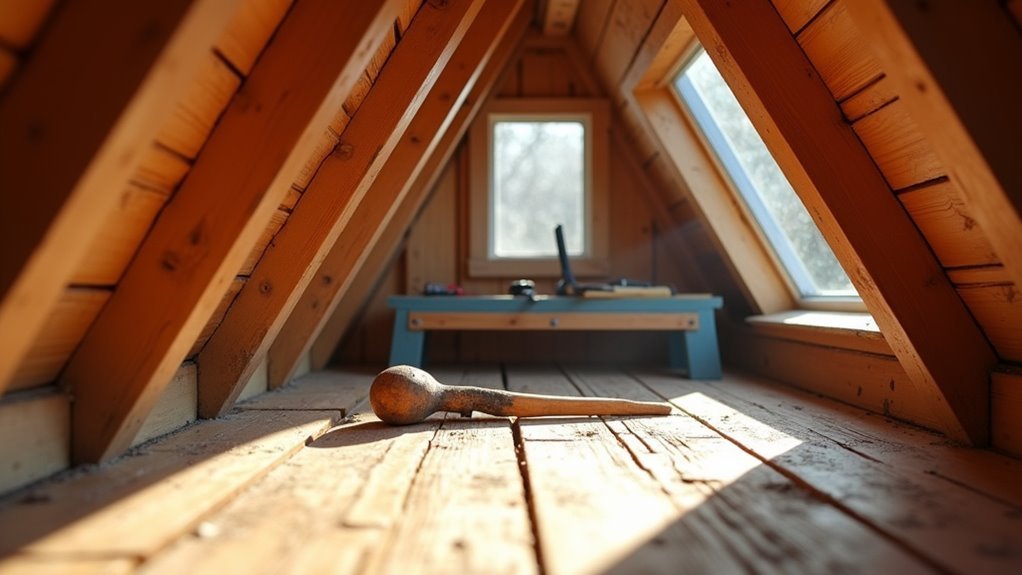
Since wasps can squeeze through gaps as small as 1/4 inch, you’ll need to thoroughly inspect your attic and exterior walls for any potential entry points.
Look for cracks around windows, doors, and soffits that could allow these pests inside. Pay special attention to areas where electrical wires or plumbing enter your home, as these create common access points.
Once you’ve identified openings, seal them immediately using high-quality caulk or weather stripping.
Install stainless steel insect screens over vents and soffits to maintain proper ventilation while blocking wasp access.
Make inspecting and sealing gaps part of your regular maintenance routine, especially during spring when wasps actively search for nesting sites.
This proactive approach will prevent wasps from establishing colonies in your attic space.
Identify Common Wasp Species in Attics
You’ll encounter several wasp species in your attic, and knowing which ones you’re dealing with can save you from unnecessary danger.
Some species like Mud Daubers are relatively peaceful and won’t attack unless directly threatened, while others like Yellowjackets and Bald-Faced Hornets are highly aggressive and will defend their nests vigorously.
Learning to identify these species by their appearance and nest characteristics helps you determine the safest approach for removal.
Aggressive Vs Peaceful Species
When dealing with wasp infestations in your attic, recognizing the difference between aggressive and peaceful species can mean the difference between a manageable situation and a dangerous encounter.
You’ll want to identify Yellowjackets and Bald-Faced Hornets as your most aggressive threats. Yellowjackets, with their black and yellow markings, will sting repeatedly if you disturb their nests.
Bald-Faced Hornets are equally territorial, sporting distinctive black and white coloring with large, grayish nests.
Paper Wasps represent a more peaceful option—they’ll typically flee rather than attack unless directly provoked. You can spot their umbrella-shaped nests easily.
Mud Daubers are your least concerning species, being generally non-aggressive and actually beneficial for controlling other pests in your attic space.
Visual Identification Methods
Learning to spot these species requires focusing on specific physical characteristics and behavioral patterns.
When conducting visual identification of wasps in attic spaces, look for Yellowjackets’ bright yellow and black markings paired with aggressive behavior around hidden nesting areas.
Paper Wasps display slender bodies with brown and yellow coloring, creating distinctive umbrella-shaped wasp nests in sheltered corners.
Bald-Faced Hornets feature black bodies with white facial markings and construct large, grayish nests in elevated locations.
You’ll notice increased wasp activity around entry points when colonies are established.
Mud Daubers appear with long, narrow bodies near their characteristic mud constructions.
Observing buzzing sounds combined with these visual cues helps confirm wasp presence and guides appropriate removal strategies for your specific situation.
Remove Attractants and Food Sources
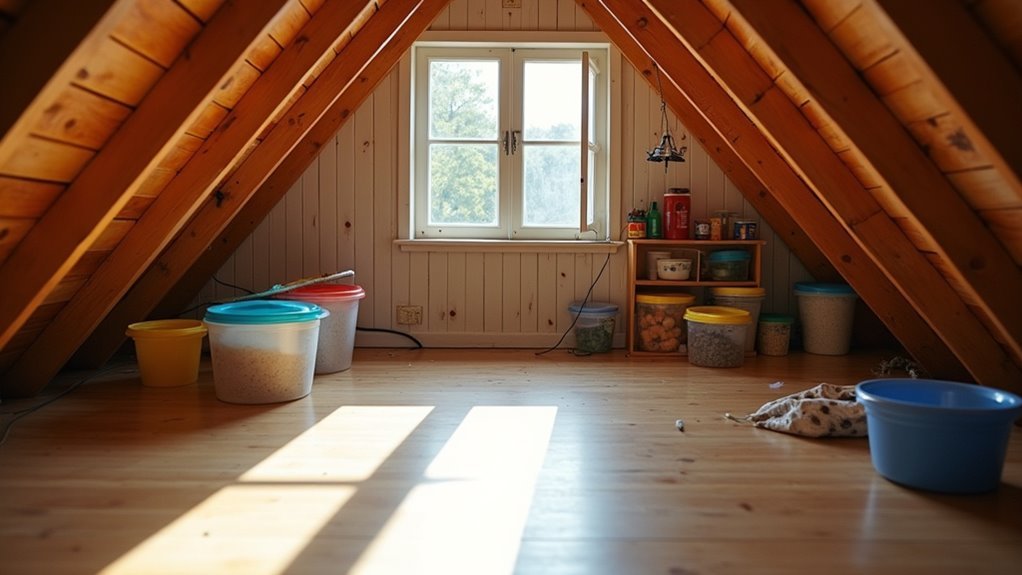
Food sources act as powerful magnets that draw wasps toward your attic, making elimination of these attractants your first line of defense.
Keep food and sweet beverages tightly covered, preventing wasps from detecting these powerful lures. Secure garbage cans with tight-fitting lids to contain food waste that attracts these pests.
Tightly sealed food containers and garbage cans eliminate the sweet scents that act as wasp magnets.
Clean up organic debris like fallen fruits and vegetables from your yard immediately. Never leave sugary drinks exposed, as they’re irresistible to foraging wasps.
Remove pet food from outdoor areas where wasps build search patterns for future visits. Seal any cracks around your home’s exterior to block access routes.
Deploy natural repellents like peppermint oil in potential nesting areas to deter wasps from establishing colonies near food sources.
Use Natural Deterrents and Repellents
Beyond securing potential food sources, natural wasp repellent methods offer another powerful weapon in your wasp control arsenal.
Peppermint oil works exceptionally well—apply it to surfaces around your attic to prevent wasps from nesting, as they can’t tolerate its strong scent.
Place cucumber slices in active areas since wasps dislike their smell.
Create a spray using vinegar and water to make your attic environment unpleasant for these pests.
Plant herbs like mint, basil, and thyme around your home’s perimeter as natural wasp deterrents.
Set up homemade traps using plastic bottles filled with sugar water to attract and eliminate wasps, effectively reducing their population before they reach your attic space.
Install Preventive Barriers and Traps
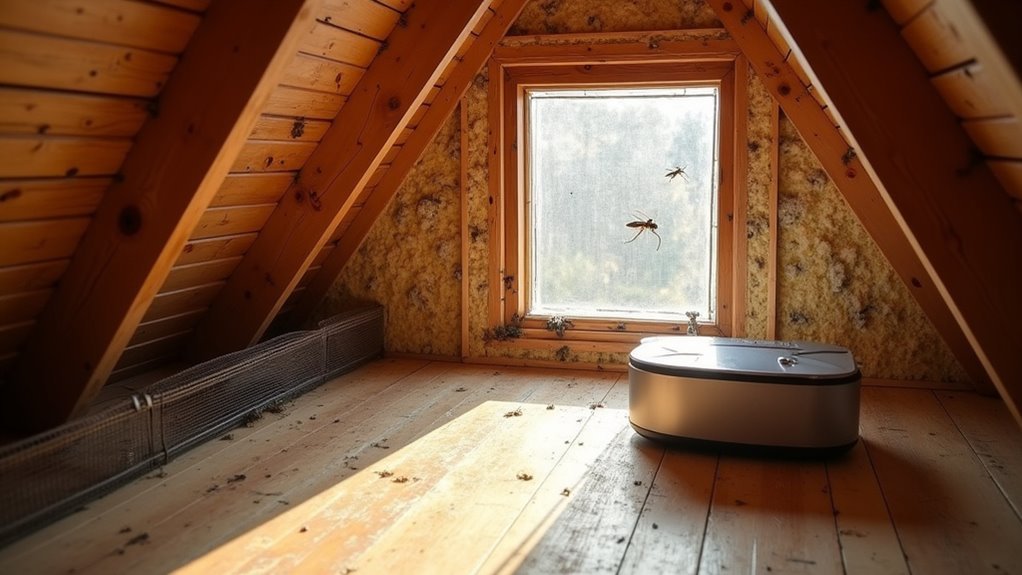
You’ll want to create physical barriers that stop wasps from reaching your attic in the first place.
Start by sealing every gap and crack around your soffit areas, then install heavy-gauge stainless steel insect screens along the bottom of soffit materials to maintain ventilation while blocking wasp entry.
Set up both homemade and commercial wasp traps in strategic locations to capture wasps before they can establish nests in your attic space.
Seal Entry Points
One of the most effective strategies for keeping wasps out of your attic involves creating a fortress-like barrier by systematically sealing every potential entry point.
You’ll need to inspect your home’s foundation, siding, and roof thoroughly for small holes and cracks that wasps can exploit. Use quality caulk to fill gaps around wall-roof joints, windows, and doors to prevent these pests from entering.
Don’t overlook installing heavy-gauge stainless steel screens over soffits—they’ll block wasps while maintaining proper ventilation.
Additionally, set up wasp traps with sugar water as backup protection in your attic area.
Maintain strict cleanliness by removing any food sources or sweet-smelling items that could attract these unwanted visitors to your space.
Install Wasp Traps
While sealing entry points forms your primary defense, installing wasp traps creates an additional protective layer that actively captures these pests before they can establish colonies.
You can install wasp traps using commercial options or create homemade versions with plastic bottles filled with sugar water. Since wasps are attracted to sweet smells, invert the bottle top to form a funnel and tape securely.
Place traps near attic entrances and entry points strategically. Monitor traps regularly and dispose of captured wasps safely. Multiple traps help prevent wasp infestation more effectively.
If wasps already established colonies, contact a pest control company to remove the nest professionally before installing traps. Keep your home clean to reduce additional attractants.
Use Insect Screens
Installing insect screens over soffits and vents creates a reliable physical barrier that blocks wasps from entering your attic while maintaining essential airflow.
Choose stainless steel, heavy-gauge screens that resist chewing and withstand outdoor conditions effectively. These screens prevent wasps from establishing nests in your attic by blocking key entry points.
You’ll need to inspect screens regularly for tears or gaps that could compromise their effectiveness. Seal all openings around the barrier with caulk to eliminate potential access routes.
Consider positioning wasp traps near these entry points as an additional defense layer. Proper screen installation considerably reduces wasp infiltration while preserving necessary ventilation.
This preventive approach protects your attic space from infestations before they develop into serious problems.
Safely Remove Existing Nests
Before attempting nest removal, you’ll need to identify the wasp species in your attic since different types exhibit varying levels of aggression and require specific removal approaches.
Once identified, don protective clothing including long sleeves, pants, gloves, and a face mask before proceeding.
To safely remove nests, apply wasp spray or insecticides during dusk or dawn when wasps are least active.
Target wasp nests during dusk or dawn hours when these insects are naturally less active and aggressive for safer removal.
Alternatively, mix two tablespoons of dish soap with water in a spray bottle and spray directly onto the nest—the soap clogs their breathing pores, killing them quickly.
After confirming all wasps are dead, carefully remove the nest.
Seal any entry points in your attic to prevent future infestations and maintain your wasp-free environment.
Maintain Regular Attic Inspections
Twice yearly attic inspections form your most effective defense against wasp infestations, allowing you to spot potential problems before they escalate into major issues.
You’ll want to maintain regular attic inspections during early spring and late summer when wasp activity peaks.
During each inspection, focus on these critical areas:
- Entry points – Check for small holes or cracks where wasps can access your attic space.
- Signs of activity – Listen for buzzing noises and look for dead wasps or visible nests.
- Stored items – Guarantee sweet-smelling materials are properly sealed to avoid attracting wasps.
Document your findings to track changes over time.
This documentation helps pest control professionals understand any developing infestation patterns if professional intervention becomes necessary.
Frequently Asked Questions
How Do You Get Rid of Wasps in Tight Spaces?
You’ll need to locate the nest first, then spray wasp killer directly at the entrance during evening hours while wearing protective gear. Remove the nest afterward and seal entry points.
What Actually Works to Keep Wasps Away?
You’ll find sealing entry points with caulk works best for prevention. Install wasp-specific traps and apply peppermint oil around nesting areas. Don’t skip regular inspections – they’ll catch problems before infestations establish.
How Often Do You Need to Spray Peppermint Oil to Keep Wasps Away?
You’ll need to spray peppermint oil every few days to maintain its wasp-repelling effectiveness. Reapply after rain or high humidity since moisture reduces the oil’s potency, especially during peak wasp season.
How Do You Get Rid of Wasps if You Can’t Find the Nest?
Monitor wasp flight patterns during daylight to track their entry points. Set sugary bait traps to reduce numbers. Spray wasp-specific insecticide around suspected areas at dusk when they’re less active, or contact professionals.
In Summary
You’ve got the tools to create a wasp-free attic space. Start by sealing gaps and removing attractants, then use natural deterrents and install barriers. If you discover existing nests, remove them safely or call professionals. Don’t forget to inspect your attic regularly to catch problems early. With consistent effort and these preventive measures, you’ll maintain a wasp-free environment year-round.


Leave a Reply