

You should seal foundation cracks because mice can squeeze through openings as small as a dime, turning tiny vulnerabilities into major health hazards. These rodents carry over 35 diseases including hantavirus and salmonella, while their gnawing damages electrical wires and weakens structural components. Sealing cracks with weather-resistant materials like silicone caulk and steel wool prevents costly infestations before they start. The techniques below will show you exactly how to protect your home year-round.
How Mice Exploit Foundation Vulnerabilities
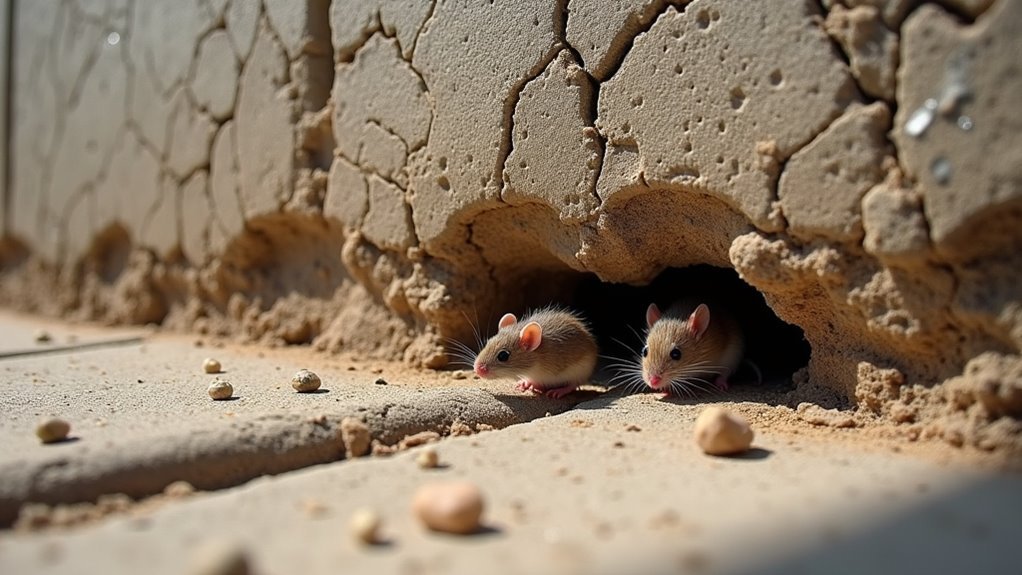
Mice possess an extraordinary ability to squeeze through foundation cracks as small as a dime, turning even the tiniest structural gaps into highways for home invasion.
These persistent rodents actively seek out your home’s weakest points, particularly targeting gaps around utility lines and unsealed pipe openings. They’ll exploit any foundation vulnerability they discover, using their flexible bodies to navigate through spaces you’d never imagine possible.
Once these entry points for pests are established, mice follow pheromone scent trails that make your foundation cracks even more attractive to future invaders.
They’re methodical in their approach, systematically testing every potential access point until they find success.
When you seal your home properly, you’re eliminating these pathways and forcing mice to look elsewhere for shelter and nesting opportunities.
Understanding Mouse Entry Point Behavior
When temperatures drop and outdoor food sources become scarce, your home transforms into an irresistible target for opportunistic rodents seeking warmth and sustenance.
Mice exploit surprisingly small openings, squeezing through foundation cracks as tiny as a dime. They’ll systematically investigate gaps around utility lines and plumbing entry points, testing each potential pathway.
Once these persistent invaders discover access routes, they’ll establish nests in your insulation and wall cavities.
What’s particularly concerning is their use of pheromone trails—previous infestations create chemical roadmaps that guide future intruders directly to the same entry points.
This behavior makes it essential to seal every crack and crevice. Effective pest control solutions start with understanding that mice don’t randomly enter homes; they follow established patterns and exploit even the tiniest vulnerabilities.
Common Foundation Crack Locations Mice Target
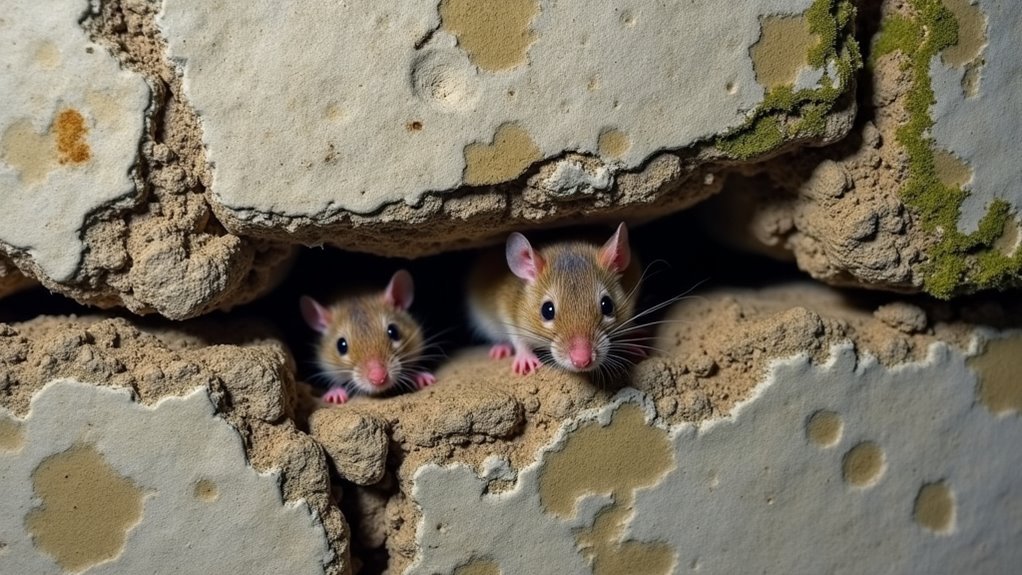
Foundation vulnerabilities cluster around predictable locations that mice have learned to exploit over generations.
You’ll find these persistent rodents targeting specific weak spots where your home’s defenses are naturally compromised.
The most common foundation cracks that create entry points for mouse infestation include:
- Concrete-to-soil interfaces – Where your foundation meets the ground, settlement and weather create gaps that mice easily navigate through.
- Utility line penetrations – Plumbing and electrical conduits entering your foundation often have inadequate sealing, providing direct access routes.
- Deteriorating mortar joints – Brick foundations develop weakened mortar over time, creating perfect-sized openings for mice to squeeze through.
These vulnerabilities become especially problematic during fall and winter when mice actively seek indoor warmth and food sources.
Health Risks Associated With Mouse Infestations
Beyond the structural damage and property concerns, rodent invasions pose serious health threats that can affect your entire household. Mice carry over 35 diseases, including hantavirus and salmonella, transmitting them through droppings, urine, and saliva. These health risks extend beyond direct disease transmission—exposure to mouse waste can trigger asthma and allergies, especially in children with respiratory conditions.
| Transmission Method | Health Impact |
|---|---|
| Droppings/Urine | Disease spread, respiratory issues |
| Food contamination | Foodborne illnesses |
| Presence stress | Anxiety, mental health effects |
The CDC emphasizes that rodents create significant health risks, particularly in food preparation areas. Contaminated surfaces and stress from infestations compound these dangers. To prevent rodents and protect your family’s health, you must seal cracks in your foundation immediately.
Property Damage Caused by Mice Intrusions
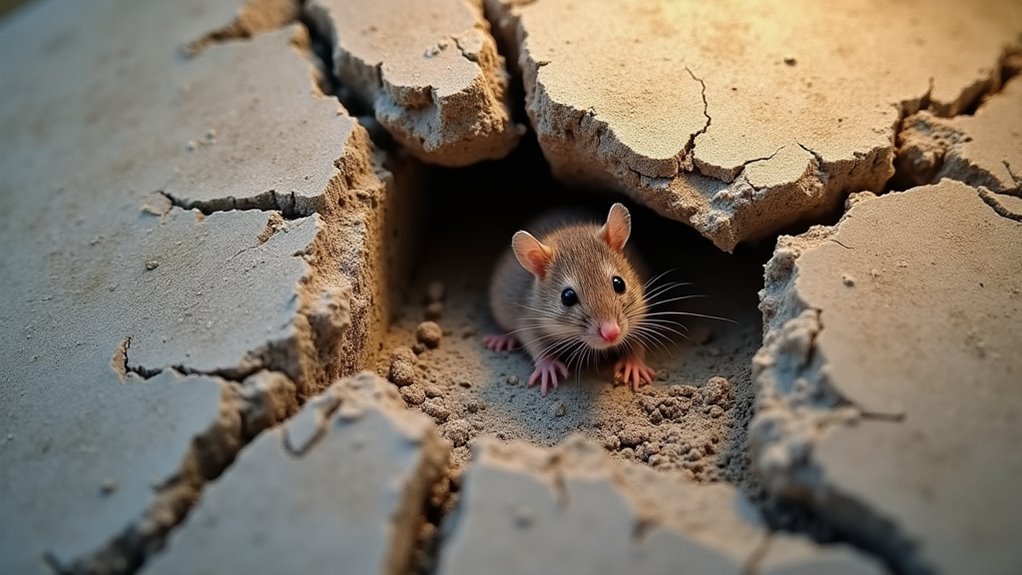
Once mice establish themselves in your home, they’ll release a destructive force that can compromise your property’s safety and value.
Mice don’t just invade your home—they unleash a cascade of property damage that threatens both safety and financial investment.
These relentless invaders create costly damage that extends far beyond simple inconvenience.
Mouse invasions cause three primary types of property damage:
- Electrical hazards – Mice gnaw through wires, creating fire risks and requiring expensive electrical repairs.
- Structural deterioration – Their tunneling weakens insulation, drywall, and wooden components throughout your home’s framework.
- Food contamination – Droppings and urine contaminate storage areas, forcing you to discard groceries and sanitize spaces.
You can’t afford to ignore these destructive behaviors.
Seal foundation cracks immediately to prevent entry points before minor intrusions escalate into major infestations that multiply repair costs exponentially.
Essential Tools and Materials for Foundation Sealing
You’ll need specific tools and materials to effectively seal foundation cracks and block mouse entry points.
Steel wool serves as an excellent reinforcement material that mice can’t chew through, making it perfect for stuffing into gaps before applying sealants.
Choosing the right caulk depends on your crack size—silicone caulk works for small gaps while expanding foam handles larger openings.
Steel Wool Applications
Steel wool stands out as one of the most versatile materials you’ll reach for when sealing foundation cracks against mouse invasions. Its unique ability to expand and contract with temperature changes makes it ideal for maintaining tight seals that prevent pests from entering your home.
When applying steel wool to seal foundation cracks, follow these essential steps:
- Stuff tightly into cracks – Pack steel wool firmly into gaps, remembering mice squeeze through dime-sized holes.
- Combine with sealants – Apply caulk or expanding foam over steel wool for thorough barriers.
- Inspect regularly – Check seals periodically since steel wool can deteriorate or become dislodged.
You’ll need to identify all entry points around pipes and vents during your foundation inspection to guarantee extensive protection.
Caulk Selection Guide
Selecting the right caulk determines whether your foundation sealing efforts will withstand years of weather exposure and persistent rodent attempts.
Your caulk selection guide should prioritize silicone-based or polyurethane formulations that deliver flexibility and strong adhesion for outdoor applications. These materials handle temperature fluctuations and moisture exposure effectively to seal foundation cracks against mouse invasions.
Choose products labeled “pest-resistant” or “rodent-proof” since these formulations deter mice from chewing through sealants.
Clean and dry crack areas before application—caulk won’t adhere properly to dirty or wet surfaces. Use a caulk gun for precise application that fills gaps completely.
Allow the manufacturer’s recommended curing time, typically 24 hours, ensuring your seal creates an impenetrable barrier against determined rodents.
Step-by-Step Foundation Crack Inspection Process
Before you can effectively seal foundation cracks against mouse invasions, conducting a thorough inspection is essential to identify all potential entry points.
Start by walking your foundation’s perimeter, examining walls and utility openings for visible damage. Use a flashlight to illuminate darker corners and inaccessible areas where mice might enter.
Follow this systematic approach:
- Measure every crack – Even dime-sized openings allow mouse entry, so document all findings with precise measurements.
- Focus on utility penetrations – These common entry points around plumbing and electrical lines require extra attention.
- Photograph everything – Create detailed documentation to prioritize sealing efforts and track changes.
This thorough inspection helps you seal any cracks effectively, potentially saving money on future pest control services by preventing infestations before they start.
Effective Sealing Techniques for Different Crack Types
Once you’ve identified all cracks during your inspection, choosing the right sealing technique becomes your next priority.
For small cracks and gaps less than 1/4 inch, apply silicone caulk that offers flexibility and durability while blocking moisture and pests.
Larger foundation cracks greater than 1/4 inch require expanding foam sealant to effectively block access and provide insulation against temperature fluctuations.
When you need to seal any gaps around pipes or utility lines, use steel wool or copper mesh since mice can’t chew through these materials.
These effective sealing techniques must use weather-resistant materials to withstand outdoor conditions and maintain long-term effectiveness.
Remember to regularly inspect and maintain all sealed areas, as wear and tear can create new entry points if you don’t address them promptly.
Weather-Resistant Materials That Block Mouse Entry
When harsh weather conditions threaten your foundation sealing efforts, you’ll need materials that can withstand moisture, temperature changes, and UV exposure while maintaining their mouse-blocking properties.
Effective foundation sealing demands materials that resist harsh weather while maintaining their ability to block mouse entry points year-round.
These weather-resistant materials effectively seal entry points and prevent mouse invasions year-round.
Three top-performing materials that’ll protect your foundation include:
- Silicone caulk – Remains flexible and adheres to various surfaces, creating long-lasting barriers against small gaps.
- Expanding foam – Hardens and expands to fill larger cracks, forming solid seals mice can’t chew through.
- Copper mesh – Provides sturdy protection around pipes and vents, preventing rodents from gnawing access points.
Regular inspections guarantee these materials maintain their effectiveness over time.
Weather-resistant solutions require periodic maintenance to address wear and prevent new vulnerabilities that could compromise your mouse-proofing efforts.
Seasonal Timing for Foundation Crack Repairs
You’ll want to tackle foundation crack repairs during fall when mice actively search for winter shelter, making this the most critical time for prevention.
Winter’s freeze-thaw cycles create new vulnerabilities in your foundation, so you’ll need to stay vigilant for fresh cracks that can appear throughout the cold months.
Your timing strategy should focus on completing major repairs before temperatures drop and conducting regular winter inspections to catch new damage early.
Fall Preparation Strategies
As temperatures drop and autumn arrives, mice begin their desperate search for warm shelter, making fall the most critical time to seal foundation cracks around your home.
You’ll want to act quickly before rodents establish winter hideouts in your property.
Here’s your essential fall preparation strategy:
- Conduct a thorough inspection of the foundation of your home, looking for cracks, gaps, and openings larger than a quarter-inch.
- Gather weather-resistant materials like expanding foam and silicone caulk that’ll withstand freezing temperatures throughout winter.
- Prioritize immediate sealing of any discovered entry points to seal your house before mice become desperate for shelter.
This proactive approach saves you from costly pest control expenses and prevents potential property damage from infestations during the harsh winter months ahead.
Winter Vulnerability Periods
Winter brings the most dangerous period for foundation vulnerabilities, with freezing temperatures creating a perfect storm of structural weakness and rodent desperation.
You’ll face the highest risk during December through February when mice actively seek warm shelter and foundation cracks expand from temperature fluctuations.
Your home’s foundation becomes increasingly vulnerable as freeze-thaw cycles widen existing gaps, creating larger entry points for desperate rodents.
Small cracks you ignored in fall can double in size during harsh winter months, turning minor vulnerabilities into major access routes.
To prevent mice from exploiting these seasonal weaknesses, you must act before temperatures drop consistently below freezing.
Once winter arrives, repairs become difficult and mice have already established indoor territories through compromised foundation cracks.
Long-Term Maintenance to Prevent Future Cracks
While sealing cracks provides immediate protection against mouse invasions, establishing a consistent maintenance routine guarantees your foundation remains impervious to future rodent entry points.
Proactive foundation maintenance prevents costly repairs while maintaining effective pest control barriers.
Your long-term maintenance strategy should include:
- Regular Inspections – Examine your foundation quarterly, especially after heavy rain or freezing conditions when new cracks typically develop.
- Professional Annual Assessments – Schedule yearly evaluations with foundation specialists who’ll identify emerging issues before they become mouse highways.
- Drainage System Optimization – Install and maintain gutters, downspouts, and proper grading to redirect water away from your foundation.
Apply high-quality concrete sealants immediately when you discover new cracks.
Maintain landscaping that prevents moisture accumulation by keeping soil levels below your foundation line, ensuring sealing cracks becomes preventive rather than reactive.
Professional Vs DIY Foundation Sealing Approaches
When deciding between professional and DIY foundation sealing, you’ll need to weigh cost against effectiveness and long-term reliability.
DIY sealing offers immediate cost savings, with materials like caulk, expanding foam, and steel wool costing $5 to $20 each. However, you might miss critical entry points that trained professionals would identify during detailed inspections.
Professional pest control services, such as those from Texas A-1 Pest Control, cost $200 to $600 but provide specialized equipment, superior materials, and thorough assessments.
They’ll locate hidden cracks and gaps you’d likely overlook. While DIY methods can work for visible, smaller cracks, they often lack durability and require frequent maintenance.
Professionals provide consistent, long-lasting protection and handle ongoing inspections more effectively than most homeowners can manage independently.
Frequently Asked Questions
How to Seal Foundation to Keep Mice Out?
You’ll need to inspect your foundation for cracks and gaps, then seal small openings with caulk or expanding foam. Use steel wool for larger gaps and apply weatherstripping around doors and windows.
Can Mice Get in Through Foundation Cracks?
Yes, mice can squeeze through foundation cracks as small as a dime. You’ll find these tiny openings provide easy access routes into your home, where mice seek warmth and shelter for nesting.
How Do You Seal Gaps to Keep Mice Away?
You’ll seal gaps effectively by stuffing steel wool into holes around pipes, applying caulk to wall cracks, installing weatherstripping on doors and windows, and regularly inspecting seals for wear.
Do Pest Control Seal Cracks?
Yes, you’ll find that pest control services seal cracks as part of their extensive mouse prevention strategy. They’ll use durable materials like caulk, expanding foam, and steel wool to block rodent entry points effectively.
In Summary
You’ll protect your home’s integrity and your family’s health by sealing foundation cracks before mice can exploit them. Don’t wait until you’ve spotted droppings or heard scratching sounds—take preventive action now. Choose weather-resistant materials that’ll withstand seasonal changes, and establish a regular inspection routine. Whether you tackle the job yourself or hire professionals, you’re making a smart investment that’ll save you from costly repairs and health hazards down the road.


Leave a Reply