
You can seal attic entry points against pests by identifying vulnerable areas like roof vents, soffit gaps, chimney openings, and utility penetrations. Use ½ inch hardware cloth, heavy-duty wire cutters, and a staple gun to secure barriers over vents and openings. Apply silicone caulk or expandable foam to seal smaller gaps around pipes and foundation cracks. Install chimney caps and reinforce attic access hatches with weather stripping. The thorough guide below covers advanced techniques for complete pest protection.
Identifying Common Attic Entry Points for Pests
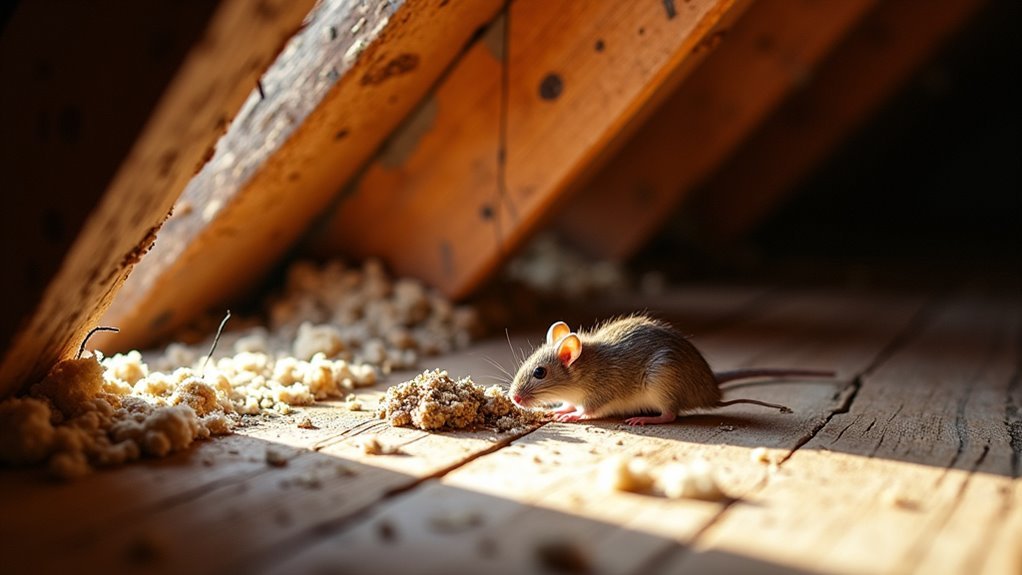
Vigilance in spotting vulnerable areas around your attic prevents costly pest infestations before they start.
You’ll find pest entry points concentrated around specific structural elements that rodents exploit for access. Check gaps around roof vents, which create obvious openings that pests can squeeze through easily.
Examine your eaves and soffit areas carefully, as these common entry points deteriorate over time, especially in older homes.
Don’t overlook cracks in your chimney or unprotected chimney tops that provide direct routes inside.
Inspect openings around attic access hatches where loose-fitting covers create gaps.
Look for utility line penetrations where pipes or wires enter your attic, creating small but significant openings.
Conducting regular inspections of these vulnerable spots helps you identify problems before pests establish themselves in your home.
Essential Tools and Materials for Sealing Attic Openings
You’ll need the right tools and materials to effectively seal your attic against unwanted pests.
Start with ½ inch hardware cloth as your primary barrier material, paired with heavy-duty wire cutters for precise cutting and a reliable staple gun for secure installation.
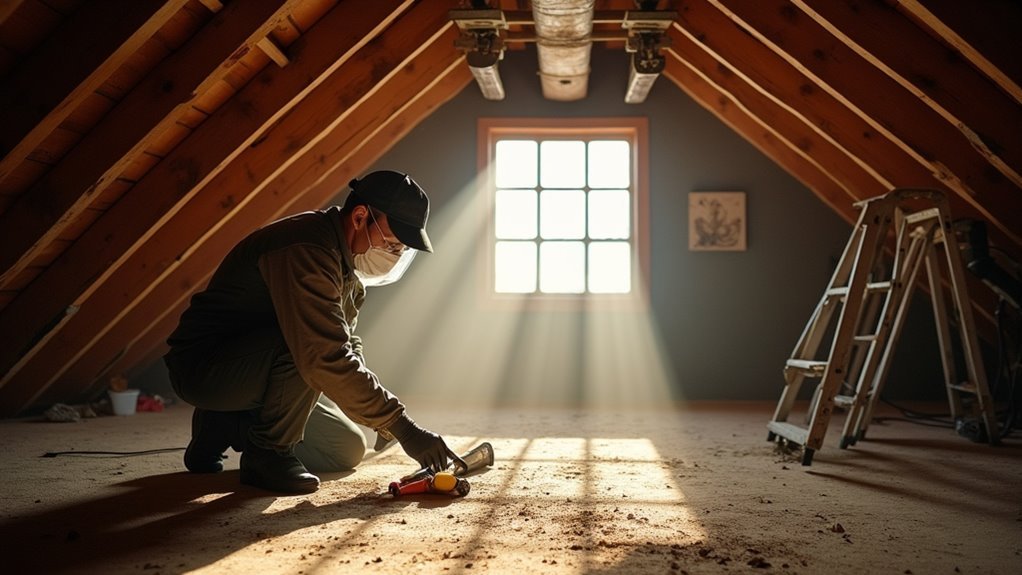
Don’t forget essential safety gear including heavyweight gloves, eye protection, and a bump cap to protect yourself while working in cramped attic spaces.
Hardware Cloth Selection
Hardware cloth stands as one of the most effective barriers against pest intrusion in your attic. This strong wire mesh material creates an impenetrable seal while maintaining proper ventilation throughout your space.
When selecting the right hardware cloth for your project, consider these essential factors:
- Mesh Size – Choose openings of ½ inch or smaller to block even the tiniest pests while preserving airflow.
- Material Quality – Opt for galvanized or stainless steel versions that resist rust and corrosion over time.
- Durability Rating – Select heavy-duty options that withstand weather exposure and maintain structural integrity.
- Coverage Area – Measure all attic openings beforehand to determine the total square footage you’ll need.
The right hardware cloth selection guarantees long-lasting protection without compromising your attic’s essential ventilation requirements.
Cutting Tool Requirements
Three essential cutting tools form the foundation of any successful attic sealing project. Heavy-duty wire cutters are your primary weapon for cutting through hardware cloth and screen material efficiently. These robust tools handle the thick gauge wire used in quality pest barriers without compromising the material’s integrity.
Utility scissors serve as your precision instrument for detailed work and trimming. They’re perfect for making clean cuts around irregular openings and fine-tuning material edges. Keep a sharp pair dedicated to your sealing projects.
Your cutting tool requirements also include backup blades for both tools. Hardware cloth can dull cutting edges quickly, so you’ll want replacements ready.
These tools guarantee you’ll cut materials accurately, creating tight-fitting barriers that effectively block pest entry points throughout your attic space.
Safety Equipment Essentials
Protecting yourself while working in cramped attic spaces requires the right safety equipment before you begin any sealing project.
You’ll face potential hazards from low-hanging beams, debris, and sharp materials that can cause serious injuries. Having a partner assist you isn’t just helpful—it’s essential for maintaining safety while accessing difficult areas.
Essential safety equipment includes:
- Eye protection – Safety glasses or goggles shield your eyes from dust, insulation fibers, and debris.
- Heavy-duty gloves – Protect your hands from sharp edges on hardware cloth and potential splinters.
- Hard hat – Prevents head injuries from low beams and protruding nails in tight spaces.
- Non-slip footwear – Provides stable footing on uneven surfaces and prevents dangerous falls.
Don’t compromise on safety equipment when working at heights.
Securing Roof Vents and Exhaust Fan Openings
While roof vents and exhaust fan openings serve essential ventilation purposes, they often create the largest and most accessible entry points for pests seeking shelter in your attic. Securing these vulnerable areas requires strategic pest control measures that maintain proper airflow.
| Opening Type | Protection Method | Maintenance Frequency |
|---|---|---|
| Roof vents | Metal mesh or grates | Every 6 months |
| Exhaust fan openings | Tight-fitting covers | Monthly inspection |
You’ll need to install protective barriers over these openings while ensuring ventilation isn’t compromised. Regular inspections help identify worn screens or damaged covers that could undermine your efforts. Professional installation enhances long-term effectiveness, providing durable pest exclusion. Remember, damaged screens compromise your entire pest prevention system, so prompt repairs are essential.
Blocking Gaps in Soffits and Eaves
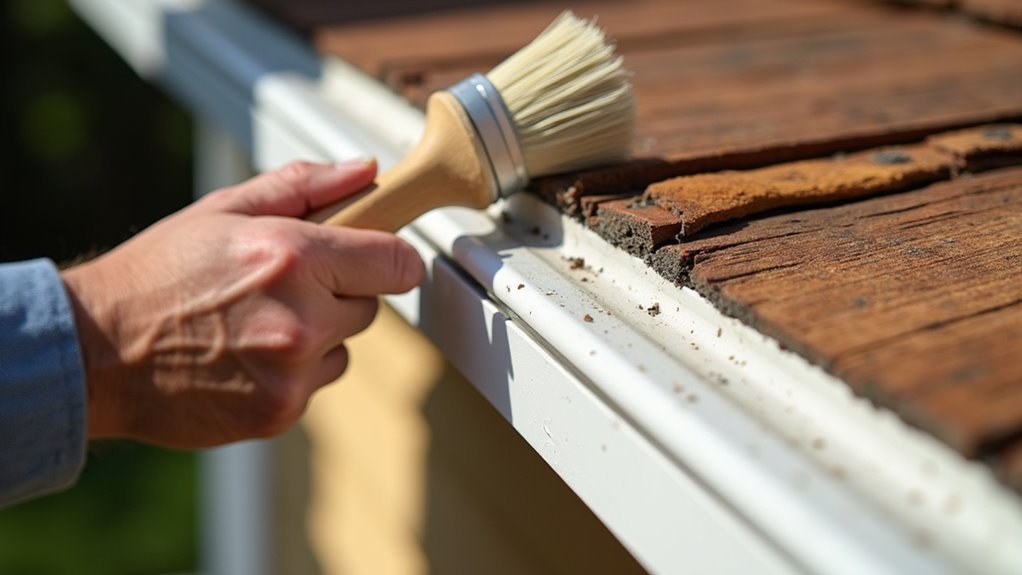
You’ll need to examine your soffits and eaves carefully since these areas often develop gaps that provide easy access for rodents and insects seeking attic entry.
Several sealing materials can effectively close these vulnerabilities, including silicone caulk for smaller gaps, expandable foam for irregular spaces, and metal flashing for larger openings requiring durable protection.
While you can tackle some soffit repairs yourself, professional installation guarantees thorough sealing that maintains your home’s energy efficiency while keeping pests out.
Identifying Soffit Vulnerabilities
Since soffits and eaves create natural pathways into your attic space, inspecting these areas should be your first priority when pest-proofing your home. Gaps in soffits develop from weather damage, settling, and normal wear over time.
You’ll need to examine these vulnerable spots systematically for effective pest prevention.
Focus your inspection on these key vulnerability areas:
- Junction points where soffit panels meet fascia boards
- Corner connections where two soffit sections intersect
- Ventilation screens that may have torn mesh or loose fittings
- Damaged panels showing cracks, holes, or separation from mounting hardware
Check for small openings that might seem insignificant but can accommodate mice, insects, and other pests.
Even quarter-inch gaps provide sufficient entry space for many unwanted invaders seeking shelter in your attic.
Sealing Material Options
Three primary material categories can effectively seal soffit and eave gaps against pest intrusion. High-quality sealants like silicone or expandable foam work best for filling smaller gaps and cracks. These sealing materials create durable barriers that prevent rodents and insects from entering your attic space.
For larger openings, metal mesh or hardware cloth provides robust protection against birds and bigger pests while maintaining proper ventilation.
You’ll need weather-resistant materials that withstand seasonal changes without deteriorating. Silicone sealants offer excellent longevity, while expandable foam adapts to irregular gap shapes. Metal barriers require galvanized or stainless steel construction to prevent rust and corrosion.
Professional sealing services can recommend ideal material combinations for your specific pest entry points, ensuring thorough protection with appropriate application techniques for maximum effectiveness.
Professional Installation Benefits
Professional pest control specialists bring specialized expertise that transforms soffit and eave sealing from a challenging DIY project into an all-encompassing protection system.
Their advanced techniques guarantee every vulnerable entry point receives proper attention, delivering superior results that DIY methods can’t match.
Key advantages of professional installation include:
- Expert gap identification – Professionals spot hidden vulnerabilities you’ll likely miss during self-inspection
- Premium sealing materials – High-quality products create durable barriers that maintain insulation integrity and energy efficiency
- Advanced sealing techniques – Specialized methods for sealing cracks provide long-lasting pest protection
- Ongoing maintenance support – Regular professional inspections reinforce vulnerable areas before problems develop
This investment prevents costly attic damage while guaranteeing your home stays pest-free for years.
Installing Chimney Caps and Screens
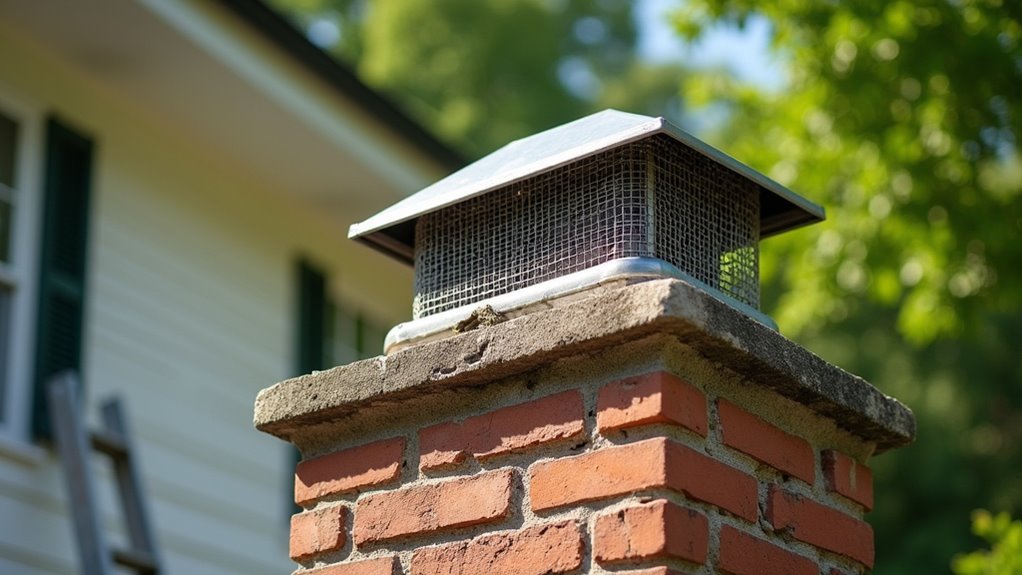
While birds and rodents often view your chimney as an ideal nesting spot, you can effectively block their access by installing a properly fitted chimney cap. These protective barriers prevent pests from entering while allowing smoke to exit safely, maintaining proper ventilation throughout your home.
Choose a chimney cap or screen made from durable materials like stainless steel or galvanized steel, which resist rust and corrosion over time. Look for caps that can block entry points as small as a quarter to prevent pests from squeezing through tiny gaps.
You’ll want professional installation to guarantee a secure fit without compromising gaps that pests could exploit.
Don’t forget to schedule regular inspections of your chimney cap to identify any damage or wear that could reduce its effectiveness against unwanted wildlife intrusions.
Sealing Pipe and Utility Line Penetrations
Where pipes and utility lines enter your attic, small gaps often create perfect highways for rodents, insects, and other unwanted visitors to infiltrate your home.
These penetrations represent critical vulnerabilities that demand immediate attention to prevent costly infestations.
To effectively seal these rodent entry points:
- Apply caulking or expanding foam to fill small gaps around pipes, guaranteeing complete coverage of minor openings.
- Stuff steel wool into larger gaps before sealing to create a physical barrier that rodents can’t chew through.
- Install escutcheon plates around pipe penetrations for enhanced protection and a finished appearance.
- Conduct regular inspections to identify wear or damage that could create new vulnerabilities.
Professional sealing services can guarantee all gaps around pipes receive proper treatment with pest-resistant materials for maximum effectiveness.
Addressing Foundation Cracks Near Attic Access
Foundation cracks near your attic access create highways for pests to enter your home, so you’ll need to locate these vulnerabilities and assess their severity.
You can choose from several sealing materials depending on crack size—silicone caulk works for hairline fractures while expandable foam or concrete patch handles larger gaps.
Regular inspection and maintenance of these sealed areas guarantees your pest barrier remains effective over time.
Identifying Crack Locations
Three key areas around your attic access point demand careful inspection for foundation cracks that can serve as pest highways into your home.
You’ll need to systematically examine these vulnerable zones where the hatch meets wall structures, as even hairline fractures can become major entry points for unwanted invaders.
Critical Inspection Areas:
- Hatch perimeter edges – Check where the access panel connects to surrounding walls, focusing on corner joints and mounting hardware gaps.
- Foundation wall surfaces – Examine vertical and horizontal surfaces near attic access for soil movement or water damage cracks.
- Dimly lit corners – Use a flashlight to illuminate hidden areas where shadows typically conceal foundation damage.
- Floor-to-wall connections – Inspect the junction where foundation walls meet flooring, as these spots often develop settlement cracks you’ll need to seal.
Sealing Material Options
Material selection plays an essential role in creating effective barriers against pest infiltration through foundation cracks near your attic access point.
Your sealing material options depend on crack size and severity. For small gaps, use silicone-based caulk, which provides flexibility and moisture resistance.
Expanding foam works best for larger cracks, expanding to fill voids completely and deterring pest entry effectively.
When dealing with significant structural damage, concrete patching compounds offer robust, long-lasting repairs.
You’ll need to repair or replace deteriorated materials during your thorough inspection process.
Choose pest-resistant sealing materials whenever possible to enhance repair effectiveness and prevent future infestations.
Regular inspections help you identify new cracks early, allowing timely intervention with appropriate sealing solutions.
Inspection and Maintenance
Once you’ve sealed existing cracks, establishing a consistent inspection routine becomes essential for maintaining your pest barrier’s effectiveness.
Foundation cracks near attic access points require regular monitoring since they’re prime locations for pest entry. Even small gaps can compromise your home’s defense against rodents and insects.
Your maintenance schedule should include these critical steps:
- Monthly visual inspections of all sealed areas to identify new cracks or deteriorating seals
- Immediate repair of small gaps using silicone-based caulk or expandable foam for larger openings
- Professional assessment for significant foundation cracks requiring concrete patching or specialized sealing
- Preventive maintenance of eroded foundation areas to maintain structural integrity and reduce pest attraction
Proactive inspection prevents minor issues from becoming major pest entry points.
Reinforcing Attic Access Hatches and Doors
While attic access points provide necessary entry for maintenance and storage, they often represent the weakest links in your home’s pest defense system.
You’ll need to check these hatches regularly for gaps or worn seals that rodents can exploit. Install weather stripping around edges to create tighter barriers against unwanted visitors.
Upgrade your security by adding locking mechanisms to deter both unauthorized entry and persistent pests.
During inspections, look for damage or deterioration that creates vulnerabilities in your defense. Use high-quality sealants or foam insulation to fill any openings around the access area and effectively block pest entry.
These reinforcement measures transform your attic access from a pest highway into an impenetrable barrier while maintaining functionality.
Repairing Holes in Siding and Roof Edges
Even the smallest cracks in your home’s exterior siding create superhighways for determined pests seeking attic access.
You’ll need to conduct thorough inspections, checking for signs of wear that compromise your home’s protective barrier. Don’t overlook gaps in the foundation, as these often connect to attic spaces through wall cavities.
When repairing holes, follow these essential steps:
- Inspect systematically – Check all siding sections and roof edges for openings
- Choose appropriate materials – Use caulk, patches, or specialized siding repair products
- Focus on roof edges – Seal gaps where rooflines meet walls to block rodent entry
- Ensure durability – Apply weather-resistant materials that’ll withstand seasonal changes
Professional installation provides superior long-term protection, ensuring your sealing efforts remain effective against persistent pests.
Maintaining Your Attic Sealing System
Your newly sealed attic won’t stay pest-proof without consistent maintenance efforts.
Regularly inspect your sealing system for gaps or cracks that could allow pest entry. When you discover new openings, fill them promptly with high-quality sealants like silicone-based caulk or expanding foam.
Pay special attention to attic vents and covers during your checks. Confirm they’re intact and damage-free, as compromised vents create easy access points for unwanted visitors.
Don’t forget about attic access hatches – these often-overlooked entry points need proper sealing and maintenance too.
Schedule annual professional inspections to catch vulnerabilities before they become infestations. A trained eye can spot potential problems you might miss, helping maintain your attic’s pest-resistant barrier year-round.
Frequently Asked Questions
How Do You Seal Attic Entry Points?
You’ll seal attic entry points by installing hardware cloth over vents, caulking gaps around pipes with silicone, covering exhaust fans tightly, maintaining chimney caps, and ensuring access hatches close securely.
How Do You Seal Pest Entry Points?
You’ll identify gaps around your home’s exterior, then seal cracks with steel wool or caulk. Install mesh screens over vents and openings. Use durable materials that pests can’t chew through for lasting protection.
What Can You Put in Your Attic to Keep Pests Away?
You can install metal mesh screens over vents, stuff steel wool around pipes, apply silicone caulk to seal cracks, secure access hatches properly, and maintain a clean, clutter-free attic environment.
How to Seal Roach Entry Points?
You’ll need to caulk cracks around access points, install mesh screens on vents, replace worn weather stripping, fill utility line gaps with foam, and eliminate clutter that provides hiding spots.
In Summary
You’ve now equipped yourself with thorough strategies to fortify your attic against unwanted pests. Remember, you’ll need to inspect these sealed entry points regularly, especially after severe weather or seasonal changes. Don’t forget to check your work annually and make immediate repairs when you discover new gaps. By staying proactive with maintenance, you’ll keep your attic secure and prevent costly pest infestations from taking hold in your home.

Leave a Reply