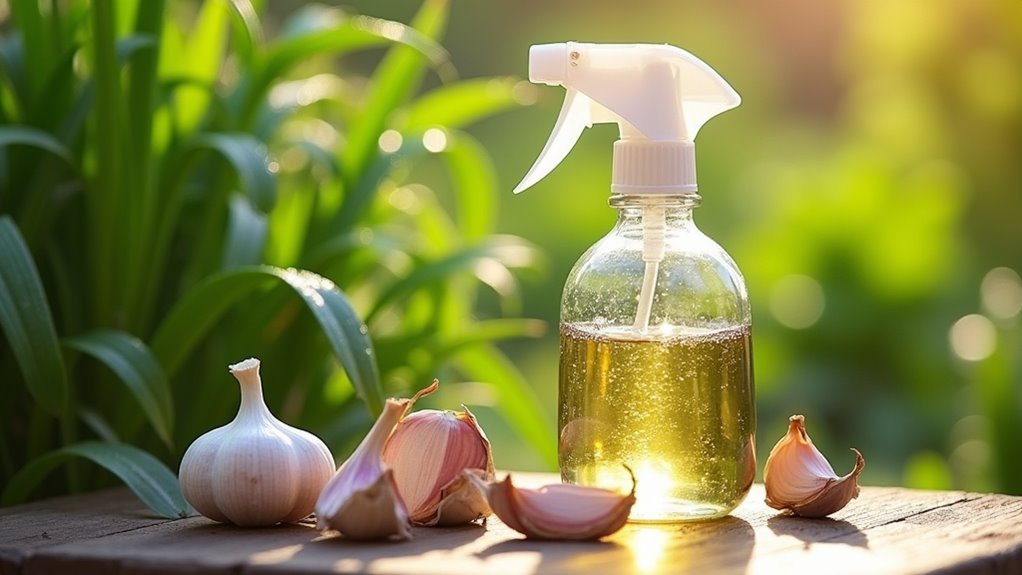
You can create an effective garlic water spray by blending one garlic head with water, adding liquid dish soap, and letting it steep for 12 hours before straining. This natural deterrent repels aphids, slugs, cabbage flies, and other common garden pests through garlic’s sulfur compounds that disrupt insect sensory receptors. Apply weekly during early evenings, focusing on leaf tops and undersides while maintaining 15-30 cm distance for even coverage. The techniques below will maximize your spray’s effectiveness.
Why Garlic Works as a Natural Pest Deterrent
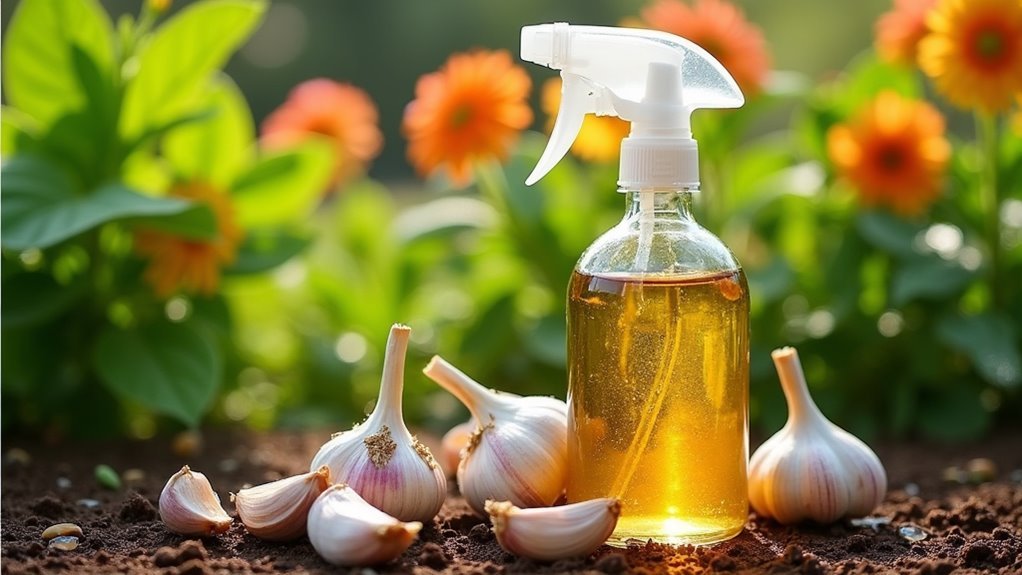
When you’re searching for an effective yet eco-friendly solution to garden pests, garlic emerges as a powerful natural deterrent that’s been protecting crops for centuries.
The secret lies in garlic’s sulfur compounds and allicin, which disrupt insects’ sensory receptors, making your treated plants fundamentally invisible to common pests like aphids, slugs, and cabbage flies.
You’ll find that garlic spray works by releasing a strong odor that’s naturally repulsive to most insects. This forces them to seek food sources elsewhere, effectively reducing infestations without harming beneficial insects or pollinators.
Research confirms that garlic spray performs comparably to synthetic pesticides against cotton aphids and houseflies, proving you don’t need toxic chemicals to achieve excellent results in your garden.
Essential Ingredients for Garlic Water Spray
Creating your own garlic water spray requires just three basic ingredients that you likely already have in your kitchen.
You’ll need 1/4 pound of garlic, which equals about 2-3 bulbs, one quart of water, and a few drops of liquid dishwashing soap for emulsification.
The garlic cloves must be crushed or blended to release their natural oils and compounds that effectively deter pests.
After blending, you’ll strain the mixture through cheesecloth or a coffee filter to remove solid particles, ensuring smooth application.
For best results, dilute your concentrated garlic solution at a 1:10 ratio before spraying.
You can boost the spray’s effectiveness by adding neem oil or hot pepper to enhance its pest-repelling properties.
Step-by-Step Preparation Method

You’ll start by blending one entire garlic head with 235 ml of water until it forms a smooth purée.
Next, add 700 ml more water and 30 ml of liquid soap, then blend the mixture again before letting it steep for at least 12 hours.
Finally, you’ll strain this infused liquid through cheesecloth or a coffee filter to remove all garlic particles and create your finished spray.
Crushing Garlic Cloves
Break apart a full head of garlic into individual cloves, but don’t peel them—the papery skin helps preserve the potent natural oils and sulfur compounds that make this spray effective against garden pests.
Crushing garlic cloves releases allicin, the active compound responsible for deterring insects and other unwanted visitors from your plants.
You’ll need about 1/4 pound of garlic, which equals roughly 2-3 bulbs for maximum potency. Use a garlic press for small batches, or employ a food processor or mortar and pestle for larger quantities.
Apply firm, consistent pressure to break down the cloves thoroughly. The more you crush the garlic, the more beneficial compounds you’ll extract, creating a stronger deterrent solution for protecting your garden.
Straining Final Mixture
After allowing your garlic and water mixture to steep for at least 12 hours, it’s time to strain out the solid particles to create a clean, sprayable solution.
Use cheesecloth or a coffee filter to remove any remaining garlic cloves and debris from your mixture. Pour the blended liquid through your chosen strainer gradually, ensuring you don’t overwhelm the filtering material.
Use a spoon to gently push the liquid through the strainer, extracting maximum garlic essence from the mixture. This technique helps you capture all the beneficial pest-repelling properties from the crushed garlic cloves.
Once you’ve extracted as much liquid as possible, discard the solid remnants left behind.
Transfer your strained garlic water into a clean spray bottle, making it ready for immediate application to your garden plants.
Proper Straining and Storage Techniques
After you’ve blended your garlic mixture, you’ll need to strain it properly to prevent clogging your spray bottle’s nozzle.
Use cheesecloth or a coffee filter to remove all solid particles from the liquid.
Once strained, store your garlic spray in ideal conditions to maintain its pest-fighting effectiveness.
Effective Straining Methods
Two essential steps will determine your garlic spray’s effectiveness: proper straining and correct storage. Effective straining methods guarantee you’ll create a smooth, clog-free garlic spray that won’t damage your sprayer or harm beneficial insects with chunky residue.
Use cheesecloth or a coffee filter to strain your garlic mixture thoroughly, removing all solid pieces for a clean liquid spray. This prevents nozzle blockages and guarantees even distribution across plant surfaces.
After straining, transfer the liquid into a clear, reusable spray bottle so you can easily monitor the contents and avoid contamination. Label your bottle with the preparation date to track freshness, since garlic-infused mixtures lose their pest-fighting potency over time.
Store the finished spray in your refrigerator to extend its shelf life and maintain effectiveness for up to two weeks.
Optimal Storage Conditions
Once you’ve achieved a perfectly strained garlic spray, maintaining its pest-fighting power depends entirely on how you store it.
Transfer your mixture into a clean, reusable spray bottle to preserve its potency and guarantee easy application. Ideal storage conditions require refrigeration, as homemade garlic sprays lose effectiveness quickly at room temperature.
Label your bottle with the preparation date since you’ll want to use it within a few weeks for maximum results. Always shake well before each use, as ingredients naturally separate during storage.
Following these ideal storage conditions when you make garlic spray guarantees your homemade pest deterrent remains potent and ready to protect your garden whenever needed.
Target Pests That Garlic Spray Repels

Several common garden pests can’t stand the pungent compounds found in garlic spray, making it an excellent natural defense for your plants.
The sulfur compounds and allicin in garlic disrupt insects’ sensory receptors, effectively confusing and repelling them from your treated garden areas.
Your garlic spray targets these destructive pests:
- Aphids and thrips – These tiny sap-suckers that drain your plants’ energy and spread devastating diseases.
- Armyworms and cabbage flies – Voracious caterpillars and larvae that can destroy entire crops overnight.
- Slugs, ants, and termites – Ground-dwelling pests that attack roots, stems, and structural plant components.
Studies demonstrate that regular garlic spray applications greatly reduce pest populations, delivering results comparable to synthetic pesticides while protecting your family from toxic chemical exposure.
Best Application Times and Weather Conditions
While garlic spray’s effectiveness depends on proper timing, you’ll achieve the finest results by applying it during early evening hours when temperatures drop and pest activity peaks. This timing minimizes harm to beneficial insects while maximizing pest exposure to the deterrent.
| Weather Condition | Application Strategy |
|---|---|
| Sunny/Hot Days | Avoid direct sunlight to prevent leaf burn |
| Rainy Weather | Reapply after rainfall due to dilution |
| Ideal Conditions | Cool, calm evenings with no rain forecast |
You should maintain consistent weekly applications for best application times effectiveness. When heavy rain occurs, increase frequency to twice weekly to maintain potency. Always test new batches on a single leaf before widespread use to verify your plants won’t experience adverse reactions.
Coverage Techniques for Maximum Effectiveness
Achieving thorough coverage requires systematic spraying techniques that target both visible surfaces and hidden pest hideouts throughout your garden.
You’ll need to make spray bottle applications with precision, maintaining 15-30 cm distance from foliage for even distribution. Focus on both leaf tops and undersides where pests typically hide.
These coverage techniques for maximum effectiveness will transform your pest control efforts:
- Target affected areas specifically – watching pests retreat from their favorite hiding spots brings immediate satisfaction
- Avoid flowers completely – protecting beneficial pollinators gives you peace of mind about environmental responsibility
- Test single leaves first – preventing plant damage eliminates the heartbreak of accidentally harming your precious crops
Reapply every few days or after rainfall to maintain your protective barrier against unwanted garden invaders.
Dilution Ratios for Different Plant Types
The concentration of your garlic spray determines whether you’ll successfully repel pests or accidentally damage your plants.
Different dilution ratios work best for specific plant types and their sensitivity levels. For delicate seedlings and herbs, use a 1:10 ratio (one part garlic concentrate to ten parts water) to prevent leaf burn.
Robust plants like tomatoes and peppers can handle a stronger 1:5 ratio for increased pest deterrence. During severe infestations, you can apply a 1:3 solution to resilient crops, but monitor carefully for adverse reactions.
Always test new dilution ratios on a single leaf first.
Adjust concentrations based on environmental factors—higher humidity reduces effectiveness and requires more frequent applications or stronger solutions.
Frequency of Reapplication Guidelines
You’ll need to establish a consistent reapplication schedule to maintain your garlic spray’s pest-fighting effectiveness throughout the growing season.
Apply the spray every 7-10 days under normal conditions, but you’ll want to adjust this timing based on your local weather patterns.
Rain greatly impacts how often you’ll need to reapply, as it washes away the protective barrier your garlic spray creates on plant surfaces.
Weekly Application Schedule
Weekly applications of garlic water spray provide perfect pest protection for your garden plants.
This consistent weekly application schedule creates a protective barrier that deters harmful insects while maintaining plant health. You’ll achieve superior results by establishing a routine that keeps pests at bay before they become problematic.
Your weekly application schedule should include:
- Evening spraying sessions – Apply when pests are most active and plants are completely dry for maximum effectiveness.
- Complete foliage coverage – Confirm every leaf surface receives adequate protection to prevent pest infiltration.
- Post-rainfall reapplication – Monitor weather conditions and reapply immediately after heavy rains wash away your protective coating.
During severe infestations, you’ll need to increase frequency to twice weekly until pest populations decrease considerably.
Weather Impact Timing
Weather conditions directly influence how often you’ll need to reapply garlic water spray to maintain effective pest control. Rain washes away your protective barrier, requiring more frequent applications than during dry spells. Make sure to monitor weather forecasts and adjust your spray bottle schedule accordingly.
| Weather Condition | Application Frequency | Special Notes |
|---|---|---|
| Dry conditions | Every 5-7 days | Standard maintenance schedule |
| Light rainfall | Every 4-5 days | Moderate barrier loss |
| Heavy rainfall | Every 3 days | Immediate reapplication needed |
After heavy rains, inspect plants closely for returning pest activity and reapply promptly. Time applications for dry evenings when pests are most active, ensuring maximum effectiveness while protecting beneficial insects from unnecessary exposure.
Safety Precautions During Use
Several critical safety measures protect you and your garden when using homemade garlic water spray. These safety precautions during use guarantee effective pest control without compromising your health or damaging your plants.
Always wear protective gloves and eyewear to prevent skin irritation and eye contact. Test the spray on a small plant area first to avoid potential foliage damage. Apply during cooler hours, avoiding peak sunlight to prevent leaf burn.
Essential Safety Reminders:
- Keep away from children and pets – Large quantities can cause serious adverse health effects.
- Store properly labeled in refrigerator – Prevents dangerous accidental misuse by family members.
- Never spray during hot midday sun – Protects your precious plants from devastating burn damage.
Following these safety precautions during use maximizes effectiveness while protecting everyone involved.
Enhancing the Spray With Additional Natural Ingredients
While garlic water spray works effectively on its own, you’ll achieve superior pest control by incorporating complementary natural ingredients that boost its potency.
Add neem oil to disrupt pest life cycles while providing antifungal benefits. Incorporate cayenne pepper for capsaicin’s irritating effects that repel various insects. Mix in biodegradable dish soap drops to help the spray adhere better to plant surfaces, ensuring thorough coverage.
Fresh mint creates a synergistic effect when blended with garlic using a food processor or blender, as mint’s insect-repelling properties complement garlic’s effectiveness.
You can experiment with different ratios of garlic, water, and these additional ingredients to customize your spray for specific pest challenges in your garden, creating a more potent and targeted solution.
Troubleshooting Common Application Issues
Even experienced gardeners encounter challenges when applying garlic water spray, but most issues stem from timing, concentration, or application methods.
If you notice leaf burn or discoloration, you’ve likely applied the spray during hot daytime hours or used too strong a concentration. Always test on a single leaf first and apply in early evening when plants are dry.
Here are three critical troubleshooting steps:
- Reduce garlic concentration immediately if you see yellowing leaves or stunted growth
- Check for powdery mildew development which can indicate moisture retention from improper timing
- Monitor pest activity regularly to guarantee your spray frequency matches infestation levels
Store your mixture properly and reapply every few days for consistent results.
Signs of Successful Pest Control
You’ll notice your garlic spray is working when your plants start showing clear signs of recovery and pest populations drop considerably.
Look for healthier foliage with fewer holes, less discoloration, and more vibrant green leaves as your plants bounce back from pest damage.
You should also observe dramatically reduced insect activity around treated areas, with fewer aphids, slugs, and other harmful pests visible on or near your plants.
Visible Plant Recovery
Watch for dramatic improvements in your plants within just a few days of applying garlic water spray.
You’ll notice visible plant recovery as leaf color transforms from dull or yellowing to vibrant green, while growth rates accelerate noticeably. Your plants will show fewer bite marks and damage on foliage, proving the spray’s effectiveness against destructive pests.
The most rewarding signs of visible plant recovery include:
- Fresh, healthy new growth emerging where damage once dominated your garden
- Beautiful new buds and blossoms appearing within weeks of treatment
- Sustained energy that continues with regular applications, creating long-term pest prevention
Continuous monitoring reveals that your plants maintain their newfound health.
Regular garlic spray treatments prevent pest comebacks while promoting vibrant foliage that’ll make your garden the envy of neighbors.
Reduced Pest Activity
When you apply garlic water spray consistently, you’ll witness a dramatic decline in pest activity that signals your natural defense system is working.
Within just a few days of treatment, you’ll notice markedly fewer aphids, slugs, and other destructive insects on your plants. The garlic’s potent natural compounds disrupt insect sensory receptors, creating an inhospitable environment for pests.
You can expect up to 80% reduced pest activity on treated plants compared to untreated ones. Weekly monitoring reveals this effectiveness clearly – damaged leaves decrease, and plant vigor improves noticeably.
Regular weekly applications, especially after rainfall, maintain this protective barrier. The best part? While deterring harmful insects, garlic spray preserves beneficial insects when applied carefully, ensuring your garden ecosystem stays balanced and healthy.
Long-Term Garden Management Strategies
While garlic water spray provides immediate pest control benefits, incorporating it into a thorough long-term strategy transforms your garden into a naturally resilient ecosystem.
You’ll build sustainable defenses that protect your plants year after year while reducing dependency on harsh chemicals.
Your all-encompassing plant spray management approach should include:
- Strategic intercropping – Plant garlic alongside vulnerable crops to create natural pest barriers that’ll make your garden thrive with enhanced biodiversity.
- Regular monitoring schedules – Check plants weekly for early pest signs, allowing you to intervene before infestations devastate your hard work.
- Integrated remedy combinations – Blend garlic spray with neem oil or hot pepper solutions to create powerful, eco-friendly pest control that’ll give you confidence in your garden’s protection.
This holistic approach guarantees lasting garden health and productivity.
Frequently Asked Questions
How Do You Make Garlic Spray for Garden Pests?
You’ll blend one crushed garlic head with 235ml water until puréed, then add 700ml water and 30ml liquid soap. Blend again, steep for twelve hours, strain through cheesecloth, and store in a spray bottle.
Can I Spray Garlic Water on My Plants?
Yes, you can spray garlic water on your plants. It’s safe and effective for pest control. Always test on one leaf first, then spray in the evening, coating both leaf sides thoroughly.
How Do I Make Garlic Water for My Garden?
Blend one garlic head with 235ml water, strain the purée, then mix with 700ml water and 30ml liquid soap. Let it steep twelve hours before straining again for application.
How to Use Garlic as an Insecticide?
You’ll blend garlic with water, strain it, then dilute before spraying. Apply during evening hours, covering both leaf sides thoroughly. Reapply weekly or after rain, and always test on one leaf first.
In Summary
You’ve now mastered creating an effective garlic water spray that’ll keep garden pests at bay naturally. Remember to reapply every few days or after rain for consistent protection. Monitor your plants regularly and adjust the concentration if needed. Don’t forget to combine this spray with other organic pest management practices like companion planting and crop rotation. You’re well-equipped to maintain a healthy, pest-free garden using this simple, eco-friendly solution.


Leave a Reply