
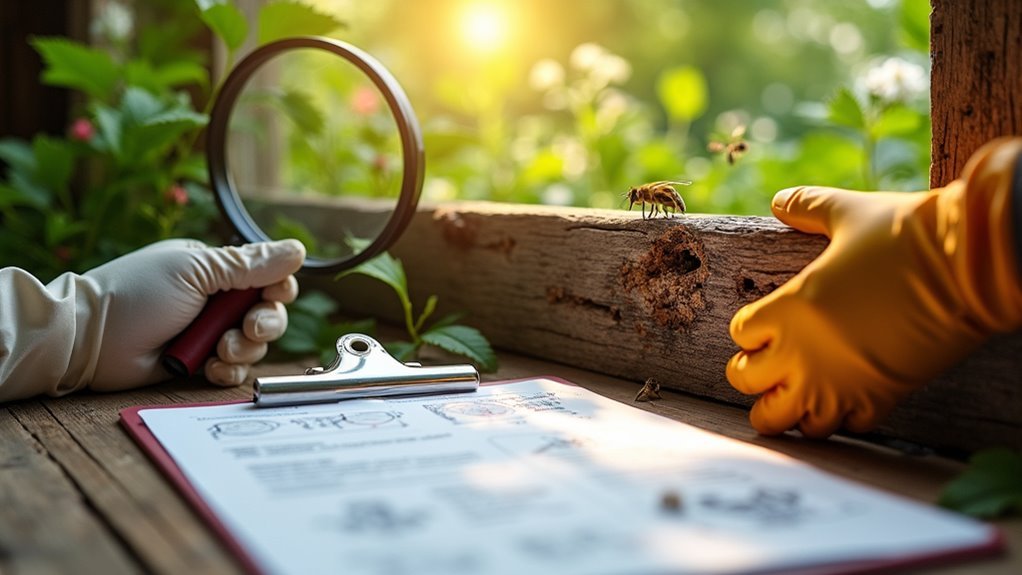
You’ll start your spring termite inspection in early March by evaluating winter damage and moisture issues that attract termites. Move to foundation and wooden structure checks in mid-March, then watch for swarmer activity and shed wings in late March during peak swarming season. Early April focuses on crawl spaces and basements, while mid-April involves documenting findings and planning treatment areas. Schedule professional follow-up in late April if you’ve discovered concerning signs throughout your systematic inspection process.
Early March: Assess Winter Damage and Moisture Issues
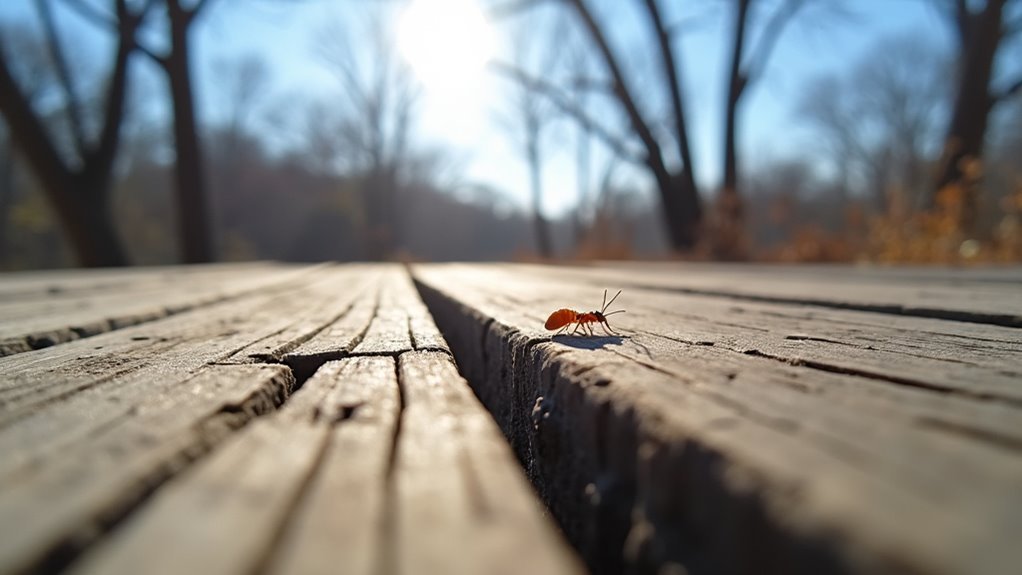
As winter shifts into spring, early March presents the perfect opportunity to assess your property for damage and moisture issues that could attract termites.
Temperature and moisture fluctuations create ideal conditions for termite activity, making thorough inspection essential.
Start by checking your plumbing and roofing for leaks, as accumulated moisture greatly attracts termites.
Examine wooden structures, your home’s foundation, and crawl spaces for water damage that weakens wood and increases susceptibility to termite infestation.
Look for mud tubes and other subterranean termite signs that become more visible with warmer weather.
Address moisture issues immediately by repairing leaks and improving drainage.
Don’t wait—spring’s arrival activates termite colonies.
Consider scheduling a professional inspection if you discover concerning signs during your assessment.
Mid-March: Inspect Foundation and Wooden Structures
You’ll need to conduct a thorough examination of your foundation and wooden structures during mid-March when termite swarming season begins in Houston.
Start by checking your foundation for cracks of any size, as these create entry points for termites to access your home’s wooden components.
Focus your structural wood assessment on areas where moisture tends to accumulate, looking specifically for mud tubes, discarded wings, and visible wood damage that signal active infestations.
Foundation Crack Detection
When mid-March arrives, you’ll want to focus your termite prevention efforts on a thorough foundation inspection, as this critical barrier protects your entire home from underground termite colonies.
Foundation crack detection requires careful examination of your home’s perimeter to identify potential entry points that termites exploit.
During your inspection, follow these essential steps:
- Examine all foundation surfaces for hairline cracks, gaps around pipes, and settling damage that creates openings.
- Check moisture levels around the foundation, as damp areas attract termites and indicate vulnerability.
- Seal discovered cracks immediately using appropriate caulk or epoxy materials to eliminate access routes.
If you discover mud tubes, discarded wings, or wood damage during your foundation crack detection process, schedule a professional inspection immediately.
Preventing termites starts with maintaining an impenetrable foundation barrier.
Structural Wood Assessment
Following your foundation crack inspection, shift your attention to evaluating the structural wood components throughout your home’s framework.
Your structural wood assessment should focus on examining wooden beams, joists, and exposed lumber for deterioration signs or insect activity. Look for mud tubes, hollow-sounding wood, and visible damage that indicates termite presence.
Conducting this evaluation in mid-March helps you catch problems before peak swarming season arrives in late spring.
You’ll want to check areas where wood contacts soil or concrete, as these locations attract subterranean termites most frequently.
If you discover suspicious signs, contact pest control services immediately. A professional inspection can prevent average repair costs of $3,000 per home.
Early intervention through expert assessment protects your investment and prevents extensive termite damage that affects millions of properties annually.
Late March: Check for Swarmer Activity and Shed Wings

Late March signals the start of termite swarming season, when winged reproductive termites emerge from established colonies to seek new locations for nesting.
Reproductive termites spread their wings each spring, abandoning parent colonies to establish new nesting sites near unsuspecting homes.
You’ll typically notice swarming termites after heavy rainfall or humid conditions, making this period critical for detection.
Watch for these obvious signs around your property:
- Discarded wings near windows, doors, or outdoor entry points
- Live swarmers flying around light sources during evening hours
- Small piles of wings accumulated in corners or on windowsills
Focus your inspection on foundation areas, door frames, and any wood-to-soil contact points.
Don’t ignore shed wings—they’re clear evidence of termite activity nearby.
Consider scheduling a professional inspection during late March to catch early signs before swarmers establish new colonies in or around your home.
Early April: Examine Crawl Spaces and Basement Areas
As early April arrives, you’ll want to focus your termite inspection efforts on crawl spaces and basement areas where conditions are often ideal for infestations.
Start by scanning these spaces for moisture problems like leaks, standing water, or excessive humidity that attract termites to your home’s foundation.
Look carefully for telltale signs of termite activity including mud tubes along walls, discarded wings near entry points, and small piles of frass that indicate an active colony.
Identifying Moisture Problems
Early April brings the perfect opportunity to examine your crawl spaces and basement areas for moisture problems that could attract termites to your property.
You’ll need to inspect these vulnerable areas thoroughly, as moisture creates ideal conditions for potential infestations.
Focus on these critical moisture indicators:
- Water accumulation and dampness – Check for standing water or damp spots, especially after heavy spring rains that can soften wood structures.
- Damaged caulking – Look around plumbing fixtures and foundation areas where compromised seals create moisture entry points.
- Humidity levels – Assess overall dampness that creates perfect breeding conditions for termite colonies.
Don’t forget to evaluate your drainage systems.
Check gutters and downspouts to guarantee proper water flow away from your foundation, preventing excess moisture buildup.
Spotting Termite Evidence
When you’ve identified potential moisture issues, shift your attention to detecting actual termite evidence throughout these same vulnerable areas. Spotting termite evidence requires systematic examination of key indicators that reveal active infestations.
| Evidence Type | Location | What to Look For |
|---|---|---|
| Mud tubes | Foundation walls, crawl spaces | Brown tunnels connecting soil to wood |
| Discarded wings | Windows, doors, light fixtures | Translucent wings from swarming activity |
| Wood damage | Structural beams, floor joists | Hollow-sounding wood when tapped |
Check for frass around wooden structures—these small pellets indicate drywood termite activity. Test suspicious wood by tapping with a screwdriver; healthy wood produces sharp sounds while damaged wood sounds hollow. Focus your inspection on areas where you’ve previously noted moisture problems, as these zones typically harbor the most concentrated termite activity.
Mid-April: Document Findings and Plan Treatment Areas

Document every detail you discover during your mid-April termite inspection, as this critical step determines the success of your entire treatment strategy.
Your thorough documentation creates the foundation for effective pest control measures that’ll protect your home from costly termite damage.
Detailed inspection records form the backbone of successful termite control strategies that safeguard your property investment.
During this peak swarming season, you’ll want to systematically record:
- Physical evidence locations – Map mud tubes, discarded wings, and damaged wood areas with precise measurements and photos
- Severity assessment – Rate the extent of damage on each affected structure to prioritize treatment zones
- Treatment area planning – Identify specific regions requiring immediate intervention versus preventive measures
Late April: Schedule Professional Follow-Up if Needed
After completing your detailed documentation, you’ll need to determine whether your findings warrant professional expertise. Late April presents the perfect opportunity for a professional inspection since it coincides with peak swarming season when termite activity becomes most detectable.
| Signs Found | Emotional Impact | Action Required |
|---|---|---|
| Discarded wings, mud tubes | Heart-stopping panic | Immediate professional call |
| Suspicious wood damage | Sleepless worry | Schedule inspection within days |
| Minor concerns | Nagging anxiety | Book routine professional check |
| No visible signs | False security | Consider preventive inspection anyway |
Professionals can identify subtle indicators you might’ve missed, including frass and early structural threats. Don’t let a $5 billion annual damage statistic include your home. Schedule your professional inspection now to safeguard your home before summer’s peak termite activity arrives.
Frequently Asked Questions
What Time of Year Is Best for Termite Inspection?
Spring’s the best time for your termite inspection. You’ll catch increased activity and swarming during this peak season. Schedule your annual inspection then to identify infestations early and prevent costly damage to your home’s structure.
What Is the Average Cost of a Termite Inspection?
You’ll typically pay between $75 to $150 for a termite inspection, depending on your property’s size and location. Many pest control companies offer free inspections to encourage preventive care and ongoing services.
What Month Are Termites Most Active?
Termites are most active during spring months, particularly from mid-April through June. You’ll notice increased swarming activity after heavy rains when warm temperatures and humidity create ideal conditions for reproductive termites to establish new colonies.
Are Termites in the House in Spring?
Yes, you’ll likely find termites in your house during spring since it’s their peak activity season. You’ll notice swarming alates, discarded wings, and mud tubes as they establish new colonies in warmer, moist conditions.
In Summary
You’ve got your spring termite inspection roadmap from early March through late April. Don’t skip any steps—consistent monthly checks will catch problems before they become costly disasters. Start by evaluating winter damage, work through your foundation and wooden structures, then watch for swarmers. Document everything you find and don’t hesitate to call professionals if you spot active infestations. Your home’s protection depends on following this schedule religiously.


Leave a Reply