
You can effectively repel stink bugs by planting garlic, catnip, thyme, radishes, and lavender around your garden’s perimeter. These plants emit strong scents and compounds that stink bugs find repulsive, creating a natural barrier that protects your vegetables. Position aromatic herbs like basil and mint among susceptible crops, while using marigolds as colorful border plants for added protection. Regular maintenance and strategic companion planting enhance their effectiveness throughout the growing season, and there’s much more to discover about optimizing your natural defense system.
Understanding Stink Bugs and Garden Damage
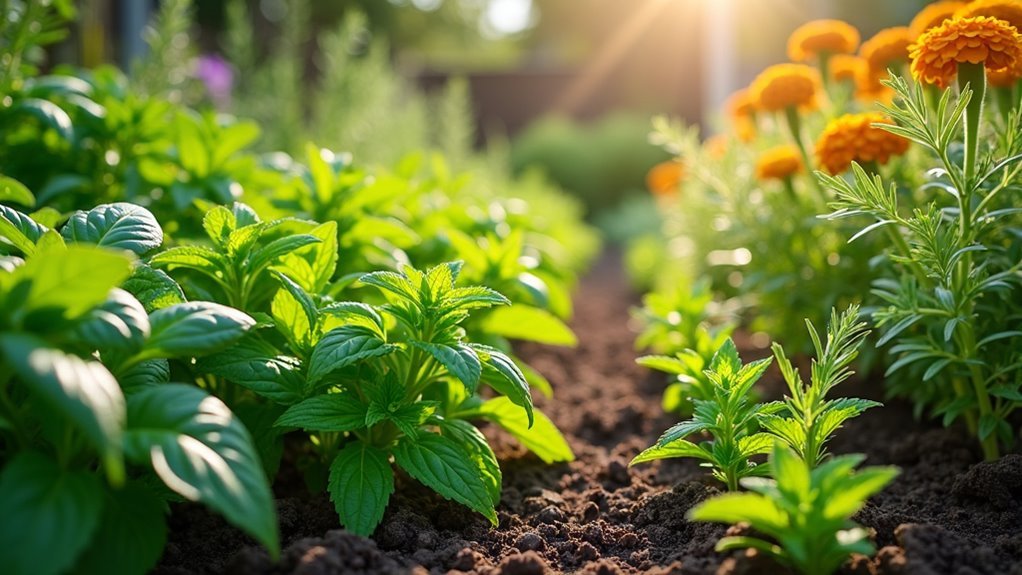
While stink bugs might seem like harmless garden visitors, they’re actually voracious pests that can devastate your plants and crops.
These herbivorous insects target over 100 plant species, piercing tissues to suck out essential sap. You’ll notice the damage through misshapen fruits, failed flower openings, and dropping buds that signal a stink bug infestation.
The brown marmorated stink bug is particularly destructive, causing visible scarring and growth distortions that ruin your garden’s aesthetic appeal and reduce yields. They’ll also transmit yeast-spot disease, compounding the agricultural damage.
Brown marmorated stink bugs devastate gardens through scarring, growth distortions, reduced yields, and yeast-spot disease transmission.
When disturbed, these pests release an unpleasant odor as a defense mechanism.
Fortunately, strategic companion planting with specific plants can help deter these destructive insects naturally.
Best Plants for Natural Stink Bug Deterrence
You can transform your garden into a natural stink bug fortress by selecting the right repellent plants and positioning them strategically.
The most effective varieties release strong scents that these pests find unbearable, while companion planting amplifies their protective power throughout your growing space.
Let’s explore the top plant varieties that’ll keep stink bugs at bay and how to arrange them for maximum deterrent effect.
Top Repellent Plant Varieties
Several powerful plants can transform your garden into a natural fortress against stink bugs.
Garlic’s strong scent makes it exceptionally effective—plant it along garden edges or grow it in portable containers.
Catnip doesn’t just attract felines; it releases compounds that stink bugs find repulsive, especially when you trim it regularly to maintain potency.
Thyme offers dual benefits as a culinary herb with pest-deterrent properties, adapting well to various growing conditions.
Radishes work differently by acting as trap plants and creating repellent gases as they decompose naturally.
Lavender rounds out your arsenal with beautiful blooms and pleasant fragrance that humans love but stink bugs hate.
These plants help repel pests while enhancing your garden’s functionality and visual appeal.
Companion Planting Strategies
Strategic companion planting amplifies your garden’s natural defenses by positioning repellent plants where they’ll maximize protection for vulnerable crops.
You’ll want to place plants that repel stink bugs directly around your most susceptible vegetables. Garlic and catnip work exceptionally well as border companions, creating protective barriers around tomatoes and peppers.
Marigolds planted throughout your garden beds provide widespread insect deterrence while adding vibrant color.
You can use radishes as trap crops, positioning them strategically to intercept stink bugs before they reach your primary harvest plants.
Integrate aromatic herbs like thyme, lavender, basil, and mint among your vegetables.
These companion planting strategies leverage strong scents that naturally repel pests while creating a diverse, healthy ecosystem that discourages infestations and promotes overall garden health.
Strategic Garden Layout and Plant Placement
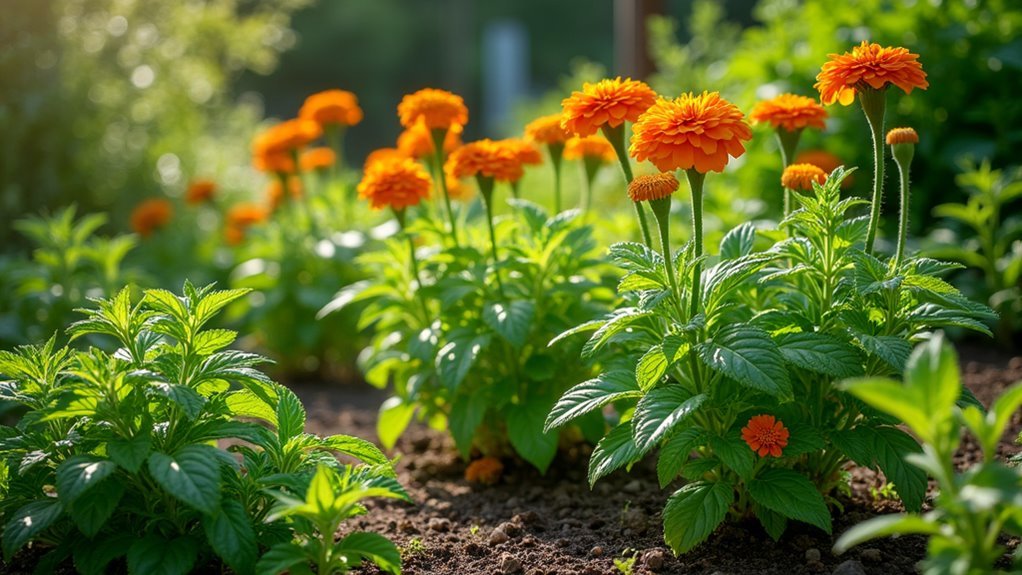
You’ll maximize your stink bug defense by thoughtfully arranging repellent plants throughout your garden rather than randomly scattering them.
Strategic border planting, proper companion plant spacing, and smart trap crop positioning work together to create multiple layers of protection that confuse and deter these pests.
Let’s explore how each placement technique can transform your garden into a fortress against stink bug invasions.
Border Planting Arrangements
When you’re designing your garden’s defense system against stink bugs, border planting arrangements create the most effective first line of protection.
You’ll want to strategically place pest-repelling plants like marigolds and garlic around your garden bed perimeters to form natural barriers.
Incorporate companion plants such as thyme and basil in your border layouts—their strong scents will repel stink bugs while enhancing your garden’s overall health.
Mix flowering and aromatic plants to attract beneficial insects, promoting biodiversity in your ecosystem.
Choose low-maintenance options like lavender and mint for effective pest control without extensive upkeep.
Regularly alternate plant types in your arrangements to disrupt stink bug habits and reduce infestation likelihood over time.
Companion Plant Spacing
Proper spacing between companion plants determines whether your stink bug defense strategy succeeds or fails.
You’ll need to position repelling plants like marigolds and garlic 12-18 inches from your main crops to maximize deterrent effects without creating nutrient competition. Group these pest-repelling plants in protective clusters around vulnerable vegetables to create effective barriers against stink bug infestations.
Maximize your garden’s vertical space by pairing taller companion planting options like lavender with shorter crops beneath. This arrangement optimizes sunlight while strengthening your defense network.
Place companion plants every few rows or at bed ends to disrupt pest movement patterns. Don’t forget to rotate these protective plants each season—this prevents stink bugs from establishing territories and maintains soil health throughout your garden.
Trap Crop Positioning
Strategic trap crop positioning transforms your garden into a well-orchestrated defense system that redirects stink bugs away from your prized vegetables.
Position trap crops like radishes or marigolds at your garden’s perimeter to create an attractive buffer zone. Arrange taller plants centrally while placing shorter trap crops around them, enhancing visibility to intercept stink bugs effectively.
Combine this strategy with companion planting by positioning pest-repelling plants like garlic and basil near susceptible crops. This creates natural barriers that discourage stink bug infiltration.
Plant trap crops in succession throughout the growing season to maintain continuous protection and reduce populations consistently.
Monitor stink bug activity regularly and adjust trap crop positioning based on pest movement patterns and plant growth. This adaptive approach guarantees ideal pest control effectiveness.
Companion Planting Techniques for Maximum Protection
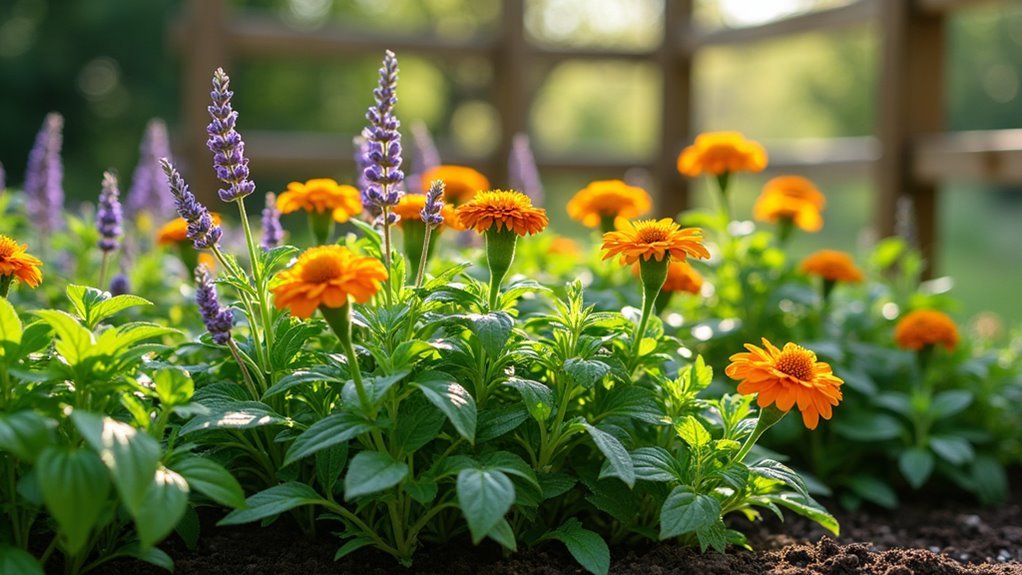
Three key principles form the foundation of effective companion planting against stink bugs: strategic placement, scent masking, and diversification. You’ll maximize protection by positioning repellent plants upwind from vulnerable crops, allowing their strong scents to drift across your garden naturally.
Create protective barriers using aromatic herbs like basil and thyme around susceptible vegetables. Rotate your plant locations annually to disrupt stink bug life cycles and prevent establishment. Group multiple pest-deterring species together for layered defense systems.
| Repellent Plants | Placement Strategy | Protected Crops |
|---|---|---|
| Basil & Thyme | Border planting | Tomatoes, peppers |
| Marigolds | Scattered throughout | Beans, squash |
| Garlic | Companion rows | Brassicas, lettuce |
This companion planting approach creates natural pest management while maintaining garden productivity and reducing chemical interventions.
Maintenance and Care of Repellent Plants
While establishing the right plant combinations sets your garden’s defensive foundation, your repellent plants won’t maintain their bug-fighting power without consistent care.
Regular maintenance throughout the growing season keeps these natural defenders at peak effectiveness. Trim and prune catnip and mint regularly to prevent overgrowth while maintaining their stink bug-deterring properties.
Confirm lavender and thyme receive adequate sunlight and well-drained soil conditions to maximize their pest-repelling potential. Water appropriately without overdoing it—healthy plants release stronger repellent scents and resist pest infestations better.
Rotate your repellent plants’ locations annually to disrupt stink bug habits and boost overall garden health.
Monitor plants closely for stress or disease signs, addressing issues promptly to preserve their effectiveness against these unwanted pests.
Creating Physical Barriers With Pest-Repelling Borders
Beyond individual plant care, you can fortify your garden’s defenses by establishing pest-repelling borders that form protective barriers around vulnerable areas.
Plant marigolds and lavender along your garden’s perimeter to create natural deterrents that stink bugs won’t cross. Add radishes to these pest-repelling borders – their decaying leaves release gases that repel these pests effectively.
Strategic perimeter planting with marigolds, lavender, and radishes creates powerful natural barriers that effectively deter stink bugs from entering your garden space.
Enhance your barrier with garlic and mint, whose strong scents create an unpleasant environment for stink bugs. Include flowering plants like chrysanthemums and basil to attract beneficial insects that hunt stink bug eggs and nymphs.
Design your border with varying heights and plant densities to physically obstruct pests while providing shelter for natural predators. This strategic approach will help protect your main garden area thoroughly.
Seasonal Planting Guide for Year-Round Defense
Since stink bugs remain active throughout different seasons, timing your pest-repelling plantings strategically guarantees continuous protection for your garden.
Start your defense in early spring by establishing garlic, catnip, and lavender as adult stink bugs emerge from hibernation. These hardy herbs create an immediate barrier when planted in your garden during March.
Summer maintenance involves introducing basil and marigolds alongside your crops. These companion plants enhance resistance while providing culinary benefits.
Chrysanthemums and lemon balm further strengthen your defenses during warmer months.
Fall preparation requires clearing debris that harbors pests. Plant radishes as trap crops to confuse stink bugs. Remove dead foliage and spray affected areas with soapy water.
Winter focuses on eliminating overwintering sites. Trim back thyme and mint, ensuring healthy spring regrowth while maintaining year-round diversity.
Frequently Asked Questions
What Kind of Plants Keep Stink Bugs Away?
You’ll want to plant garlic around your garden edges since it releases strong odors that repel stink bugs. Catnip, thyme, radishes, and lavender also work effectively as natural deterrents.
What Do Stink Bugs Hate the Most?
Stink bugs hate strong aromatic scents the most. You’ll find they’re particularly repelled by garlic’s pungent odor, catnip’s potent compounds, and chrysanthemums’ natural pyrethrin insecticide, which they can’t tolerate.
What Is a Natural Enemy of Stink Bugs?
You’ll find parasitic wasps like Trissolcus japonicus are stink bugs’ biggest natural enemy. They lay eggs inside stink bug eggs, killing them. Birds, spiders, ladybugs, and soil nematodes also prey on stink bugs effectively.
How Do I Get Rid of Stink Bugs in My Garden Naturally?
You can plant garlic, lavender, catnip, marigolds, and chrysanthemums to naturally repel stink bugs. Remove their eggs from leaf undersides, use companion planting with radishes, and attract beneficial insects like parasitic wasps.
In Summary
You’ve learned how strategically placed repellent plants can transform your garden into a natural fortress against stink bugs. By combining aromatic herbs, companion planting techniques, and proper maintenance, you’ll create an environment that deters these pests year-round. Don’t forget to establish protective borders and follow seasonal planting schedules for maximum effectiveness. With consistent care and the right plant selections, you’ll enjoy a thriving, stink bug-free garden that’s both beautiful and productive.




Leave a Reply