
Keep wasps away this summer by eliminating moisture sources around your property through regular gutter cleaning and trimming tree branches for better airflow. Use natural essential oil repellents like clove, peppermint, or lemongrass that can reduce wasp visits by up to 95%. Maintain clean outdoor spaces by sealing garbage containers and promptly removing food residues. Seal entry points like window gaps and foundation openings while installing mesh screens on vents. Plant wasp-deterrent herbs like mint, basil, and marigolds strategically around your perimeter to discover extensive protection methods.
Eliminate Moisture Sources Around Your Property

Since wasps actively seek out areas with abundant moisture and the insects it attracts, you’ll want to eliminate these water sources around your property to make your outdoor spaces less appealing to them.
Start by trimming tree branches to increase sunlight and airflow, helping topsoil dry faster. Clean your gutters regularly and guarantee they properly channel rainwater away from your home’s foundation to prevent pooling.
Space plants in garden areas to promote topsoil drying after watering. This pests management approach considerably reduces the moist conditions that attract wasps and their prey.
Don’t forget to inspect and repair leaky outdoor faucets or hoses, as these create damp areas that draw various pests to your property.
Use Essential Oils as Natural Wasp Repellents
While commercial wasp sprays contain harsh chemicals that can harm beneficial insects and pollinators, essential oils offer a safer alternative that’s equally effective at keeping wasps away from your outdoor spaces.
- Clove oil reduces wasp visits by up to 95% – protecting your family gatherings
- Peppermint oil’s menthone compound triggers negative responses in wasp antennae
- Lemongrass oil creates an invisible barrier around potential wasps nests
- 17 out of 21 tested essential oils proved effective for thorough wasp prevention
- Natural repellent solutions won’t harm bees or butterflies – preserving garden ecosystems
To create a repellent, mix essential oils with water in a spray bottle and apply around nesting areas.
These natural solutions help repel wasps without toxic side effects, though regular reapplication is necessary to prevent wasp infestation effectively.
Maintain Clean Outdoor Spaces and Food Storage

Because wasps are opportunistic scavengers that actively hunt for food sources around human activity, maintaining spotless outdoor areas becomes your most critical defense against unwanted visitors.
Clean outdoor spaces relentlessly—wasps are aggressive scavengers that will exploit every food opportunity near human activity areas.
You’ll need to eliminate attractants for wasps by promptly removing food residues and using tightly sealed containers for garbage cans. During outdoor gatherings, cover all beverages and meals since wasps target sugary and protein-rich items.
Store pet food indoors, feeding animals only under supervision to prevent pest attraction. Regularly clean grilling areas by removing grease and food particles from surfaces.
Don’t forget compost bins—keep them covered and positioned away from living spaces. These prevention methods greatly reduce wasp encounters around your property.
Seal Entry Points and Potential Nesting Sites
Although wasps can infiltrate even the smallest openings, you’ll greatly reduce their presence by systematically sealing potential entry points around your property.
These persistent insects exploit every vulnerability to establish nesting sites near your home.
Focus on these critical areas to prevent wasps from invading:
- Inspect windows and doors for gaps and cracks, then seal them immediately with caulk
- Repair torn screens on windows and doors to eliminate easy access points
- Check your foundation thoroughly for any openings that could harbor colonies
- Examine attic vents and eaves, installing mesh screens to block nesting opportunities
- Seal ground holes around your yard where yellowjackets commonly build underground nests
Use expanding foam or caulk around utilities and siding crevices to create an impenetrable barrier against these unwanted summer visitors.
Plant Wasp-Deterrent Vegetation Strategically
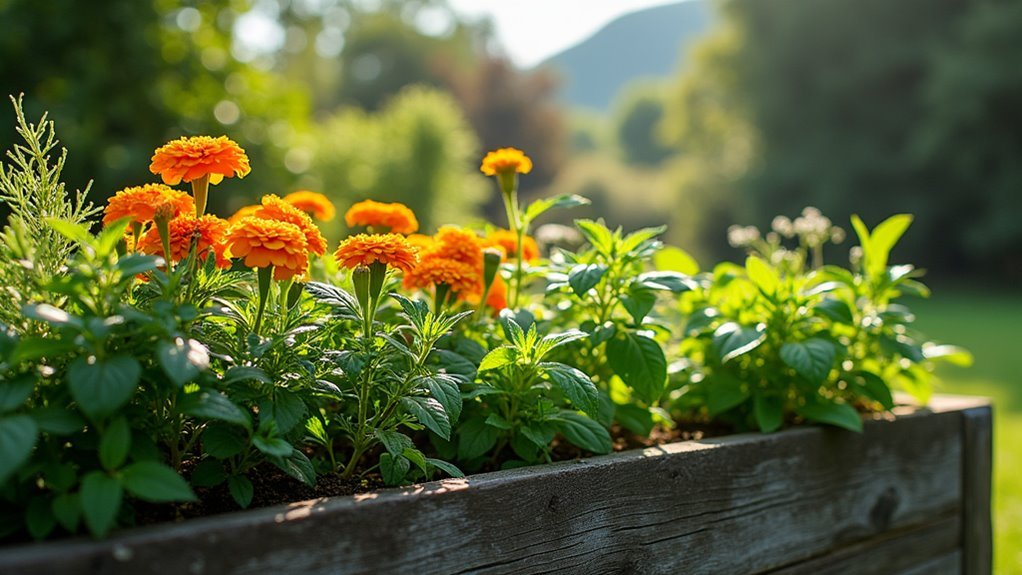
Since certain plants naturally repel wasps through their aromatic properties, you can create an effective living barrier around your home by selecting and positioning the right vegetation.
Start by planting mint varieties like spearmint or peppermint around your property’s perimeter, as their strong scents effectively deter wasps. Incorporate aromatic herbs including basil, rosemary, and sage throughout your garden to repel wasps naturally.
Strategic placement of mint, basil, rosemary, and sage creates aromatic barriers that naturally discourage wasps from entering your outdoor living spaces.
Add flowering plants such as marigolds and geraniums to minimize presence in your outdoor spaces while creating visual appeal. Position wasp-deterrent vegetation that attracts beneficial insects like lacewings and ladybugs, establishing a balanced ecosystem that naturally controls wasp populations.
Make certain you place these plants away from areas designated for food consumption outdoors.
Frequently Asked Questions
What Do Wasps Hate the Most?
Wasps hate strong mint scents the most. You’ll find peppermint oil extremely effective as a natural deterrent. Clove, lemongrass, and cinnamon oils also work well, with clove reducing wasp presence by ninety-five percent.
What Scent Will Keep Wasps Away?
You’ll find peppermint oil works exceptionally well against wasps. Place cotton balls soaked in the oil near potential nesting areas. Clove, lemongrass, sage, rosemary, and geranium oils also effectively repel these insects naturally.
What Home Remedy Will Keep Wasps Away?
You can make a DIY wasp repellent by mixing peppermint, clove, or lemongrass essential oils with water in a spray bottle. You’ll also keep areas clean and use cotton balls soaked in peppermint oil.
How Often Do You Need to Spray Peppermint Oil to Keep Wasps Away?
You’ll need to spray peppermint oil every few hours during outdoor activities since it evaporates quickly. For continuous protection around nesting areas, reapply daily during peak wasp season.
In Summary
You’ll keep wasps away this summer by controlling moisture, using essential oil repellents, maintaining spotless outdoor areas, sealing potential nesting spots, and planting deterrent vegetation. Don’t wait until you’ve got a wasp problem—start implementing these strategies now. You’ll create an environment that’s naturally unwelcoming to these pests while keeping your family safe during outdoor activities. Consistency with these methods guarantees you’ll enjoy a wasp-free summer season.


Leave a Reply