
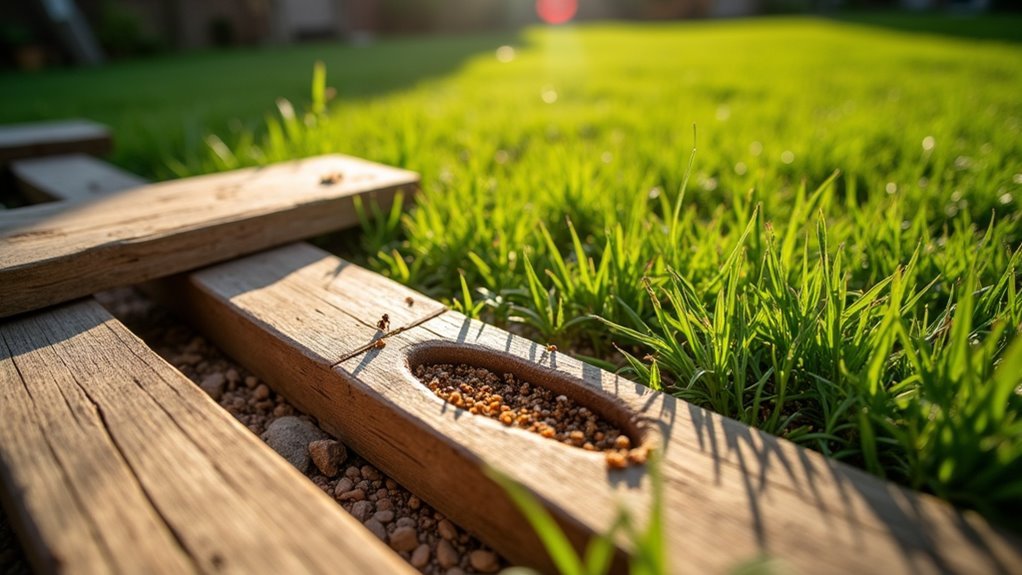
You can kill termites by exposing infested furniture to direct sunlight for 8-12 hours, as temperatures above 120°F cause rapid dehydration and death within hours. This environmentally friendly method exploits termites’ vulnerability to bright, dry conditions while disrupting their moisture-dependent survival systems and pheromone communication trails. Position items in areas receiving maximum sun exposure on clear days with temperatures of 80°F or higher for best results. Understanding the complete process and ideal conditions will guarantee maximum effectiveness.
Understanding How Sunlight Kills Termites
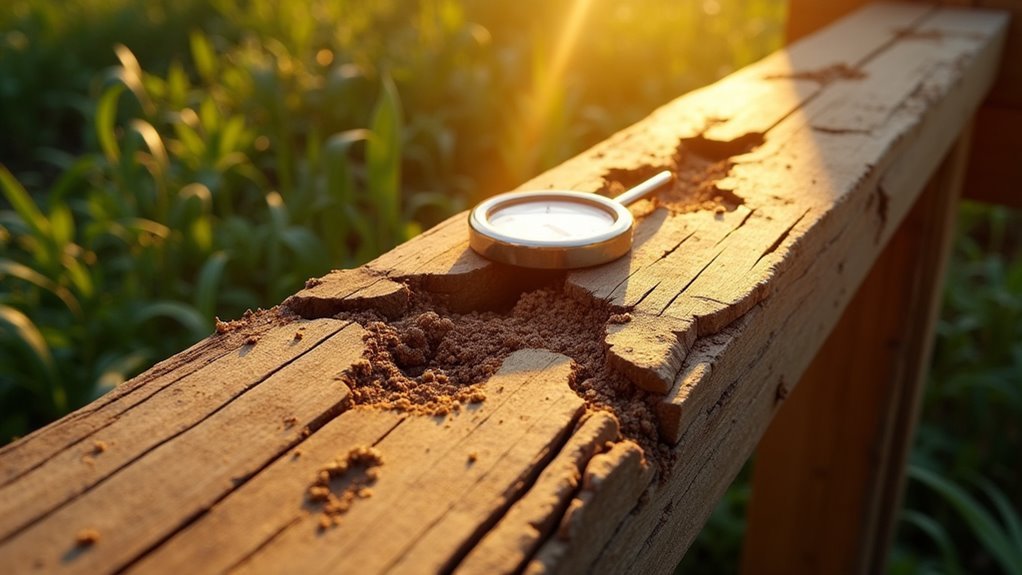
While termites have adapted to survive in the shadows of your home’s hidden spaces, their greatest weakness lies in something as simple as sunlight.
Despite their remarkable ability to thrive in darkness, termites become vulnerable when exposed to their most basic natural enemy: sunlight.
This natural method works by attacking termites on multiple fronts. Direct exposure generates intense heat that raises infested wood temperatures to lethal levels, killing termites within hours. Sunlight also dehydrates these moisture-dependent pests while disrupting their navigation abilities, preventing them from finding food sources.
You’ll find this environmentally friendly approach particularly effective because termites can’t tolerate the bright, dry conditions.
Unlike chemical treatments, using sunlight for termite control poses no risks to your family or pets. This exposure technique leverages nature’s power to eliminate infestations safely and efficiently.
Why Termites Cannot Survive Direct Sun Exposure
You’ll find that termites instinctively avoid bright areas because they’ve evolved to thrive in the dark, moist conditions found within wood structures.
When you expose them to direct sunlight, the UV rays and heat quickly dehydrate their soft bodies, causing fatal water loss within hours.
The intense heat also breaks down their carefully organized colony structure, forcing them to scatter and ultimately die when they can’t find adequate shelter.
Termites Prefer Dark Environments
Since termites have evolved to thrive in dark, humid environments, they’re extremely vulnerable when exposed to direct sunlight.
You’ll find these destructive pests instinctively avoid bright conditions because their bodies can’t handle the extreme temperature changes and dehydration that sunlight brings.
Understanding termites’ preference for dark environments helps you eliminate termites effectively:
- Termites seek shelter in hidden areas like wall voids, crawl spaces, and underground tunnels
- They require consistent moisture and darkness to maintain their colony structure
- Sunlight exposure disrupts their natural habitat needs instantly
- Moving infested wood outdoors forces them into hostile conditions
This natural vulnerability makes sunlight exposure an excellent chemical-free method of termite control.
You can exploit their dark environment dependency by simply relocating infested furniture into direct sunlight for several hours.
Sunlight Causes Fatal Dehydration
Direct sunlight acts as a lethal weapon against termites because their delicate exoskeletons can’t retain moisture under intense heat and UV radiation.
When you expose termites to sunlight, dehydration occurs rapidly, causing their bodies to shrivel and die within hours. This natural vulnerability makes sun exposure an excellent preventive method for controlling termite infestation.
You can leverage this weakness by moving infested furniture outdoors during peak sunlight hours. The intense heat penetrates deep into wood, disrupting the moisture balance termites need to survive.
Within eight hours of direct exposure, most termites will perish from fatal dehydration. For severe infestations, maintain this sunlight treatment for three consecutive days to guarantee complete elimination and prevent survivors from reestablishing colonies.
Heat Disrupts Colony Structure
Beyond individual termite mortality, the heat from sunlight systematically destroys the organized social framework that keeps colonies functional.
When you expose termite-infested wood to direct sunlight, the intense heat doesn’t just kill individual termites—it completely disrupts their entire social structure.
Here’s how heat exposure dismantles termite colonies:
- Communication breakdown – High temperatures interfere with chemical pheromone trails termites use for coordination.
- Worker abandonment – Heat forces workers to flee, leaving larvae and eggs unprotected.
- Queen vulnerability – Extreme temperatures can kill the reproductive queen, ending colony reproduction.
- Tunnel collapse – Heat causes wood expansion, physically destroying termite galleries and pathways.
You’ll find that sustained sunlight exposure creates a cascading effect where the colony’s organizational structure completely falls apart, making recovery impossible even if some termites initially survive.
Preparing Infested Furniture for Sunlight Treatment
Before exposing furniture to sunlight, you’ll need to thoroughly inspect each piece for clear signs of termite activity, including mud tubes, hollow-sounding wood, or visible damage to surfaces. When you inspect your home and identify termite infestation, target specific pieces for treatment.
| Preparation Step | Key Requirement |
|---|---|
| Location Selection | Direct sunlight for 8+ hours |
| Positioning | Safe distance from house |
| Environment Check | Free from moisture sources |
| Duration Planning | Up to 3 days maximum |
Move infested furniture outdoors on sunny days, ensuring the area remains dry since moisture reduces treatment effectiveness. Position pieces away from your home to prevent termites from migrating back inside. Monitor condition regularly throughout the exposure period, keeping furniture in direct sunlight for best results.
Optimal Weather Conditions for Sun Exposure Method

While termites can’t survive extreme heat, you’ll achieve the finest results when outdoor temperatures consistently reach 80°F or higher during clear, sunny days.
These ideal weather conditions create the perfect environment for your sun exposure technique to eliminate termites effectively.
For maximum success, focus on these key factors:
- Temperature timing – Place infested items outside during midday when sun’s rays are strongest and most direct
- Duration matters – Maintain direct sunlight exposure for at least 8 hours, ideally extending treatment over 3 consecutive days
- Humidity awareness – Choose dry days over humid conditions, as high humidity levels help termites survive longer
- Weather planning – Monitor forecasts for prolonged sunny periods to guarantee uninterrupted treatment
Step-by-Step Sunlight Exposure Process
You’ll need to prepare your infested furniture by removing it from its current location and clearing any debris from the surface.
Position each piece in an area that receives unobstructed direct sunlight throughout the day, rotating items if necessary to guarantee even exposure.
Maintain the exposure for at least 8 hours daily, though you’ll achieve better results by extending treatment to 2-3 consecutive days when temperatures consistently reach termite-lethal levels.
Prepare Infested Furniture Items
Since termites can’t survive prolonged exposure to heat and direct sunlight, preparing your infested furniture properly maximizes this natural treatment’s effectiveness.
Before moving items outdoors, you’ll need to guarantee maximum exposure by removing all debris, cushions, and stored items that could shelter termites.
Follow these preparation steps:
- Remove all loose items, fabrics, and debris from furniture surfaces and compartments
- Clean thoroughly to eliminate hiding spots where termites might seek shelter
- Check for structural damage or hollow areas that need special attention
- Document current infestation levels to monitor signs of improvement later
Proper preparation guarantees ideal results during sun treatment.
After exposure, inspect for remaining signs of termite activity and consider combining sunlight with other methods for thorough control.
Optimal Sun Positioning Methods
Once you’ve prepared your furniture, strategic positioning determines how quickly sunlight eliminates termites.
Place your infested furniture in areas receiving maximum sun exposure throughout the day, avoiding any shaded spots that’ll extend treatment time. Position items away from trees, buildings, or structures that create shadows. Maintain a safe distance from your house to prevent attracting termites back to the main structure during exposure.
Choose sunny days when temperatures above 120°F are expected, as this heat proves lethal to termites. Direct sunlight should hit all surfaces for at least eight hours daily.
If you’ve disassembled larger pieces, arrange components so each surface receives adequate exposure. Monitor weather forecasts and reposition furniture if cloud cover reduces effectiveness.
Duration and Temperature Requirements
Three critical factors determine successful termite elimination through sunlight exposure: temperature thresholds, duration timing, and consistent monitoring.
You’ll need temperatures above 100°F (37.8°C) for the heat to penetrate wood effectively and eliminate termites. This temperature requirement makes sunlight exposure most effective during peak summer conditions.
For duration, you should expose infested furniture to direct sunlight for a minimum of 8 hours, though extending this to 3 days maximizes effectiveness.
Here’s your timing strategy:
- Position items in direct sunlight from morning through afternoon
- Monitor temperature readings throughout exposure periods
- Check furniture regularly for adequate drying progress
- Avoid shaded areas that reduce heat penetration
Duration and Timing Requirements for Effective Results
Timing your sunlight treatment correctly determines whether you’ll successfully eliminate termites from your furniture or waste valuable days with inadequate exposure.
You’ll need a minimum of 8 hours of direct sun exposure, but placing infested furniture outside for 3 days delivers ideal results. Summer months provide the most effective conditions when temperatures peak and sunlight intensity maximizes termite elimination.
Position your furniture where trees or buildings won’t create shade throughout the day. Monitor for signs of termite activity during treatment, watching for insects fleeing the area.
Remember that this sun exposure technique works best for localized infestations affecting individual pieces. Entire home infestations require professional treatment methods since sunlight alone can’t penetrate structural areas where colonies typically establish themselves.
Safety Precautions When Moving Infested Items
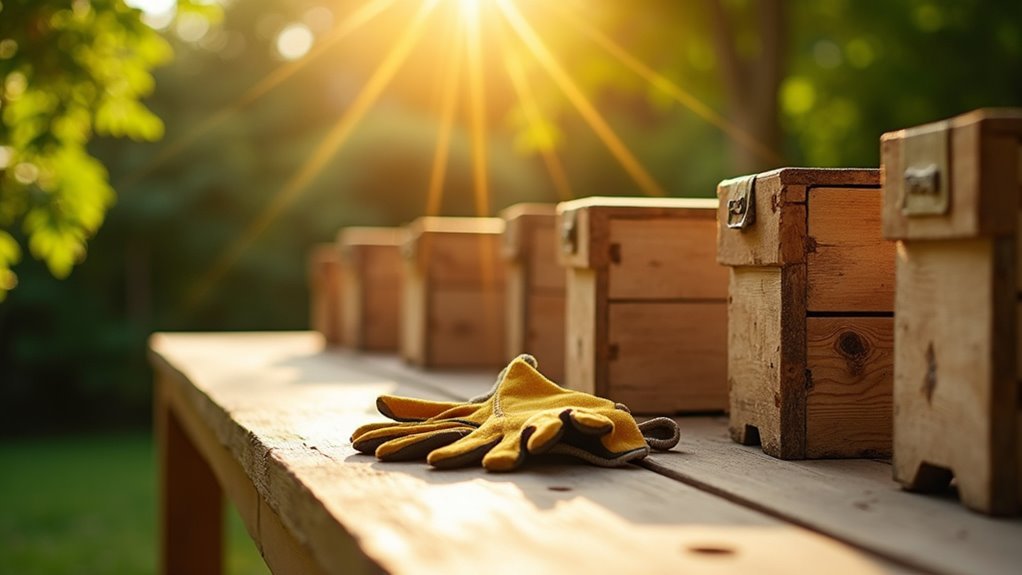
Before you relocate termite-infested furniture outdoors, you’ll need protective gear and careful planning to prevent spreading these destructive pests throughout your home.
Essential safety precautions when moving infested items include:
Proper protective equipment and strategic planning are crucial when relocating termite-infested furniture to prevent pest spread throughout your living space.
- Wear gloves during handling to avoid direct contact with termites and their harmful droppings.
- Inspect area thoroughly before and after placement to check for signs of termites and prevent re-infestation.
- Maintain distance from items during sun exposure to avoid risks from escaping live termites.
- Use moving aids like dollies for heavy furniture to prevent strain and avoid dropping infested pieces.
Position items in direct sunlight for at least eight hours to maximize heat effectiveness.
This careful approach guarantees the sun exposure technique works safely while protecting you and your home from further termite contamination.
Combining Sunlight With Other Natural Methods
You can boost your termite elimination efforts by combining sunlight exposure with other natural treatments for maximum impact.
Essential oils like clove and neem penetrate deeper into sun-heated wood, while boric acid becomes more effective when applied during heat treatment sessions.
Adding beneficial nematodes to your light exposure strategy creates a dual attack that targets termites both above and below the surface.
Essential Oils Plus Sunlight
When you combine essential oils with direct sunlight exposure, you’ll create a powerful one-two punch against termite infestations that’s far more effective than either method alone.
Mix clove or orange oil with water and apply to infested areas before placing items in direct sunlight. The heat weakens termites’ defenses while oils disrupt their navigation systems. This combination creates multiple attack vectors:
- Sunlight kills termites within 8-72 hours while drying out wood
- Essential oils repel termites and accelerate dehydration processes
- Strong oil scents deter remaining termites from treated areas
- Heat enhances oil penetration into wood fibers
The drying effects of sun exposure make wood inhospitable for termite survival.
After treatment, reapply essential oils regularly to maintain a protective barrier for ongoing termite control.
Boric Acid Heat Treatment
While essential oils paired with sunlight create an effective termite treatment, adding boric acid to this combination delivers even more devastating results against persistent infestations.
You’ll find boric acid disrupts termites’ nutrient absorption, causing gradual death when they ingest it. This makes it perfect for heat treatment alongside sunlight exposure.
Place your infested wooden furniture in direct sunlight for at least eight hours while applying boric acid simultaneously. The heat weakens termite structures while boric acid targets survivors.
Always wear gloves and masks when handling boric acid, especially under intense sunlight.
After treatment, reapply boric acid regularly to maintain a protective barrier against returning termites. This combination approach tackles your termite problem more efficiently than using either method alone.
Nematodes With Light Exposure
Although nematodes work effectively on their own, combining these microscopic termite-hunting worms with sunlight exposure creates a powerful dual-action treatment that attacks infestations from multiple angles.
The nematodes inject deadly bacteria into termites while sunlight dehydrates and forces them from hiding spots. This combination maximizes your effectiveness against stubborn colonies.
Here’s how to apply this dual approach:
- Move infested furniture outdoors where sunlight kills some termites while nematodes target survivors.
- Apply nematodes during evening hours to prevent heat stress on these beneficial organisms.
- Schedule regular reapplication after rain or watering to maintain nematode populations.
- Use cooler days for treatment when both methods work efficiently together.
This integrated strategy guarantees thorough termite elimination through natural means.
Limitations of the Sun Exposure Technique
Despite its natural appeal, the sun exposure technique comes with several significant limitations that restrict its effectiveness as a complete termite control method. While sunlight exposure works well for small infestations in furniture, it can’t adequately penetrate structural wood or reach hidden termite colonies within your home’s framework.
| Limitation | Impact |
|---|---|
| Requires 8+ hours direct sunlight | Impractical for large items |
| Weather dependent | Ineffective during overcast days |
| Limited penetration depth | Hidden colonies remain untouched |
| Doesn’t address root causes | Moisture conditions persist |
You’ll find this approach serves as a temporary solution rather than an all-encompassing treatment. The technique can’t modify underlying moisture conditions that attract termites, making reinfestation likely without additional interventions.
Signs That Sunlight Treatment Is Working
When you implement sun exposure treatment correctly, several clear indicators will show you’re making progress against termite infestations.
You’ll notice termites fleeing from infested furniture when exposed to direct sunlight, as the heat disrupts their habitat.
Key signs your sunlight treatment is working include:
- Visible termite exodus – Termites abandoning the wood when heat becomes unbearable
- Reduced mud tubes – Existing tunnels dry out and new construction stops
- Wood cracking – Infested wood develops cracks as moisture evaporates, forcing termites out
- Decreased activity – Less movement, dead termites, and dry debris around treated areas
After 8 hours of direct sun exposure, you’ll see lethal temperature effects.
Within several days, the complete absence of live termites and fresh signs confirms your treatment’s success.
Preventing Termite Re-infestation After Treatment
After successfully eliminating termites through sunlight treatment, you’ll need to establish robust defense strategies to prevent these destructive pests from returning to your property.
Regularly inspect your home for signs of termite activity like mud tubes and droppings to catch problems early. Control moisture around your home by fixing leaks and maintaining clean gutters, since termites gravitate toward damp environments.
Store firewood at least 20 feet from your foundation to limit access for termites. Seal any cracks in walls and foundations using caulk or appropriate sealants to prevent termites from entering.
Schedule annual professional inspections to maintain a termite-free home and detect re-infestations before they escalate into major problems requiring extensive treatment.
When to Consider Professional Alternatives
How do you know if your termite problem has grown beyond what DIY methods can handle? Several clear indicators suggest it’s time to call a professional.
Several clear indicators suggest when termite problems have outgrown DIY solutions and require professional intervention.
You should contact a professional pest control company when:
- Extensive infestation – Termite activity has spread throughout multiple areas or penetrated structural components.
- Persistent signs – You continue seeing termite damage despite your DIY treatment attempts.
- Safety concerns – Chemical treatments pose risks around children or pets in your home.
- Assessment needs – You can’t determine the termite species or scope of the problem.
Professional pest control services offer advanced techniques like fumigation and soil treatments that provide more effective treatment than home remedies.
They’ll conduct thorough inspections to identify termite infestations and develop targeted solutions for long-term elimination.
Frequently Asked Questions
How Fast Can Sunlight Kill Termites?
You’ll start killing termites within hours of direct sunlight exposure, but you need at least 8 hours for effective results. For severe infestations, you should expose items for up to 72 hours.
What Is the Fastest Way to Kill Termites?
You’ll eliminate termites fastest through direct sunlight exposure. Place infested furniture outside for at least eight hours in bright sun. The heat and dryness will dehydrate and kill termites quickly without chemicals.
Can You Use Heat to Kill Termites?
Yes, you can use heat to kill termites effectively. Temperatures above 120°F for thirty minutes are lethal to them. You’ll need professional heating equipment or direct sunlight exposure for furniture treatment.
How Fast Does Baking Soda Kill Termites?
Baking soda doesn’t kill termites quickly – you’ll typically wait several days for results. It works by disrupting their digestive systems when they ingest it, causing dehydration over time rather than immediate elimination.
In Summary
You’ve learned how sun exposure can effectively eliminate termites from furniture through their vulnerability to heat and UV radiation. While this natural method works well for small infestations and portable items, you’ll need to assess weather conditions and treatment limitations carefully. Monitor for dead termites and wood damage improvement to confirm success. If you’re dealing with widespread structural infestations, don’t hesitate to contact professional exterminators for thorough treatment solutions.

Leave a Reply