
You can eliminate citrus pests using proven vinegar-based solutions that target specific insects without harsh chemicals. Mix white vinegar with dish soap for aphids, create apple cider vinegar traps for fruit flies, and combine vinegar with essential oils for scale insects. Apply horticultural vinegar for stubborn infestations, use vinegar-baking soda mixtures for mealybugs, and try soil drenches for root pests. These natural methods protect your trees while maintaining fruit quality, and there’s much more to discover about timing and application techniques.
White Vinegar and Dish Soap Spray for Aphids and Soft-Bodied Insects
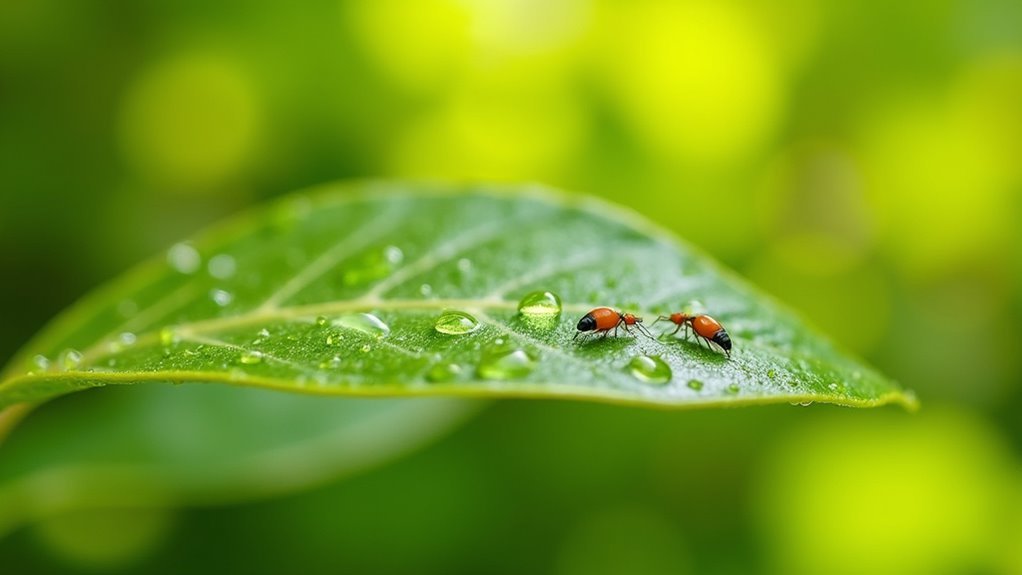
When aphids and other soft-bodied insects invade your citrus trees, you can create an effective homemade spray using white vinegar and dish soap that’ll disrupt their cell membranes and suffocate them on contact.
Mix one part white vinegar with three parts water, then add several drops of dish soap to help the solution stick to plant surfaces.
This powerful mixture targets citrus pests while removing honeydew and sooty mold from leaves, boosting your tree’s overall health.
Apply the spray during cooler morning or evening hours to prevent leaf burn. Test a small area first to verify your tree tolerates the solution well.
For maximum effectiveness, spray every 5 to 7 days during peak pest seasons to considerably reduce aphid populations.
Apple Cider Vinegar Trap Solution for Fruit Flies and Gnats
You can create an effective fruit fly and gnat trap using apple cider vinegar, which acts as a powerful attractant for these flying pests that commonly target citrus plants.
This simple DIY solution requires just a few household ingredients and strategic placement around your citrus trees or indoor growing areas.
Regular maintenance of these traps guarantees they’ll continue catching new pests while reducing the overall population threatening your citrus garden.
DIY Vinegar Trap Setup
Although fruit flies and gnats can quickly overrun your citrus growing area, you can eliminate these pests with a simple apple cider vinegar trap that costs just pennies to make.
Here’s how to set up your DIY trap:
- Fill a small bowl with apple cider vinegar, leaving space at the top for flies to enter.
- Add several drops of dish soap to break surface tension, causing pests to sink and drown.
- Cover with plastic wrap secured by a rubber band, then poke small holes for entry points.
Place these traps near your citrus trees where fruit flies congregate, especially around overripe fruit or damp soil areas.
The vinegar’s sweet scent attracts pests, while the soap guarantees they can’t escape once they land.
Replace the solution every few days to maintain effectiveness.
Targeting Flying Citrus Pests
Flying citrus pests like fruit flies and gnats pose a constant threat to your orchard’s health, but apple cider vinegar traps offer a targeted solution that’s both cost-effective and environmentally safe.
The fermented vinegar’s strong scent acts as a powerful lure, drawing these flying citrus pests from considerable distances. You’ll create an effective trap by filling a bowl with apple cider vinegar and adding several drops of dish soap to break surface tension, guaranteeing captured pests sink rather than escape.
Position traps strategically near infested areas where flying citrus pests congregate. The aroma’s reach extends well beyond the immediate placement area, maximizing capture potential.
Replace the vinegar solution every few days to maintain peak effectiveness and guarantee continuous control of these persistent flying citrus pests.
Trap Placement and Maintenance
Where should you position your apple cider vinegar traps to maximize their pest-catching potential?
Strategic trap placement makes all the difference in controlling fruit flies and gnats around your citrus trees.
Position your traps near affected trees or areas where you’ve spotted these flying pests. Avoid direct sunlight, as heat reduces the vinegar’s attractiveness.
For best results, follow this maintenance routine:
- Check traps every 2-3 days – Monitor capture rates and vinegar levels regularly
- Replace vinegar weekly – Fresh vinegar maintains the fruity scent that lures pests effectively
- Clean containers thoroughly – Remove debris and dead insects before refilling
Proper trap placement and consistent maintenance guarantee your apple cider vinegar solution remains effective.
You’ll see significant reductions in fruit fly and gnat populations when you stay committed to this simple yet powerful approach.
Vinegar and Essential Oil Blend for Scale Insect Treatment
Scale insects create a persistent challenge for citrus growers, but you can combat these stubborn pests with a simple vinegar and essential oil blend that attacks their defenses from multiple angles.
The acetic acid in vinegar disrupts their protective coating while essential oils like tea tree or rosemary repel them with aromatic properties.
Create your treatment by mixing equal parts white vinegar and water, then adding several drops of your chosen essential oil.
Spray the solution directly onto affected areas, focusing on leaf undersides where scale insects typically hide. Apply every 7 to 10 days during growing season for ideal control.
Always test on a small plant section first to prevent foliage damage before full application.
Horticultural Vinegar Concentration for Stubborn Pest Infestations
When you’re dealing with persistent pest problems on your citrus trees, you’ll need to understand the proper concentration levels of horticultural vinegar to maximize effectiveness without causing damage.
The timing and method of application directly impact how well the treatment works against stubborn infestations like aphids and mealybugs.
You’ll also want to follow specific safety precautions to protect both your trees and beneficial insects in your garden.
Optimal Vinegar Concentration Levels
While household vinegar contains only 5% acetic acid, horticultural vinegar packs a powerful 20% concentration that’ll effectively tackle stubborn pest infestations on your citrus trees.
Understanding ideal vinegar concentration levels is essential for implementing effective strategies against aphids, whiteflies, and spider mites.
The high acidity disrupts pest exoskeletons on contact, but you’ll need proper dilution to protect your plants:
- Dilute to 10-20% concentration – Mix horticultural vinegar with water to prevent leaf burn while maintaining pest-killing power
- Apply during cooler hours – Morning or evening applications minimize evaporation and maximize effectiveness
- Reapply every 5-7 days – Vinegar breaks down quickly in the environment, requiring consistent treatment schedules
Regular monitoring guarantees your citrus trees stay pest-free without sustaining foliage damage.
Application Methods for Effectiveness
Targeting pest-infested areas with precision guarantees horticultural vinegar delivers maximum impact against stubborn citrus tree infestations. You’ll need to focus on leaf undersides and visible pests where harmful insects congregate most. Direct application methods guarantee better contact with pest membranes, maximizing disruption effectiveness.
| Application Method | Concentration | Target Areas | Frequency |
|---|---|---|---|
| Direct spray | 20% undiluted | Heavy infestations | Weekly |
| Diluted solution | 1:3 ratio | Moderate pests | Bi-weekly |
| Spot treatment | Full strength | Individual clusters | As needed |
| Preventive spray | 1:4 ratio | Entire canopy | Monthly |
Your management strategies should include patch testing before widespread use. Consistent applications every 7-14 days work best for persistent populations. This systematic approach transforms horticultural vinegar into an effective weapon against citrus trees’ most challenging pest problems.
Safety Precautions and Timing
Although horticultural vinegar’s 20% acetic acid concentration makes it highly effective against stubborn citrus pests, you’ll need to follow strict safety precautions to protect both yourself and your trees.
Timing your application correctly prevents unnecessary plant stress and maximizes treatment effectiveness. Apply during cooler periods like early morning or late afternoon to avoid leaf burn from intense sunlight.
Essential safety precautions include:
- Test first – Conduct a patch test on a small foliage area before widespread application.
- Avoid vulnerable plants – Never use on young seedlings or already stressed citrus trees.
- Monitor regularly – Check pest populations after treatment since multiple applications may be necessary.
The high acidity can damage your citrus trees if applied improperly, so dilute according to instructions and avoid treating plants during heat stress.
Vinegar and Baking Soda Formula for Mealybug Control
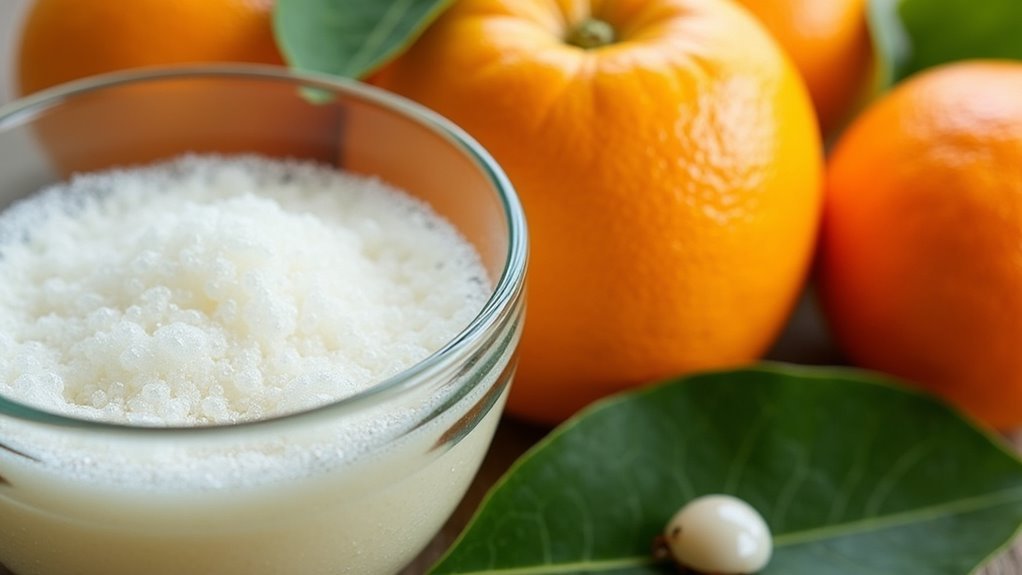
One of the most accessible and effective homemade remedies for mealybug control combines common household ingredients that pack a powerful punch against these stubborn pests.
Transform your pest control arsenal with simple kitchen staples that deliver surprising effectiveness against persistent mealybug infestations.
You’ll create this solution by mixing one part vinegar with one part water, then adding a tablespoon of baking soda. The mixture should fizz, indicating the chemical reaction that makes it effective against mealybugs.
Apply the solution directly onto affected plant areas, targeting the mealybugs and their egg sacs specifically. The acetic acid in vinegar suffocates these pests while baking soda disrupts their exoskeleton.
This natural remedy’s safe for citrus trees and can be reapplied every few days until you’ve controlled the infestation. Always test on a small area first to prevent adverse reactions.
Rice Vinegar and Garlic Extract for Thrips Management
You can create an effective thrips control solution by combining equal parts rice vinegar and water with crushed garlic cloves, then letting the mixture steep for several hours before straining.
This natural remedy targets thrips through the acetic acid’s repellent properties and garlic’s sulfur compounds that disrupt their feeding and reproduction cycles.
Regular applications of this environmentally safe formula will keep thrips populations manageable on your citrus trees without resorting to harsh chemical pesticides.
Preparation and Application Method
When thrips invade your citrus trees, creating an effective rice vinegar and garlic extract solution requires just three simple ingredients and minimal preparation time.
You’ll combine 1 cup rice vinegar, 1 cup water, and 2-3 crushed garlic cloves, then let the mixture steep overnight for maximum potency.
After straining out garlic pieces, follow this application process:
- Transfer the solution into a spray bottle for easy, targeted application
- Apply directly onto foliage covering both leaf tops and undersides where thrips hide
- Spray during early morning or late afternoon to prevent potential leaf burn from sun exposure
Reapply every 5-7 days or after rainfall to maintain effectiveness.
Regular monitoring helps you assess results and adjust your integrated pest management strategy as needed.
Thrips Control Effectiveness
The rice vinegar and garlic extract combination delivers impressive results against thrips infestations through a dual-action approach that targets multiple stages of the pest lifecycle.
You’ll see significant reductions in thrips populations as the rice vinegar disrupts their lifecycle by altering your plant’s surface pH, creating an inhospitable environment for reproduction and development.
Meanwhile, garlic extract’s allicin compound actively repels adult thrips with its potent odor and toxic properties.
When you apply this mixture directly to affected foliage, you’re simultaneously attacking both mature thrips and their larvae.
The synergistic effect of these natural ingredients enhances overall effectiveness beyond what either component achieves alone.
Regular applications maintain thrips-free conditions in your citrus orchard, resulting in healthier trees and substantially improved fruit yields.
Diluted Vinegar Soil Drench for Root-Dwelling Pests
While chemical pesticides often target visible pests, root-dwelling invaders like nematodes and soil larvae can silently damage your citrus trees from below ground.
You’ll need a different approach to protect your fruit trees’ foundation. A diluted vinegar soil drench offers an effective, natural solution. The acetic acid creates an unfavorable environment for these hidden pests while maintaining healthy growing season conditions for your citrus.
Vinegar’s acetic acid disrupts underground pests naturally while preserving the soil conditions your citrus trees need to thrive.
Here’s your application method:
- Mix the solution: Combine one part white or apple cider vinegar with four parts water.
- Apply strategically: Pour directly around the tree base during early morning or late afternoon.
- Maintain consistency: Repeat every two to four weeks for best results.
Make sure you’re targeting the soil, not foliage, to avoid interference with natural predators and beneficial insects protecting your fruit and nut trees.
Vinegar and Neem Oil Combination for Multi-Pest Defense
Beyond targeting root-dwelling pests, you’ll encounter aerial threats that require a broader defensive strategy.
Combining vinegar and neem oil creates a powerful organic insecticide that tackles multiple citrus pests simultaneously. This mixture effectively controls aphids, whiteflies, and spider mites through a dual-action approach. Vinegar’s acetic acid breaks down insects’ protective outer layers, causing dehydration, while neem oil disrupts their hormonal systems to prevent growth and reproduction.
Mix one part vinegar with two parts neem oil and add several drops of dish soap for better adhesion. Spray this solution directly onto affected tree areas.
When applied correctly, it won’t harm beneficial insects, preserving your orchard’s ecological balance. Apply every 7-14 days during peak pest season for ideal results and healthier citrus growth.
Fermented Vinegar and Molasses Bait for Citrus Fruit Flies
Citrus fruit flies pose one of the most persistent threats to your harvest, but you can turn their feeding instincts against them with a simple fermented vinegar and molasses trap.
This organic solution exploits their attraction to sugary, fermenting substances, creating an irresistible lure that’ll greatly reduce their population around your trees.
Creating your trap is straightforward:
- Mix equal parts apple cider vinegar or wine vinegar with molasses in a container
- Add dish soap drops to break surface tension, preventing escape once they’re trapped
- Place strategically near fallen fruit or under tree canopies where flies congregate
The fermented aroma draws them in effectively, while the soap guarantees they sink upon contact.
Replace your bait every two weeks or after rainfall to maintain peak effectiveness.
Vinegar-Based Foliar Spray Schedule for Preventive Pest Control
Prevention works even better than trapping when you apply vinegar-based foliar sprays directly to your citrus trees before pests establish themselves.
Apply vinegar-based foliar sprays to citrus trees before pest infestations occur for superior prevention results compared to trapping methods.
You’ll create an unfavorable environment for aphids and spider mites by mixing one part apple cider vinegar with three parts water in a spray bottle. Apply this solution every two weeks during growing season for consistent protection.
Time your applications for early morning or late afternoon to prevent leaf burn from direct sunlight while maximizing effectiveness.
Always test a small area first to verify your tree won’t react negatively to the vinegar concentration.
This preventive approach establishes a protective barrier that deters common citrus pests while maintaining your tree’s health throughout the season.
Frequently Asked Questions
How to Get Rid of Pests on Citrus Trees?
You’ll need to inspect your trees weekly, apply neem oil or insecticidal soap for soft-bodied pests, use sticky traps, encourage beneficial insects like ladybugs, and maintain proper watering and pruning practices.
What Is the Best Pesticide for Citrus Scale?
You’ll find Monterey Fruit Tree Spray Plus and Safer® Brand Insect Killing Soap work best for citrus scale. They’re environmentally safe yet effective. For severe infestations, consider GardenTech® Sevin® Concentrate Bug Killer.
What Is the Best Natural Pesticide for Citrus Trees?
You’ll find neem oil works best as a natural pesticide for citrus trees. It’s highly effective against various pests while staying safe for beneficial insects when you apply it correctly and follow proper timing guidelines.
What Is the Best Pesticide for Oranges?
For oranges, you’ll get excellent results with Fertilome® Tree & Shrub Systemic Insect Drench at $13.40, providing long-lasting protection. Alternatively, neem oil offers effective organic control against aphids and whiteflies safely.
In Summary
You’ve now got nine proven vinegar-based solutions to tackle any citrus pest problem. Don’t wait until infestations get out of hand – start with preventive foliar sprays and keep these recipes handy for quick action. Remember to test solutions on small areas first and reapply as needed. With consistent use of these natural methods, you’ll maintain healthy citrus trees without relying on harsh chemicals that harm beneficial insects.


Leave a Reply