
You can eliminate household pests using common kitchen ingredients that are safer and more cost-effective than commercial pesticides. Mix equal parts vinegar and water to disrupt ant trails, create apple cider vinegar traps for fruit flies, or combine baking soda with sugar for effective cockroach bait. Salt treatments dehydrate fleas, while peppermint oil deters mice and cayenne pepper creates protective barriers. Coffee grounds repel garden pests, and vanilla extract provides mosquito protection. These natural solutions deliver results within hours while protecting your family’s health.
Vinegar and Water Solutions for Ant Control
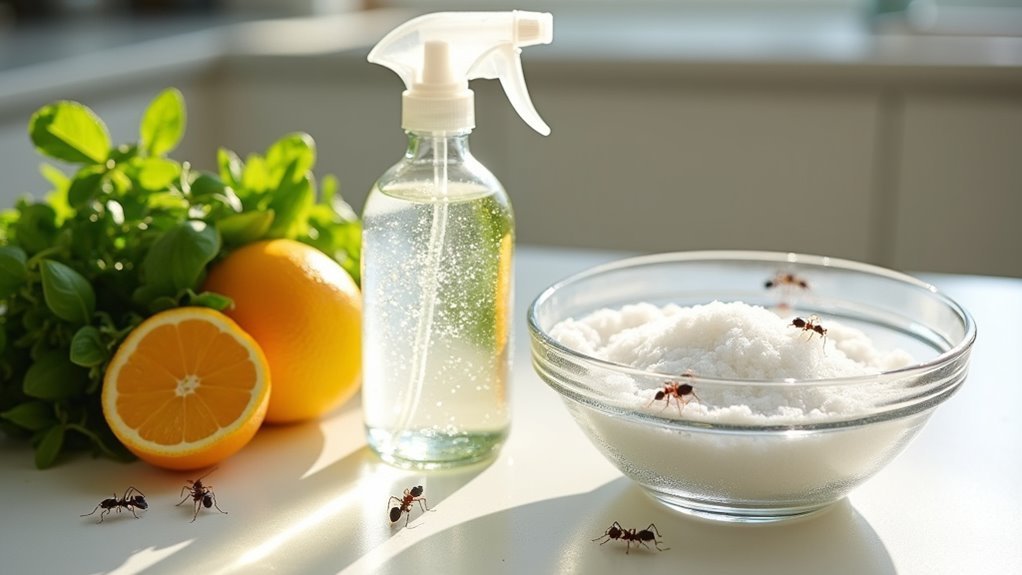
When ants invade your kitchen, you don’t need harsh chemicals to send them marching elsewhere. Vinegar and water solutions for ant control offer a simple, effective approach using ingredients you already have.
Mix equal parts vinegar and water to create a powerful cleaning solution that disrupts ant navigation by eliminating their pheromone trails. The acidic properties of vinegar break down these scent markers, preventing ants from finding their way back to food sources.
Vinegar’s acidic properties eliminate ant pheromone trails, disrupting their navigation system and preventing them from returning to food sources.
Simply wipe down countertops, entry points, and areas where you’ve spotted ant activity. This natural method is safe around children and pets, unlike chemical pesticides.
Regular application greatly reduces ant activity throughout your kitchen and living spaces while providing a cost-effective pest control strategy.
Apple Cider Vinegar Traps for Fruit Flies
Apple cider vinegar proves equally effective against fruit flies, those tiny pests that seem to appear from nowhere around ripe bananas and forgotten produce. You’ll create a powerful trap using this common kitchen staple that’s both safe and non-toxic for indoor use.
Pour apple cider vinegar into a small dish and add one drop of liquid dish soap to break the surface tension. Cover with plastic wrap, leaving one edge slightly lifted to allow entry while preventing escape. The strong scent attracts fruit flies irresistibly.
| Component | Purpose | Amount |
|---|---|---|
| Apple cider vinegar | Primary bait attractant | Fill small dish |
| Liquid dish soap | Break surface tension | 1 drop |
| Plastic wrap | Trap covering | Cover dish |
| Small opening | Entry point | Lift one edge |
Place traps near kitchens or ripe fruit for best results.
Baking Soda and Sugar Cockroach Bait
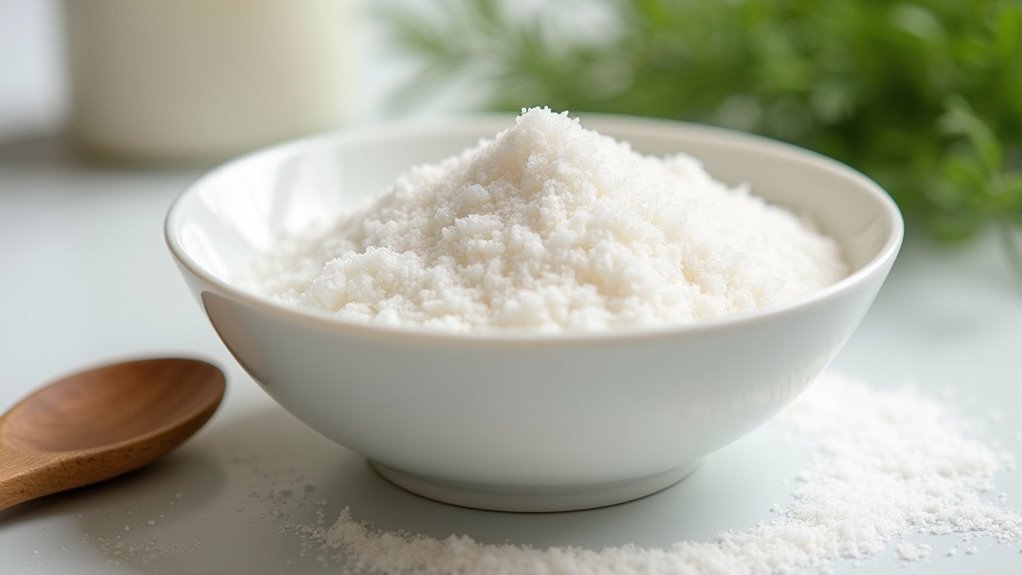
Cockroaches present a persistent challenge in many homes, but you can eliminate them using a simple two-ingredient bait that’s likely already in your pantry.
Mix equal parts baking soda and sugar to create this deadly combination. The sugar attracts cockroaches while the baking soda delivers the fatal blow.
This simple pantry ingredient combination uses sweet sugar as bait while baking soda delivers the lethal punch to eliminate roaches.
When roaches consume this mixture, the baking soda reacts with their stomach acid, producing gas they can’t expel. This reaction kills them effectively.
Place the bait in shallow dishes or sprinkle it where you’ve spotted cockroaches frequently.
Keep this mixture away from pets and children since large amounts of baking soda can harm them.
Check your bait stations regularly and replenish them to maintain consistent control over cockroach populations throughout your home.
Salt Treatments for Flea Elimination
You’ll find salt works as an effective flea killer by acting as a natural desiccant that dehydrates both adult fleas and their eggs.
When you sprinkle fine salt generously across your carpets and upholstery, it penetrates deep into fibers where fleas hide and disrupts their life cycle.
The dehydration process eliminates existing infestations while preventing future ones from developing in treated areas.
Salt Application Methods
When dealing with flea infestations, salt offers a simple yet powerful solution that harnesses dehydration to eliminate these persistent pests. You’ll need to apply salt generously across affected areas, focusing on carpets, upholstery, and pet bedding where fleas typically hide and reproduce.
| Application Area | Salt Amount | Contact Time | Follow-up Action |
|---|---|---|---|
| Carpets | Heavy coating | 24 hours | Vacuum thoroughly |
| Pet bedding | Generous sprinkle | 24 hours | Wash and vacuum |
| Upholstery | Even distribution | 24 hours | Vacuum all crevices |
| Floor cracks | Targeted application | 24 hours | Sweep and vacuum |
For enhanced effectiveness, you can combine salt with baking soda in equal parts. After the 24-hour treatment period, vacuum completely and dispose of contents immediately to prevent re-infestation.
Dehydration Process Effects
Salt transforms flea control by targeting the pest’s most vulnerable weakness: their dependence on moisture. When you sprinkle salt across infested carpets, you’re initiating a powerful dehydration process that systematically eliminates these persistent pests. The salt draws essential moisture from both adult fleas and their eggs, causing them to die from dehydration within 24 hours.
This dehydration process creates a cascading effect throughout the flea population. As moisture gets extracted, you’re not just killing existing fleas—you’re disrupting their entire reproductive cycle.
Eggs can’t develop properly, larvae can’t mature, and adults can’t survive. This thorough approach breaks the infestation at multiple stages, preventing future generations from establishing themselves in your home and ensuring long-term pest control success.
Dish Soap Sprays for Flying Insects
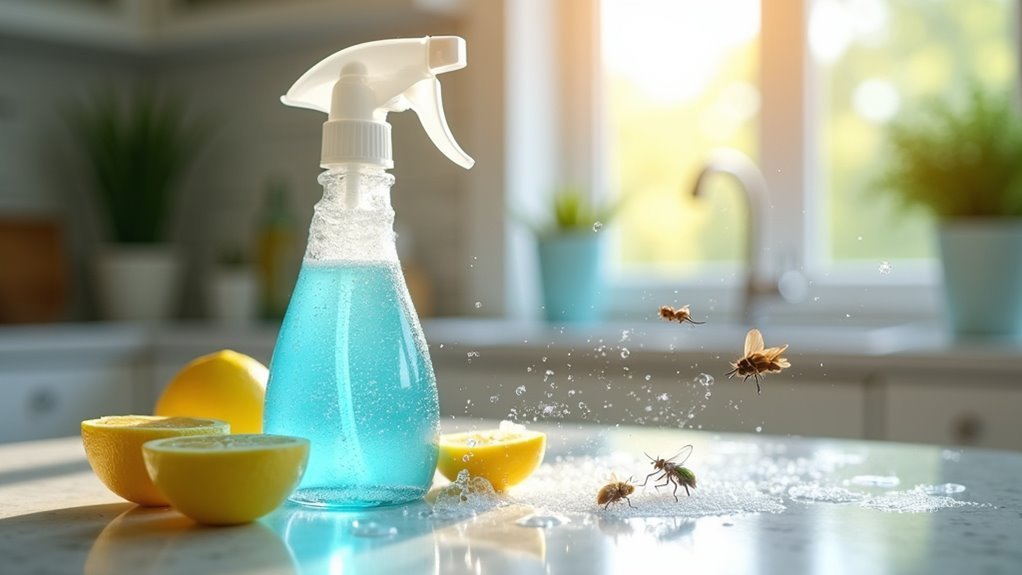
One of the most effective homemade pest control solutions sits right in your kitchen sink. Dish soap sprays break down flying insects’ exoskeletons, making them an efficient pest control method. You’ll need concentrated dish soap without additives for maximum impact.
Mix equal parts Blue Dawn dish soap and water in a spray bottle. When you spray directly onto flies and other flying insects, the solution immobilizes them temporarily, allowing easy disposal without messy traps. The soap mixture also deters other pests when used as a surface cleaning spray.
| Ingredient | Amount | Purpose |
|---|---|---|
| Blue Dawn Soap | 1 part | Breaks down exoskeletons |
| Water | 1 part | Dilutes for spraying |
| Spray Bottle | 1 unit | Application method |
This kitchen staple transforms into powerful pest control instantly.
Garlic and Onion Outdoor Pest Deterrents
Although harsh chemical pesticides might seem like the obvious choice, two pungent kitchen staples offer a gentler yet effective solution for outdoor pest control. Garlic and onion work as powerful natural insect deterrents thanks to their strong odors that repel mosquitoes, flies, and other unwanted pests.
Creating your own spray is simple: blend one chopped garlic clove and one small chopped onion with a quart of water. Let this mixture steep for an hour, then apply it around your home’s perimeter. The pungent aroma creates an unpleasant barrier that keeps insects away.
The simple garlic and onion mixture creates a natural barrier that effectively repels insects without using harmful chemicals.
Add a tablespoon of liquid dish soap to enhance effectiveness—it helps the solution stick to surfaces and pests.
Regular applications maintain a pest-free outdoor environment without harsh chemicals.
Essential Oil Blends From Kitchen Herbs
When you’re looking beyond garlic and onion solutions, essential oil blends from kitchen herbs provide another powerful weapon against household pests.
Peppermint and basil oils effectively repel ants, flies, and mosquitoes through their strong scents that insects naturally dislike. You can create a DIY spider deterrent by mixing lemon oil with liquid soap and water, then spray it around entry points.
Keep basil plants indoors or use dried basil near doorways to ward off flies. For pet protection, dilute eucalyptus or lavender oils and apply them to collars or around your home to combat ticks and fleas.
These essential oil blends from kitchen herbs offer chemical-free alternatives that protect your family while maintaining a fresh-smelling home.
Cornmeal Baiting for Ant Colonies
Three simple ingredients from your pantry can eliminate entire ant colonies without exposing your family to harsh chemicals.
Cornmeal works because ants can’t digest it properly, causing their colony to decline over time. You’ll place small piles where you’ve spotted ant activity, letting them carry the cornmeal back to their nest.
Ants cannot properly digest cornmeal, so they’ll unknowingly carry this natural deterrent straight back to their colony.
This method’s completely safe around kids and pets, unlike toxic pesticides. You’ll need to check your bait regularly and add fresh cornmeal to keep it effective.
For better results, mix the cornmeal with sugar or syrup – the sweetness makes it irresistible to ants while the cornmeal does the actual work of controlling their population naturally.
Citrus Peels as Spider Repellents
You’ll find that citrus peels make excellent spider repellents because they contain d-limonene, a natural compound that spiders can’t stand.
Simply place fresh peels from lemons, oranges, or other citrus fruits around entry points, windowsills, and corners where spiders tend to gather.
The key is choosing the right citrus varieties and applying them strategically throughout your home for maximum effectiveness.
Why Citrus Works
Because spiders rely heavily on their sensory receptors to navigate and hunt, citrus peels disrupt their natural behavior through limonene, a powerful natural oil that creates an overwhelming scent barrier.
| Citrus Component | Effect on Spiders |
|---|---|
| Limonene oil | Disrupts sensory receptors |
| Strong scent | Creates deterrent barrier |
| Acidic properties | Breaks down existing webs |
| Fresh peels | Continuous oil release |
When you spray citrus juice mixed with water around entry points, you’re establishing a chemical boundary that spiders instinctively avoid. The acidity in citrus also destroys their webs, forcing them to relocate. Fresh peels work continuously as natural repellents, slowly releasing oils that maintain your protective barrier. This method proves effective because it targets spiders’ primary navigation system.
Application Methods
Understanding citrus repels spiders means nothing without proper application techniques. You’ll find success by placing fresh lemon or orange peels directly in spider-heavy areas and along entry points like windowsills and doorways.
Unlike chemical insect repellents, citrus peels work naturally by disrupting spider pheromones used for navigation.
For enhanced coverage, create a citrus spray by blending peels with water. Apply this solution around windows, doors, and corners where spiders typically hide. The spray reaches areas where whole peels can’t fit effectively.
Consistency matters most for long-term results. Replace dried peels weekly and reapply your citrus spray every few days.
Fresh citrus maintains potency better than old peels, ensuring continuous spider deterrence throughout your home.
Best Citrus Types
While all citrus fruits contain spider-repelling properties, certain varieties pack more punch than others.
Lemons and oranges top the list as the most effective citrus peels for spider control due to their high d-limonene content. This natural compound creates a powerful scent barrier that spiders find unbearable.
Lemon peels offer the strongest concentration of repelling oils, making them your first choice for serious spider problems.
Orange peels provide excellent results while adding a sweeter fragrance to your home.
Grapefruit peels work well too, though they’re slightly less potent than their smaller citrus cousins.
You’ll find lime peels effective but milder in comparison.
For maximum impact, combine different citrus peels around your home’s entry points and problem areas.
Flour-Based Silverfish Traps
Three simple ingredients from your kitchen pantry can create an surprisingly effective silverfish trap that outperforms many commercial options.
These flour-based silverfish traps require only a straight-sided glass, regular flour, and tape. Pour 1/4 inch of flour into the glass – silverfish can’t resist this common kitchen staple and will climb inside but won’t escape the smooth walls.
Create vertical tape strips on the glass’s exterior to form climbing paths for easier access.
Position your traps where you’ve spotted silverfish activity: basements, bathrooms, and near bookshelves work best. Check traps regularly and refresh the flour to maintain effectiveness.
This non-toxic method controls silverfish populations without harsh chemicals, making it safe around family and pets while using ingredients you already have.
Peppermint Oil Mouse Deterrents
Moving from pantry staples to aromatic solutions, peppermint oil offers a powerful weapon against unwanted mouse visitors. This natural deterrent works by overwhelming mice’s sensitive noses, disrupting their ability to navigate and locate food sources.
Create an effective spray by mixing 10-15 drops of peppermint oil with water in a spray bottle. Apply this mixture around entry points, baseboards, and areas where you’ve noticed mouse activity.
Mix 10-15 drops of peppermint oil with water in a spray bottle for an effective natural mouse deterrent.
For enhanced protection, soak cotton balls in peppermint oil and place them strategically in corners and potential nesting spots.
Research shows consistent use can reduce mouse activity by 50%. Unlike harsh chemicals, peppermint oil remains completely safe around children and pets, making it an ideal eco-friendly pest control solution that transforms your home into an unwelcoming environment for rodents.
Cayenne Pepper Barrier Methods
You can harness cayenne pepper’s natural irritant properties to create powerful pest barriers that keep ants, spiders, and cockroaches away from your home.
The capsaicin in this common spice disrupts insects’ sensory receptors, making it nearly impossible for them to navigate through treated areas.
Creating Effective Barriers
When ants and other crawling insects invade your home, cayenne pepper creates a powerful natural barrier that exploits their sensitive sensory systems. The capsaicin disrupts their sensory receptors, effectively deterring them from crossing treated areas.
Sprinkle cayenne pepper around doorways, windows, and other entry points where pests commonly appear. For better coverage, create a spray solution by mixing cayenne pepper with water, then apply it directly to surfaces where you’ve noticed frequent insect activity.
Remember to reapply your barriers regularly, especially after rain or cleaning sessions, to maintain their effectiveness. Since cayenne pepper is completely non-toxic, you can use it safely around children and pets while keeping unwanted insects away.
Application and Placement
Strategic placement of your cayenne pepper barrier determines its success in keeping pests at bay. You’ll want to focus on ant entry points like windowsills, doorframes, and cracks where they typically enter your home. Sprinkle cayenne pepper generously around these areas to disrupt their pheromone trails.
| Location | Application Method | Reapplication Frequency |
|---|---|---|
| Window sills | Direct sprinkling | After rain or weekly |
| Door frames | Cayenne pepper spray | Every 3-5 days |
| Foundation cracks | Powder application | When moisture reduces potency |
For larger areas, mix cayenne pepper with water to create a spray that’s easier to apply. Always place barriers away from children and pets to prevent irritation from accidental contact or ingestion.
Coffee Grounds for Garden Pest Control
While commercial pesticides can harm beneficial insects and contaminate your soil, coffee grounds offer a natural alternative that’s sitting right in your kitchen trash. You can sprinkle used coffee grounds around your plants to create an effective barrier against slugs, snails, and ants. These pests hate crossing the gritty texture, keeping them away from your precious vegetables and flowers.
Coffee grounds don’t just repel unwanted visitors – they’ll also enrich your soil with nitrogen, promoting healthier plant growth while improving soil structure. This dual-purpose approach makes them incredibly efficient for garden maintenance.
When you’re finished with this pest control method, simply compost the used grounds to create nutrient-rich soil amendment, making this solution completely sustainable for your garden ecosystem.
Vanilla Extract Mosquito Repellent
You can transform ordinary vanilla extract from your pantry into an effective mosquito repellent that naturally masks the scents these pests use to find you.
Simply mix two tablespoons of vanilla extract with water in a spray bottle and apply it directly to your skin and clothing for protection.
This natural solution provides up to 8 hours of mosquito defense while being gentler on your skin than harsh chemical alternatives.
Vanilla’s Natural Repelling Properties
Because mosquitoes rely heavily on detecting human scents to locate their targets, vanilla extract’s powerful aroma effectively masks the natural odors that draw these pests to you. This kitchen staple works as a natural barrier, confusing mosquitoes and disrupting their ability to track you down.
| Property | Benefit | Duration |
|---|---|---|
| Strong scent | Masks human odors | 2-4 hours |
| Non-toxic formula | Safe for skin contact | All day |
| Pleasant aroma | Enjoyable alternative | Several hours |
You’ll find vanilla extract particularly appealing because it doesn’t contain the harsh chemicals found in commercial repellents. Its safety profile makes it perfect for families with children, while the sweet fragrance provides a welcome change from traditional insect sprays that often smell unpleasant.
Simple Application Methods
Creating your own vanilla extract mosquito repellent requires just a few simple steps that’ll have you protected in minutes.
Mix two tablespoons of vanilla extract with one tablespoon of water in a spray bottle for easy application. This homemade insect repellent can be sprayed directly onto exposed skin, clothing, or around outdoor areas where you’ll be spending time.
For best results, reapply the vanilla solution every few hours, especially if you’re sweating or in heavily infested areas.
Before using this natural repellent extensively, perform a patch test on a small skin area to check for allergic reactions. While vanilla extract is generally safe for most skin types, it’s always wise to test first when trying any new topical application.
Effectiveness and Duration
When applied properly, vanilla extract mosquito repellent offers moderate protection that typically lasts 2-4 hours under normal conditions. You’ll find its effectiveness varies based on your individual skin chemistry and the concentration you use in your mixture. Environmental factors like humidity, wind, and mosquito population density also influence how well it works for you.
| Concentration | Duration | Effectiveness |
|---|---|---|
| Light (1:10 ratio) | 1-2 hours | Basic protection |
| Medium (1:5 ratio) | 2-3 hours | Moderate protection |
| Strong (1:3 ratio) | 3-4 hours | Enhanced protection |
| Direct application | 4+ hours | Maximum protection |
You’ll need to reapply vanilla extract every few hours during outdoor activities to maintain its repellent effects, making it less convenient than commercial alternatives but safer for sensitive skin.
Frequently Asked Questions
What Is the Best Homemade Pest Killer?
You’ll find the vinegar-water mixture works best as an all-purpose homemade pest killer. It’s effective against ants, disrupts their trails, and deters return visits while being safe around your family and pets.
Can You Use Vinegar and Dawn as Insecticide?
Yes, you can mix equal parts vinegar and Dawn dish soap to create an effective insecticide. The vinegar deters pests while Dawn breaks down insects’ exoskeletons, making this safe, non-toxic solution perfect for households.
Does Spraying Vinegar Keep Bugs Away?
Yes, spraying vinegar keeps bugs away effectively. You’ll find it disrupts ant trails, repels spiders and flies with its strong scent, and acts as a natural deterrent. It’s a non-toxic solution that works well.
What Is the Best Cleaner to Keep Bugs Away?
You’ll find a vinegar-water solution works best as it disinfects surfaces, destroys ant scent trails, and creates a barrier that deters insects with its strong scent while remaining safe.
In Summary
You’ve now got nine powerful pest control methods using everyday kitchen ingredients. You’ll save money while avoiding harsh chemicals that could harm your family or pets. Don’t forget to clean up food sources and seal entry points for maximum effectiveness. These natural solutions won’t work overnight, but with consistent application, you’ll notice fewer unwanted visitors. Keep experimenting with different combinations until you find what works best for your specific pest problems.


Leave a Reply