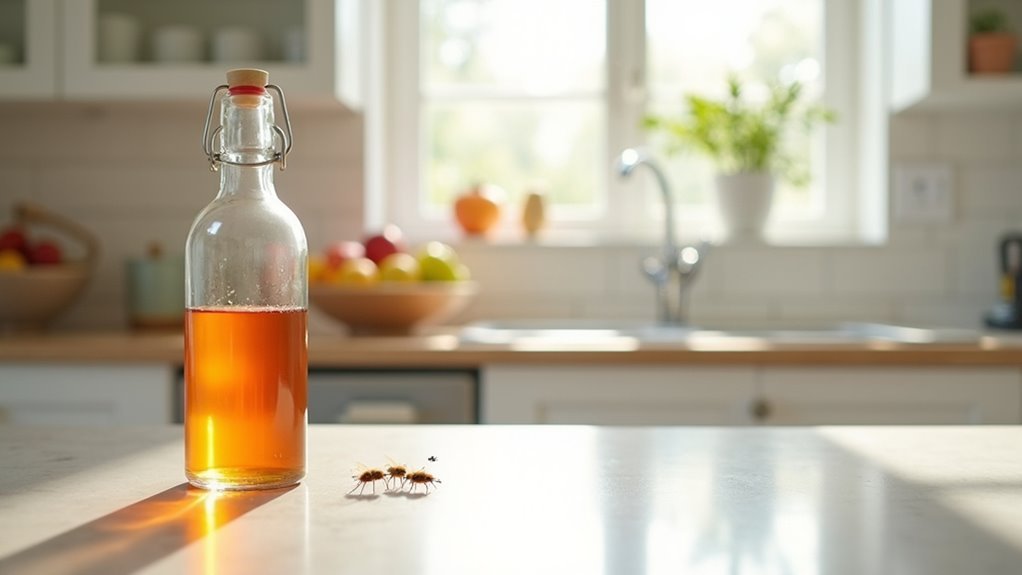
Fruit flies hate apple cider vinegar because its strong fermentation scent disrupts their sensory receptors, confusing their navigation system. You’ll find this kitchen staple works as both a repellent and deadly trap – the aroma attracts flies while the reduced surface tension causes them to drown upon contact. Apple cider vinegar captures three times more flies than white vinegar due to its sweeter scent that mimics decaying fruit. Discover advanced techniques to maximize your results.
Understanding Why Fruit Flies Invade Your Kitchen
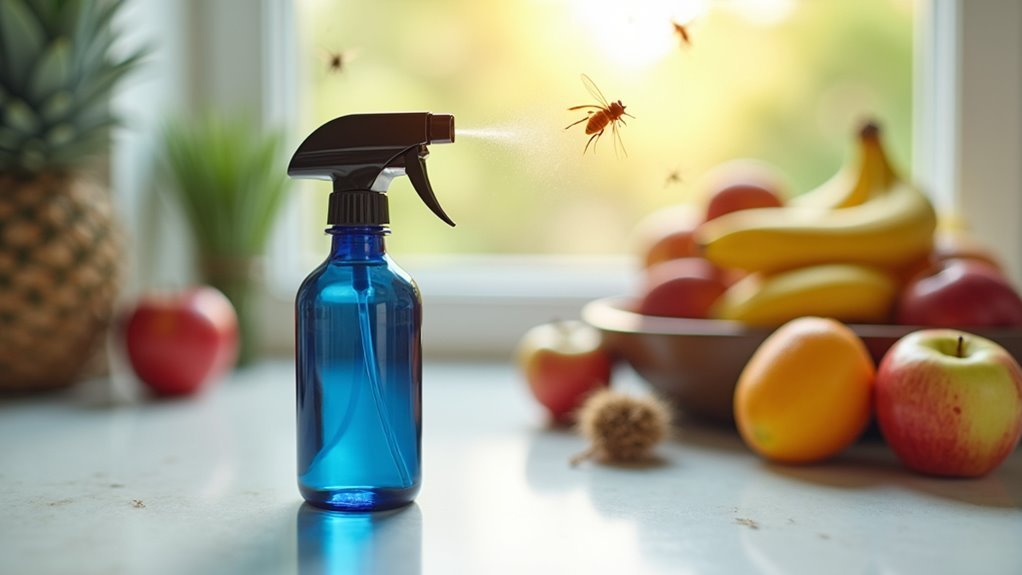
Why do these tiny pests seem to materialize overnight in your kitchen? Fruit flies don’t appear by magic—they’re drawn to specific conditions that make your kitchen an irresistible breeding paradise.
These persistent invaders are primarily attracted to decaying fruits and vegetables, sugary substances like spilled juices, and alcohol residues.
What makes the situation worse is how quickly they multiply. Female fruit flies lay hundreds of eggs on overripe produce, creating full infestations within just 12 hours.
Warm environments, especially during late summer and early fall, accelerate their reproduction cycle considerably.
The common culprits that attract fruit flies include exposed food items, unsealed garbage cans, sticky spills, and forgotten produce.
Understanding these attraction points is your first step toward eliminating them permanently.
The Science Behind Vinegar as a Natural Repellent
Two key properties make vinegar your most powerful weapon against fruit flies: its acetic acid content and its dual nature as both attractant and repellent. The high acidity disrupts their sensory receptors while the fermentation scent draws them in, creating perfect conditions for homemade traps.
| Property | Effect on Fruit Flies | Trap Mechanism |
|---|---|---|
| Acetic Acid | Disrupts sensory receptors | Creates deterrent barrier |
| Fermentation Scent | Attracts to source | Lures into trap solution |
| Surface Tension Reduction | Prevents escape | Drowning upon contact |
| Odor Masking | Hides food attractants | Reduces kitchen appeal |
| pH Level | Creates hostile environment | Prevents reproduction |
When you add dish soap to vinegar, you’re reducing surface tension, ensuring fruit flies drown upon contact. This pungent solution also masks rotting fruit scents, preventing future infestations.
Apple Cider Vinegar Vs White Vinegar: Which Works Better
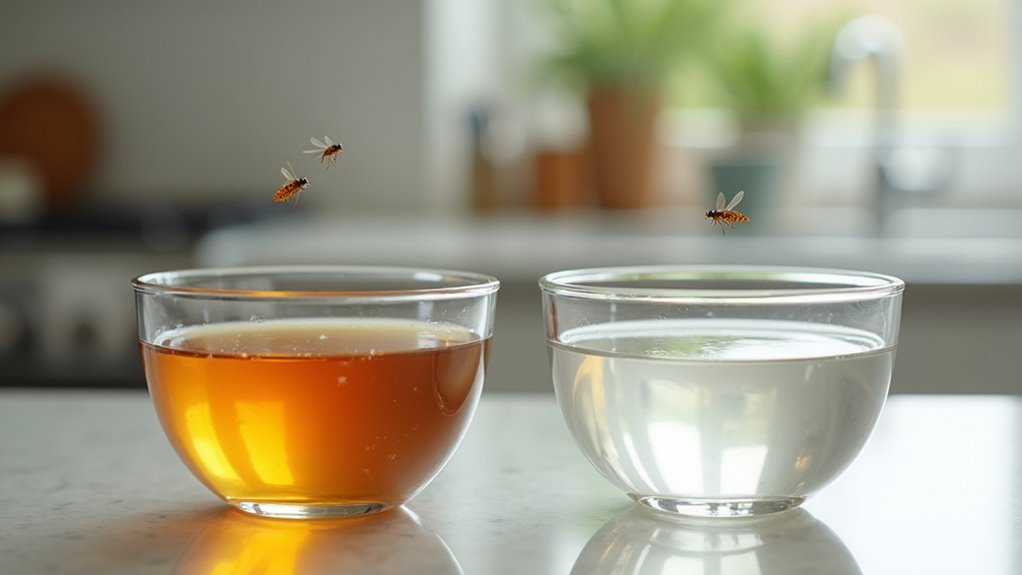
While both vinegar types contain acetic acid, apple cider vinegar dramatically outperforms white vinegar when you’re battling fruit flies.
You’ll find that apple cider vinegar’s sweeter, more potent aroma mimics the decaying fruit scents that naturally draw these pests in. This works because fruit flies are hardwired to seek out fermenting sugars for breeding and feeding.
White vinegar’s sharp scent doesn’t trigger the same response. Studies show apple cider vinegar traps capture up to three times more fruit flies than white vinegar alternatives.
The acidity in apple cider vinegar also masks competing odors, making your trap irresistible. When you combine apple cider vinegar with a few drops of dish soap, you’ll create an even more effective solution that breaks surface tension and prevents escape.
How Vinegar Disrupts Fruit Fly Behavior Patterns
When you set up a vinegar trap, you’re fundamentally hijacking fruit flies’ hardwired survival instincts. The fermented scent draws them in because it perfectly mimics their preferred breeding grounds – rotting fruit.
Once they encounter the vinegar’s acetic acid, their sensory systems become scrambled, making navigation and escape nearly impossible.
Here’s how vinegar disrupts their behavior:
- Sensory confusion – Acetic acid interferes with their ability to process environmental cues
- Surface tension manipulation – Adding dish soap creates a drowning trap they can’t detect
- Breeding cycle interruption – Trapped flies can’t reproduce, breaking the infestation cycle
You’re basically turning their strongest survival mechanism against them. The same attraction that leads them to food sources becomes their downfall when vinegar mimics those signals.
Creating the Perfect Vinegar-Based Trap Solution

You’ll want to start with apple cider vinegar as your trap’s foundation since its fermented scent acts like a magnet for fruit flies.
Add just a few drops of dish soap to break the surface tension, which prevents flies from simply landing and flying away.
This simple two-ingredient combination creates an irresistible trap that drowns flies on contact.
Apple Cider Vinegar Base
Because fruit flies can’t resist the sweet, fermented aroma of apple cider vinegar, you’ll find it’s one of the most reliable baits for homemade traps. The fermented scent mimics overripe fruit, drawing these pests directly to your trap.
To maximize your trap’s effectiveness, follow these simple steps:
- Mix apple cider vinegar with dish soap – Add a few drops to break surface tension and prevent escape.
- Use fresh ACV solution – Replace every few days to maintain the strongest scent attraction.
- Combine with rotting fruit – Add banana peels or overripe apple pieces for enhanced appeal.
The dish soap creates a deadly combination that guarantees flies can’t fly away once they land.
This powerful base will lure fruit flies more effectively than any store-bought solution while using common kitchen ingredients you already have.
Dish Soap Addition
Three drops of ordinary dish soap transform your apple cider vinegar from a mere attractant into a deadly trap. The soap breaks the surface tension that normally allows fruit flies to land, drink, and escape unharmed. Without this protective barrier, flies sink immediately upon contact and drown in the solution.
Creating this fruit fly trap couldn’t be simpler. Pour apple cider vinegar into a bowl or jar, then add just a few drops of dish soap. You don’t need expensive products—any household dish soap works perfectly.
The vinegar’s sweet scent draws flies in while the soap guarantees they can’t escape.
This inexpensive combination eliminates the frustration of watching flies hover around ineffective traps, delivering results that actually work.
Adding Dish Soap to Boost Vinegar Effectiveness
Anyone who’s tried a basic vinegar trap knows it attracts fruit flies, but adding a few drops of dish soap transforms it into a far more effective solution.
The dish soap reduces the surface tension of the vinegar, preventing flies from escaping once they land.
By breaking down the liquid’s surface tension, dish soap creates a slippery trap that drowns flies instantly upon contact.
This simple combination creates a deadly trap that’s both cost-effective and chemical-free. You’ll capture considerably more fruit flies compared to vinegar alone, making this method highly recommended for kitchen infestations.
Here’s why this combination works so well:
- Surface tension reduction – Dish soap causes fruit flies to sink and drown immediately
- Enhanced attraction – The sweet vinegar smell remains potent while soap ensures capture
- Escape prevention – Creates an inescapable barrier using common household items
Strategic Placement of Vinegar Traps in Your Kitchen
Creating the perfect vinegar and dish soap trap is only half the battle—where you place these traps determines their success rate.
Position your vinegar traps strategically near fruit bowls, garbage cans, and kitchen sinks where fruit flies congregate and breed most actively. These hotspots attract flies naturally, making your traps more effective intercept points.
Place traps directly on countertops and surfaces where you’ve spotted the most activity. Apple cider vinegar works exceptionally well because its scent mimics rotting fruit that draws flies in.
Remember to monitor your traps regularly and replace the vinegar every few days as the aroma weakens over time. Combine this strategic placement with proper food storage and surface cleaning for maximum fruit fly elimination results.
Combining Vinegar With Essential Oils for Enhanced Results
You’ll want to choose the right essential oils and mix them properly with vinegar to create an effective fruit fly deterrent.
Lemongrass, peppermint, and clove oils work best because they’re naturally repulsive to fruit flies while masking the attractive scents of ripe fruit.
Getting your mixing ratios right guarantees you’ll maximize both the trapping power of vinegar and the repelling strength of these oils.
Oil Selection Guide
While standard vinegar traps work effectively on their own, adding essential oils can greatly boost their performance by creating a more potent deterrent that overwhelms fruit flies’ sensitive smell receptors.
When selecting the right essential oils to combine with your vinegar solution, you’ll want to choose options that naturally repel these persistent pests while maintaining kitchen safety.
Consider these top essential oil choices:
- Lemongrass oil – Provides a citrusy scent that fruit flies find overwhelmingly strong
- Peppermint oil – Creates an intense menthol barrier that disrupts their navigation
- Clove oil – Delivers powerful aromatic compounds that mask vinegar’s attractant properties
Always verify you’re using food-safe, non-toxic essential oils in your kitchen.
Just a few drops mixed with vinegar creates an effective dual-purpose solution that eliminates pests while freshening your space naturally.
Mixing Ratios Explained
The 2:1 ratio forms the foundation of effective vinegar-oil combinations, where you’ll mix one tablespoon of apple cider vinegar with 2-3 drops of your chosen essential oil.
This balance maximizes the vinegar’s attraction while activating the repellent properties of oils like lemongrass or peppermint.
Start with conservative amounts when mixing vinegar solutions. Too much oil overwhelms the vinegar’s lure, while too little won’t provide adequate deterrence.
You can adjust concentrations based on your kitchen’s specific fruit fly problem. Stronger infestations might require slightly more essential oils.
Test different ratios in small batches before making larger quantities. Some oils work better at higher concentrations, while others become less effective.
Document which combinations work best in your space for future reference.
Common Mistakes When Using Vinegar Against Fruit Flies
Although vinegar traps can effectively eliminate fruit flies, many people sabotage their success through simple oversights that drastically reduce trap performance.
The biggest mistake you’ll make is using vinegar without adding dish soap. Those few drops reduce surface tension, preventing fruit flies from escaping once they’re trapped.
You’re also likely poking too few holes in your plastic wrap covering, which limits fly entry and makes your trap less effective.
Here are three critical errors to avoid:
- Using white vinegar instead of apple cider vinegar, which fruit flies find more attractive
- Placing traps near competing attractants like ripe fruit or garbage
- Forgetting to replace stale vinegar solution regularly
Fresh apple cider vinegar maintains its fruity aroma that draws flies in effectively.
Maintaining Fresh Vinegar Solutions for Maximum Impact
Since fresh vinegar solutions drastically outperform their stale counterparts, you’ll need to establish a regular replacement schedule to keep your traps working at peak efficiency.
Replace your vinegar every few days to maintain the strong aroma that attracts fruit flies effectively.
Keep your solutions at room temperature rather than refrigerated, as cold vinegar won’t emit the potent scent needed to trap flies successfully.
The warmer temperature maximizes odor dispersion, drawing more insects to your trap.
Use shallow dishes to increase surface area and scent distribution.
Add a few drops of dish soap to break surface tension, ensuring fruit flies can’t escape once they land.
Experiment with apple cider or red wine vinegar varieties, as different types may prove more appealing to your specific fruit fly population.
Alternative Vinegar Methods for Stubborn Infestations
When standard vinegar traps aren’t delivering the results you need, combining apple cider vinegar with rotting fruit scraps creates an irresistible double-baited trap that targets even the most persistent fruit fly colonies.
This enhanced approach works because flies are naturally attracted to vinegar, but adding decomposing fruit amplifies the fermenting scent they can’t resist.
For stubborn infestations, try these powerful alternatives:
- White vinegar and olive oil combo – Mix white vinegar with olive oil in a bowl where vinegar lures flies and oil traps them permanently
- Increased vinegar quantities – Double or triple your usual vinegar amount to create stronger attraction zones
- Fresh bait rotation – Replace fruit scraps and vinegar every 2-3 days to maintain peak effectiveness
These methods guarantee complete elimination of persistent populations.
Preventing Future Fruit Fly Problems With Regular Vinegar Use
You’ll prevent future fruit fly invasions by establishing a consistent vinegar-based cleaning routine that targets their breeding grounds before problems start.
Start with weekly drain cleaning using vinegar solutions, then create a regular surface spray method that eliminates food residues while leaving protective scents.
This proactive kitchen maintenance schedule transforms vinegar from a reactive solution into your best defense against recurring infestations.
Weekly Drain Cleaning Routine
Although fruit flies can quickly multiply in dirty drains, establishing a weekly vinegar cleaning routine creates an inhospitable environment that prevents infestations before they start.
You’ll need to pour a mixture of vinegar and baking soda down your kitchen drains every week to eliminate organic material that serves as breeding grounds. Vinegar’s acidic properties break down grease and food particles while its strong scent naturally deters fruit flies from approaching the area.
Your weekly routine should include:
- Cleaning drains with one cup white vinegar mixed with half cup baking soda
- Letting the mixture sit for 15 minutes before flushing with hot water
- Repeating consistently every seven days to maintain effectiveness
This systematic approach using vinegar will prevent fruit flies from establishing colonies while promoting overall kitchen hygiene throughout your home.
Vinegar Surface Spray Method
Beyond maintaining clean drains, you can create a powerful vinegar surface spray that prevents fruit flies from settling on your kitchen counters and other surfaces.
Mix equal parts water and vinegar in a spray bottle for an effective solution that masks food scents attracting these pests. The vinegar’s strong odor naturally repels flies while eliminating residues they use for breeding.
Add a few drops of dish soap to enhance your solution’s effectiveness. The soap reduces surface tension, trapping any flies that contact the sprayed areas.
Apply this mixture regularly on countertops, sinks, and food preparation zones after cooking or cleaning.
Keep your vinegar spray readily available for quick post-meal cleanups, maintaining a consistently clean environment that discourages infestations.
Proactive Kitchen Maintenance Schedule
While spot-cleaning tackles immediate concerns, establishing a consistent weekly maintenance routine with vinegar guarantees fruit flies never gain a foothold in your kitchen.
Regular vinegar solution treatments create an unwelcoming environment that prevents infestations before they start.
Your proactive kitchen maintenance schedule should include:
- Weekly surface cleaning – Wipe down countertops and sinks with vinegar solution to eliminate any lingering eggs or larvae
- Monthly drain treatments – Pour vinegar and water down drains to destroy breeding sites where fruit flies reproduce
- Strategic vinegar placement – Position bowls of vinegar around your kitchen as natural traps for adult fruit flies
Combine this routine with prompt disposal of overripe fruits.
The vinegar’s strong scent acts as a natural deterrent, making your kitchen an uninviting space for fruit flies year-round.
Frequently Asked Questions
How Do I Permanently Get Rid of Fruit Flies in My Kitchen?
You’ll permanently eliminate fruit flies by regularly disposing of overripe produce, cleaning surfaces thoroughly, storing fruits in refrigerators, pouring boiling water down drains, and using apple cider vinegar traps consistently.
What Smell Will Keep Fruit Flies Away?
You’ll keep fruit flies away using strong scents like lemongrass, peppermint, clove, or fresh citrus peels. These essential oils create fragrant barriers that repel them while making your kitchen smell pleasant.
What Is an Instant Solution for Fruit Flies?
You’ll get instant results by mixing apple cider vinegar with dish soap drops. The vinegar attracts fruit flies while soap breaks surface tension, drowning them immediately upon contact.
What Is the Best Homemade Fruit Fly Killer?
You’ll get the best results mixing apple cider vinegar with a few drops of dish soap. Cover the bowl with plastic wrap, poke small holes, and you’ve created an effective trap.
In Summary
You’ve discovered that vinegar isn’t just a cooking ingredient—it’s your most powerful weapon against fruit flies. Whether you’re using apple cider or white vinegar, you’re disrupting their natural behavior patterns and creating an environment they can’t stand. Don’t let these tiny invaders take over your kitchen. Start implementing these vinegar solutions today, maintain them consistently, and you’ll finally reclaim your fruit bowl and countertops from these persistent pests.


Leave a Reply