
You’ll create the most effective spider repellent by mixing equal parts white vinegar and water in a spray bottle. The acetic acid in distilled white vinegar dehydrates spiders on contact while creating an acidic environment they can’t tolerate. This diluted solution disrupts their sensory perception without being too harsh for household use. Apply directly to corners, cabinets, webs, and spider hiding spots for maximum effectiveness. There are several enhancement techniques that can boost your formula’s potency even further.
Understanding How Vinegar Affects Spiders
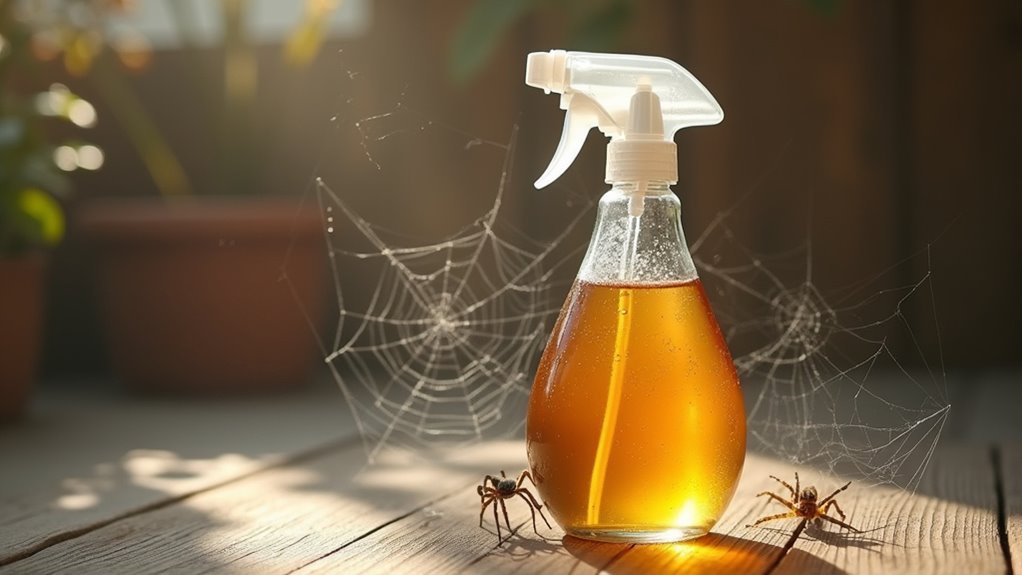
While many commercial spider repellents rely on harsh chemicals, vinegar offers a natural alternative that works through multiple mechanisms to keep these arachnids at bay. The acetic acid in vinegar directly impacts spiders’ exoskeleton, causing dehydration when they come into contact with it.
You’ll find that even a diluted solution creates an acidic environment that makes areas less favorable for spider habitation.
The strong vinegar scent disrupts spiders’ sensory perception, deterring them from settling in treated areas. This makes their environment inhospitable by interfering with their ability to navigate and hunt effectively.
Regular application increases the repellent’s effectiveness since the cumulative effects of scent and acidity help repel spiders over time. While vinegar can kill smaller species, it’s most effective as a deterrent for reducing overall spider activity.
Essential Ingredients for Maximum Spider Repellent Effectiveness
Now that you understand vinegar’s spider-repelling mechanisms, you’ll need the right ingredients to create an effective homemade solution.
The most potent effective repellent combines distilled white vinegar with water in equal parts, maximizing acetic acid concentration to disrupt spider sensory systems. This diluted solution serves as both a powerful cleaning agent and natural alternative to harsh chemical pesticides.
This powerful 50-50 vinegar-water mixture disrupts spider senses while providing a safe, chemical-free alternative to commercial pesticides.
Essential components for your spider-repelling formula:
- Distilled white vinegar – provides maximum acetic acid levels for ideal spider deterrence
- Clean water – dilutes the solution while maintaining effectiveness and safety
- Quality spray bottle – enables precise application to spider hiding spots and crevices
- Optional orange peels – masks vinegar’s strong odor while enhancing repellent properties
This simple combination creates a safe, effective formula to repel spiders throughout your home.
Step-by-Step Mixing Instructions for Vinegar Spider Formula
Creating your vinegar spider repellent requires just three simple steps that’ll have you spraying problem areas within minutes.
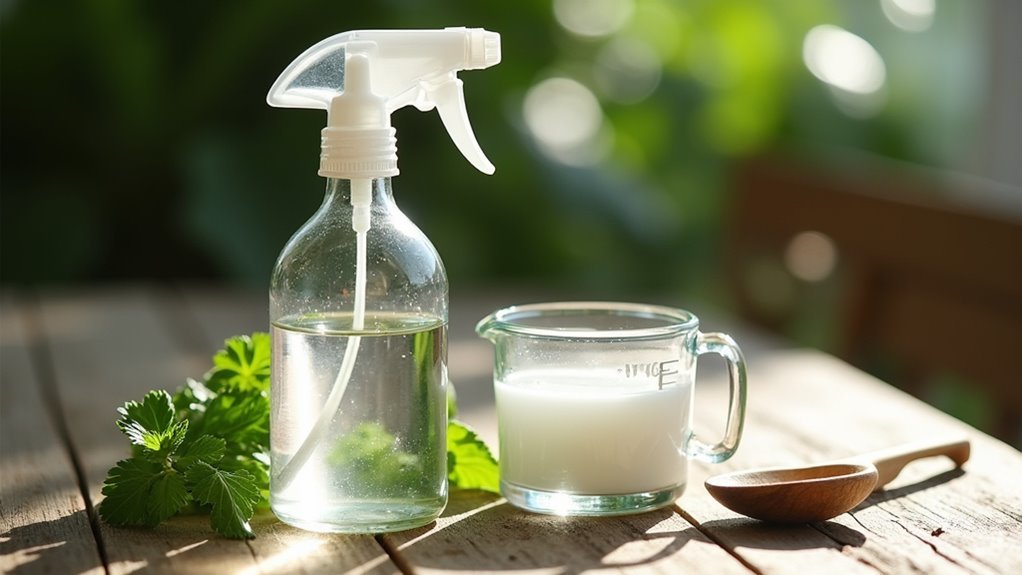
First, combine equal parts water and white vinegar in a measuring cup. Use one cup of each for an effective diluted white vinegar solution that provides maximum spider deterrence without being overly harsh.
Second, pour this mixture into a clean spray bottle, ensuring no residual cleaning products remain inside that could compromise your repellent’s effectiveness.
Third, shake the bottle vigorously before each application since vinegar and water naturally separate over time.
Focus your spray on spider hiding spots like corners, cabinets, and closets where these pests typically congregate. This simple pest control method targets both active spiders and their webs effectively.
Optimal Application Methods and Target Areas
You’ll achieve the best results by applying your vinegar solution directly onto spiders, their webs, and high-traffic areas where they’re most likely to appear.
Focus your efforts on corners, cabinets, closets, and any cracks in walls or floors that serve as entry points or hiding spots.
Regular reapplication is essential since the vinegar’s potent scent and acidity work together to create an environment spiders won’t tolerate.
Direct Spray Techniques
When applying vinegar spray to repel spiders, you’ll achieve the best results by targeting both active spiders and their preferred habitats.
Create your solution by mixing equal parts water and white vinegar in a clean spray bottle, shaking well before each application.
For maximum effectiveness, focus your direct spray application on these key areas:
- Active spiders and webs – Spray directly onto visible spiders and existing webs to eliminate current infestations.
- Entry points – Target cracks and crevices in walls and floors where spiders typically enter your home.
- Hidden corners – Apply liberally to dark spaces like cabinet interiors, closet corners, and basement areas.
- High-activity zones – Concentrate on areas where you’ve previously noticed spider presence.
Keep your spray bottle accessible for immediate use whenever you spot spider activity, ensuring consistent application.
Strategic Placement Areas
Beyond targeting immediate spider activity, strategic placement of your vinegar solution creates long-term barriers that prevent future infestations.
Focus your spray applications on corners, cabinets, and closets where spiders naturally seek shelter and food sources. Target cracks and crevices in walls and floors, as these openings serve as primary entry points into your home.
For enhanced control, place small dishes filled with diluted white vinegar in dark, undisturbed areas under furniture and in basements. These placement strategies effectively repel spiders from settling in preferred hiding spots.
Reapply your vinegar treatment every few days to maintain effectiveness. Monitor spider activity in treated areas and adjust your placement strategy based on sightings to optimize your home’s spider control system.
Application Frequency Guidelines
Consistent application schedules determine the success of your vinegar-based spider control program.
White vinegar’s acetic acid content effectively deters spiders in your home when applied systematically. Mix one part water/one part white vinegar for ideal pest control methods against unwanted insects.
Your apply frequency should follow these guidelines:
- Weekly treatments: Spray cracks or crevices, corners, and cabinets where spiders commonly hide
- Post-weather applications: Reapply after rain or high humidity to maintain effectiveness
- Immediate response: Keep solution in an accessible place and spray directly on spider webs when spotted
- Maintenance checks: Refill vinegar dishes in dark areas regularly to guarantee continuous deterrent action
Target high-traffic spider zones consistently, focusing on wall cracks, floor crevices, and hiding spots for maximum control effectiveness.
Enhancing Your Vinegar Formula With Additional Natural Ingredients
While vinegar alone creates an effective spider repellent, you can greatly boost its potency by incorporating additional natural ingredients that spiders find particularly offensive.
Essential oils like peppermint and tea tree oil work exceptionally well when mixed into your white vinegar solution, as their strong aromas intensify the acetic acid’s repelling effects.
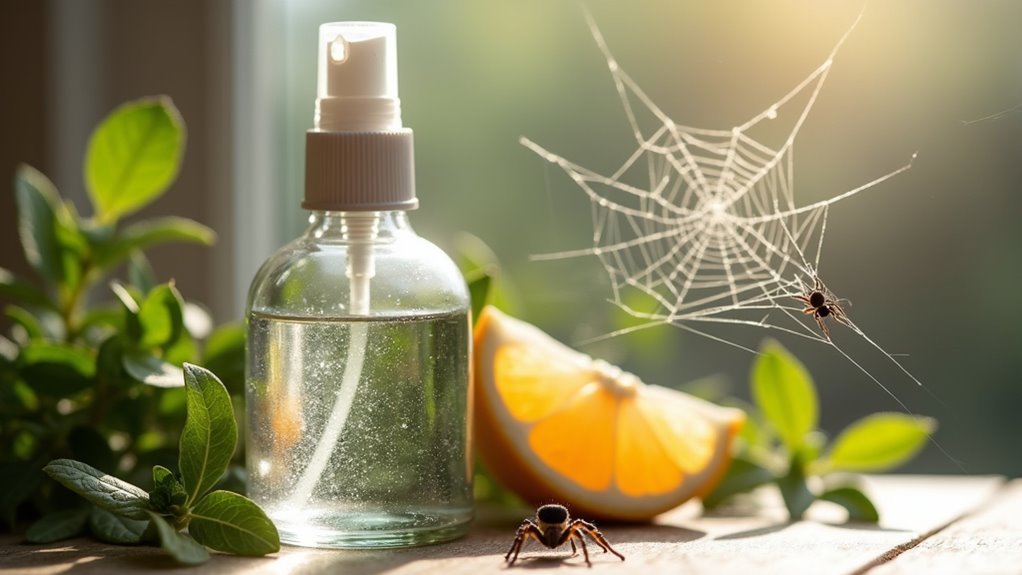
You’ll also find success infusing orange peels into your diluted solution, which adds natural citrus oils that spiders detest.
For enhanced potency, add lemon juice to your spider repellent mixture – the combined acidic properties disrupt spiders’ sensory functions more effectively.
A few drops of dish soap help the solution adhere better to surfaces.
While less common, mixing baking soda creates a fizzy reaction that can dislodge spiders from webs.
When to Seek Professional Spider Control Services
Although vinegar-based repellents work well for minor spider issues, you’ll need professional intervention when dealing with persistent infestations or potentially dangerous species.
Professional pest control services offer extensive pest control strategies that address root causes rather than surface symptoms.
Consider seeking expert help when:
- Your vinegar sprays consistently fail to reduce spider activity after several weeks of application
- You notice increased sightings indicating larger populations of unwanted insects serving as food sources
- Spider infestations persist despite multiple DIY pest management attempts
- You require tailored solutions for specific spider species or severe problems
Companies like ExtermPRO provide effective elimination methods and protection plans ensuring ongoing results.
Professional services can identify what’s attracting spiders to your property and implement extensive strategies that vinegar alone can’t match.
Frequently Asked Questions
What Is the Formula for Keeping Spiders Away?
You’ll need equal parts distilled white vinegar and water in a spray bottle. Apply this acidic solution regularly to corners, crevices, and directly on spiders and webs for effective repelling.
What Smell Do Spiders Absolutely Hate?
You’ll find spiders absolutely hate vinegar’s pungent smell, along with citrus, peppermint, eucalyptus, and tea tree oil. These strong scents disrupt their sensory perception, making them avoid treated areas completely.
What Is the Best Homemade Spider Repellent?
You’ll find the best homemade spider repellent combines equal parts distilled white vinegar and water. Spray this mixture in corners, cabinets, and cracks where spiders hide. It’s safe, non-toxic, and environmentally friendly.
How Long Does Apple Cider Vinegar Keep Spiders Away?
Apple cider vinegar’s spider-repelling effects typically last several days to a week. You’ll need to reapply it regularly since humidity and airflow reduce its potency. It’s not permanent, so you should refresh your solution frequently.
In Summary
You’ll find that a simple white vinegar and water solution can effectively deter spiders from your home. Mix equal parts vinegar and water, spray it around entry points and corners, and reapply every few days for best results. While this natural method works for light infestations, don’t hesitate to contact professional pest control services if you’re dealing with venomous species or severe spider problems that vinegar can’t handle.



Leave a Reply