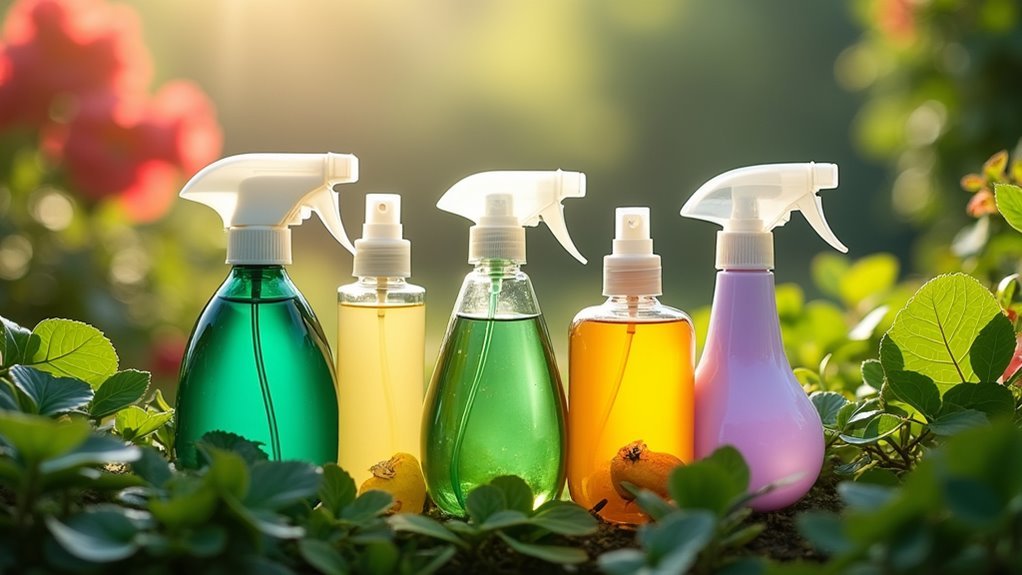
You can banish garden pests naturally with seven effective homemade sprays that work fast without harsh chemicals. Mix insecticidal soap for soft-bodied insects, neem oil for thorough control, or vinegar spray for quick elimination. Try garlic spray as a natural deterrent, hot pepper spray for capsaicin protection, essential oil spray for aromatic repelling, or rubbing alcohol spray for targeted killing. These proven solutions target aphids, spider mites, whiteflies, and more while staying safe for beneficial insects and pets. Each method offers specific benefits you’ll discover below.
Insecticidal Soap Spray for Soft-Bodied Insects
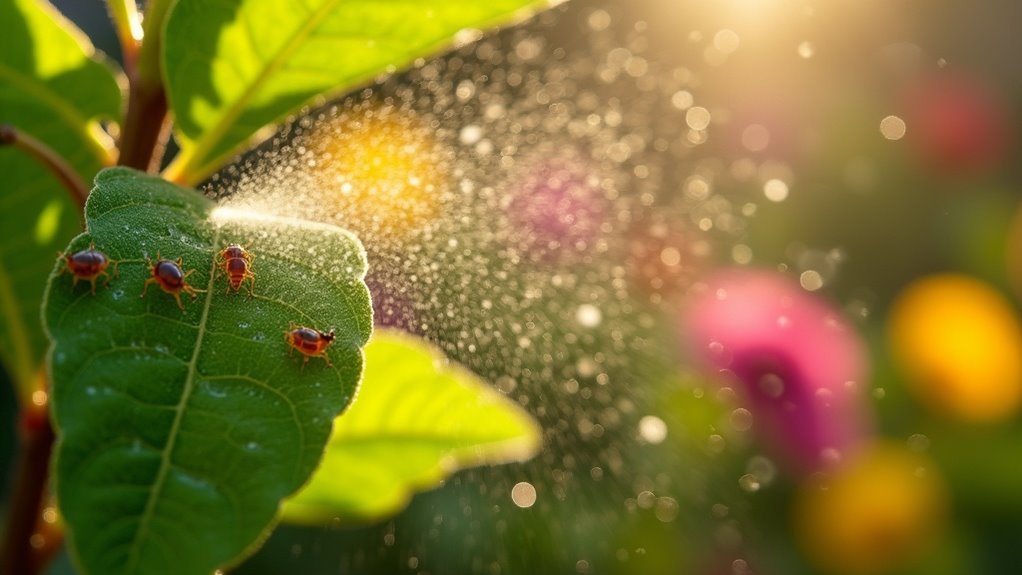
Many gardeners struggle with soft-bodied pests that can quickly devastate their plants, but insecticidal soap spray offers an effective and eco-friendly solution. This contact insecticide works by suffocating soft-bodied insects like aphids, mealybugs, and spider mites upon direct contact.
Insecticidal soap spray provides gardeners with a natural, effective weapon against destructive soft-bodied pests like aphids and spider mites.
You’ll create the solution by mixing one cup vegetable oil with one tablespoon dish soap, then diluting one teaspoon of this concentrate with two cups warm water in your spray bottle.
Always test the mixture on a small plant area first to prevent damage. Apply during early morning or late afternoon to avoid leaf burn from intense sunlight.
Regular reapplication is crucial, especially after rain or watering, since the soap washes away easily. This consistent approach guarantees maximum effectiveness against persistent pest populations.
Neem Oil Bug Spray for Comprehensive Pest Control
When you need a versatile solution that tackles multiple pest problems simultaneously, neem oil bug spray stands out as one of the most extensive organic treatments available. This natural organic insecticide effectively targets aphids, spider mites, whiteflies, and mealybugs without harming beneficial insects.
Creating homemade bug sprays with neem oil is straightforward: mix 1-2 tablespoons of pure neem oil with one gallon of water, adding dish soap for better adhesion to plant surfaces.
You’ll want to spray directly on affected areas, covering both upper and lower leaf surfaces completely.
This eco-friendly pest control method works by suffocating pests and disrupting their reproductive cycles. Safe around birds and pets, neem oil provides extensive protection while supporting sustainable gardening practices.
Vinegar Spray for Quick Pest Elimination
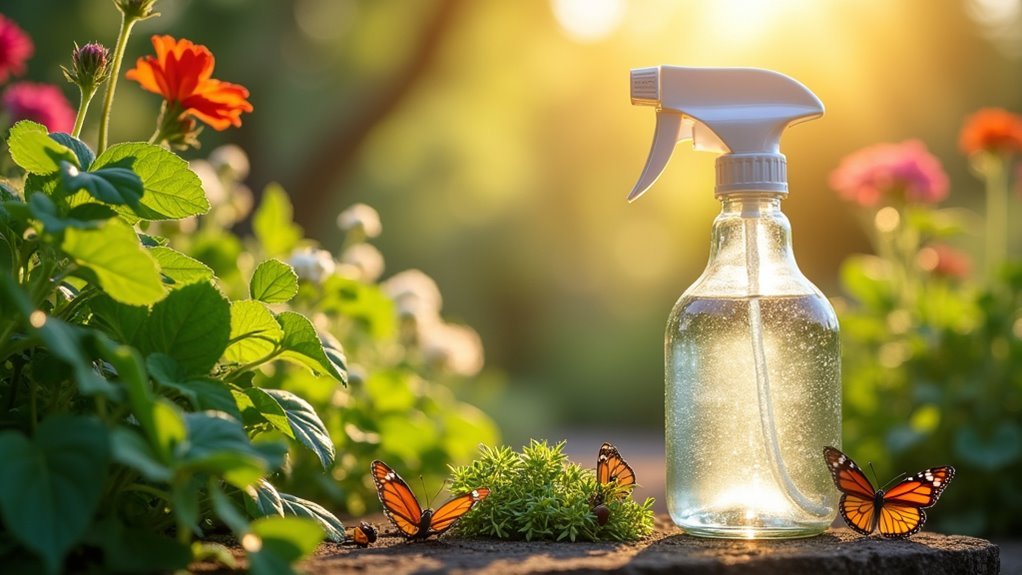
Although vinegar spray requires direct contact with pests to work effectively, it delivers rapid results against ants, moths, roaches, mosquitoes, and fruit flies through its high acetic acid content.
Vinegar’s acetic acid kills ants, moths, roaches, mosquitoes, and fruit flies instantly upon direct contact for fast pest control.
You’ll create this powerful pest repellent using common household items: mix one cup white vinegar with three cups water. Add half a teaspoon of dishwashing soap for better surface adherence.
Apply thoroughly throughout your garden, especially under leaves where insects hide. The strong odor naturally helps repel pests and deters future infestations.
For more pleasant use, you can add essential oils to mask the vinegar smell while maintaining effectiveness.
Remember that reapplication becomes necessary after rain or watering sessions, as moisture washes away the solution and reduces its insect control capabilities.
Garlic Spray for Natural Pest Deterrence
You’ll find garlic spray’s one of the most effective natural pest deterrents because its pungent odor repels mosquitoes, aphids, and other garden invaders without harsh chemicals.
Making this powerful spray involves blending garlic cloves with water, straining the mixture, and diluting it properly before application to your plants.
The key to success lies in understanding the preparation ratios, applying it correctly, and maintaining its effectiveness through regular reapplication.
Garlic Spray Preparation
Two simple methods can transform ordinary garlic into a powerful natural pest deterrent for your garden.
For the first method, blend several cloves of garlic with water, strain the mixture, then dilute with additional water.
The second approach involves pureeing two garlic bulbs with one tablespoon of vegetable oil, letting it sit overnight, straining, then combining with one teaspoon of mild liquid soap and four cups of water.
This garlic spray will effectively repel bugs due to its intense odor.
For peak effectiveness, apply garlic spray during evening hours and reapply after rain.
Always check for sensitivity by testing on a small plant area before full application.
Application and Effectiveness
When applying garlic spray to your garden, you’ll achieve maximum effectiveness by targeting both the upper and lower surfaces of plant leaves during evening hours. This timing prevents potential leaf burn from direct sunlight while maximizing the spray’s ability to keep pests away.
Your garlic spray application works exceptionally well to repel ants, aphids, and mosquitoes through its potent odor. For enhanced bug control, combine this treatment with companion plants like marigolds or basil.
The spray’s effectiveness diminishes after rain or watering, so you’ll need consistent reapplication. You can also use garlic spray on indoor plants, though adding a drop of essential oil helps maintain potency in controlled environments.
Hot Pepper Spray for Capsaicin-Based Protection
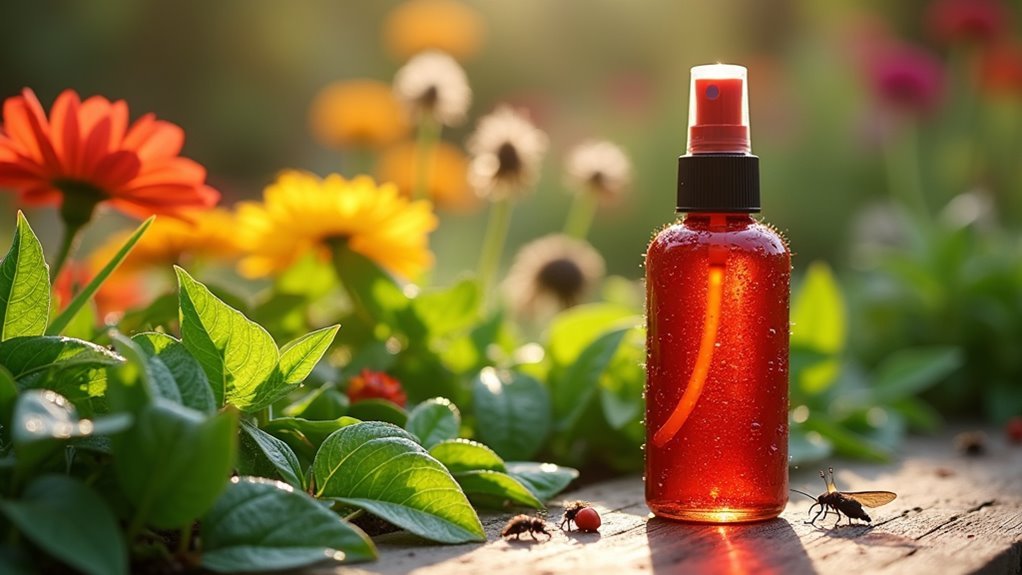
Heat becomes your ally when you harness capsaicin’s natural power to repel garden pests. Hot pepper spray serves as an effective deterrent against common pests by utilizing the intense irritation properties found in chili peppers.
You’ll create this spray by blending hot peppers with water, straining the mixture, then adding liquid soap to help it stick to plant surfaces.
Apply directly to affected areas, focusing on leaf undersides where pests typically hide. This non-toxic natural alternative protects beneficial insects when properly diluted, unlike harsh chemical pesticides.
You’ll need frequent reapplication every few days or after rain, since water washes away the solution’s effectiveness. The capsaicin-based spray offers safe, environmentally-friendly pest control around pets and gardens.
Essential Oil Spray for Aromatic Pest Repelling
Essential oils transform your garden defense strategy by releasing powerful aromatic compounds that naturally repel insects without harming your plants.
You’ll find that natural oils like peppermint, tea tree, and eucalyptus create a strong scent barrier that effectively deters ants, spiders, and other unwanted visitors.
Creating your essential oil spray requires mixing 10-15 drops of aromatic herbs with water in a spray bottle.
Mix 10-15 drops of essential oils with water in a spray bottle for effective natural pest control.
Always perform a patch test on a small plant area before full plant treatment to check for sensitivity reactions.
Once you’ve confirmed compatibility, apply liberally to affected areas.
This natural approach keeps your garden bug free while adding pleasant fragrances to your outdoor space.
However, you’ll need regular reapplication, especially after rain or watering, to maintain the spray’s effectiveness against repel pests.
Rubbing Alcohol Spray for Targeted Pest Killing
When you need to eliminate soft-bodied pests like aphids and spider mites quickly, rubbing alcohol spray delivers fast-acting results through direct contact.
You’ll create this targeted solution by mixing one part rubbing alcohol with three parts water, then applying it thoroughly to affected plant areas.
Before treating your entire garden, you must test the spray on a small section and avoid application during peak sunlight to prevent plant damage.
How It Works
Although rubbing alcohol might seem like an unlikely garden tool, it’s actually a powerful weapon against soft-bodied pests that can devastate your plants.
This rubbing alcohol spray works by delivering a direct chemical assault that insects can’t survive.
Here’s how this fast-acting solution eliminates garden pests:
- Disrupts cell membranes – The alcohol penetrates protective layers and breaks down cellular structures.
- Requires thorough coverage – You must apply directly to pests for maximum effectiveness.
- Works within minutes – This method can kill bugs almost instantly upon contact.
- Needs careful application – Test first to avoid damaging sensitive foliage.
Keep in mind that proper mixing ratios help you control pest populations while protecting your plants from potential harm.
Mixing and Application
Creating an effective rubbing alcohol spray requires precise measurements to balance pest-killing power with plant safety. Mix one part rubbing alcohol with three parts water in a spray bottle for ideal results. This spray for treating garden pests proves effective against soft-bodied insects like aphids and spider mites.
| Step | Action |
|---|---|
| 1 | Test solution on a small area first |
| 2 | Spray directly on visible pests |
| 3 | Cover all affected areas thoroughly |
| 4 | Apply in cooler conditions (morning/evening) |
Always test your solution on a small area before full application to prevent plant damage. Avoid using this treatment on sensitive plants that might suffer leaf burn. Apply in cooler conditions like early morning or late evening for best results while ensuring you cover all affected areas completely.
Safety and Precautions
Since rubbing alcohol can damage delicate plant tissues, you’ll need to exercise caution when applying this pest control method.
While it’s highly effective against soft-bodied insects like aphids and spider mites, proper safety and precautions guarantee maximum effectiveness without harming your plants.
Follow these essential guidelines when you apply rubbing alcohol spray:
- Test the spray on a small plant section first to check for sensitivity reactions before widespread application.
- Apply during early morning or late evening hours to prevent leaf burn from sun exposure interacting with the alcohol.
- Guarantee thorough coverage of affected areas while avoiding oversaturation that could stress plants.
- Monitor regularly since reapplication necessary every few days maintains pest control without excessive plant exposure.
Frequently Asked Questions
How Long Does It Take for Sevin Spray to Work?
You’ll see Sevin spray start working within hours of application as it disrupts pest nervous systems. Full control typically happens within 24-48 hours, and it’ll continue protecting your plants for several days.
What Can I Spray on My Plants to Get Rid of Bugs?
You can spray insecticidal soap, neem oil, garlic spray, vinegar solution, or diluted rubbing alcohol on your plants to eliminate bugs. Each targets different pests effectively while being safer than harsh chemical pesticides.
How Do I Stop Bugs From Eating My Vegetable Garden?
You’ll prevent bugs from eating your vegetables by applying organic sprays like insecticidal soap, neem oil, and garlic spray regularly. Monitor your garden daily and plant companion flowers like marigolds to repel pests naturally.
Can You Use Vinegar and Dawn as Insecticide?
You can combine vinegar and Dawn soap to create an effective insecticide. Mix one cup white vinegar, three cups water, and half teaspoon Dawn. This solution kills soft-bodied insects like aphids and ants on contact.
In Summary
You’ve got seven powerful weapons in your pest-fighting arsenal now. Whether you’re dealing with aphids, whiteflies, or stubborn beetles, there’s a spray that’ll get the job done. Start with the gentlest option like insecticidal soap, then escalate to stronger solutions if needed. Remember, consistency’s key – you’ll need to reapply most sprays regularly for maximum effectiveness. Your garden doesn’t have to suffer from bug damage anymore.


Leave a Reply