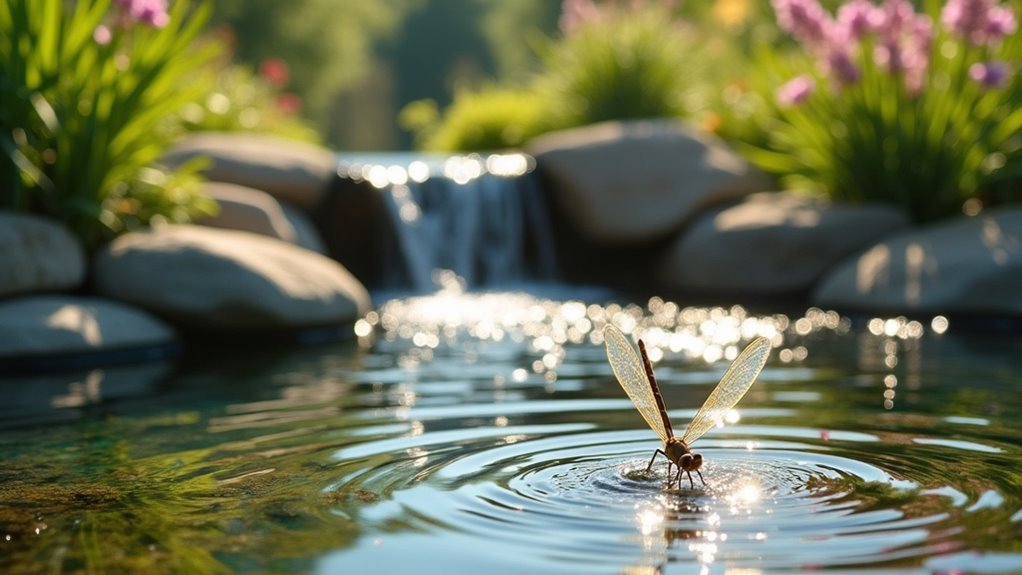
Moving water features effectively prevent mosquito breeding by disrupting their life cycle at multiple stages. You’ll find that continuous water circulation stops larvae from surfacing for air, causing them to drown before maturity. Female mosquitoes can’t lay eggs on moving water surfaces, while flowing systems eliminate the organic debris that larvae need for food. Installing fountains, waterfalls, or circulation pumps in your water features creates an environment where mosquitoes simply can’t reproduce successfully, transforming potential breeding grounds into mosquito-free zones.
Why Moving Water Disrupts the Mosquito Life Cycle

While mosquitoes need calm, stagnant water to complete their life cycle, moving water creates an environment that’s hostile to their survival and reproduction.
When you install water features with circulation systems, you’ll effectively disrupt mosquito life cycle stages. The constant turbulence prevents mosquito larvae from surfacing to breathe, causing them to drown or fail to develop properly.
Moving water also makes it nearly impossible for female mosquitoes to lay eggs since they require still surfaces for successful egg placement.
Female mosquitoes need still water surfaces to successfully deposit their eggs, making moving water an effective deterrent.
Water circulation eliminates the organic debris that mosquito larvae feed on, starving any that manage to hatch.
While standing water as small as one ounce can become mosquito breeding grounds, you can prevent mosquito breeding by ensuring you maintain water movement through fountains, pumps, or bubblers in your water features.
Types of Water Features That Prevent Mosquito Breeding
You’ll find that certain water feature designs naturally discourage mosquito breeding through their structure and water movement patterns.
Fountains and waterfalls create the continuous motion that prevents stagnant conditions, while deep water features eliminate shallow breeding zones mosquitoes prefer.
Circulating pond systems maintain constant water flow and oxygenation, making your landscape both beautiful and mosquito-resistant.
Fountains and Waterfalls
Since mosquitoes require calm water to successfully breed, fountains and waterfalls serve as powerful deterrents by creating the continuous movement that disrupts their reproductive cycle.
When you install these water features, the constant flow prevents standing water accumulation where mosquito larvae typically develop. The turbulence makes it nearly impossible for larvae to surface for air, effectively eliminating breeding opportunities.
You’ll maximize mosquito prevention by incorporating bubblers and water jets into your fountains.
Design your water features with steep vertical walls and depths exceeding two feet to discourage egg-laying females.
However, regular maintenance remains essential for effectiveness. You must clean your fountains and waterfalls consistently while ensuring proper water circulation continues.
Without proper upkeep, even moving water features can become stagnant breeding grounds.
Deep Water Features
Deep water features offer another effective strategy for mosquito control by creating environments that naturally discourage breeding activity.
When you design water features that are at least two feet deep, you’ll greatly reduce mosquito larvae survival rates compared to shallow standing water. The depth creates unfavorable conditions that female mosquitoes avoid for egg-laying.
You can enhance these deep water features by incorporating vertical walls, which further discourage larval development.
Adding water circulation through bubblers or pumps creates essential water movement that disrupts larvae and helps prevent stagnation. This circulation also boosts oxygen levels, making the environment even less hospitable.
Consider introducing fish like Gambusia or koi into your deep water features. They’ll actively consume mosquito eggs and larvae, providing natural biological mosquito control while adding visual appeal to your landscape.
Circulating Pond Systems
While deep water features provide excellent foundational mosquito control, circulating pond systems take prevention to the next level by incorporating constant water movement that actively disrupts mosquito breeding cycles.
You’ll find that fountains and waterfalls create continuous motion that prevents mosquito larvae from surfacing for air, effectively eliminating their breeding potential.
Installing aerators or bubblers keeps water oxygenated and moving, making your pond unattractive to egg-laying females.
Maintain at least two feet of depth to prevent shallow water accumulation where mosquito breeding thrives.
Regular maintenance of filters and water flow guarantees ideal mosquito control effectiveness.
Adding aquatic plants creates natural habitats for fish and other predators that consume mosquito larvae, giving you an additional biological defense against these persistent pests.
Installing Circulation Systems in Existing Water Features
When you’re ready to install a circulation system in your existing water feature, you’ll need to choose the right pump based on your feature’s size, depth, and desired flow rate.
Your pump selection should account for the total water volume and the vertical height it needs to move water, ensuring adequate circulation to disrupt mosquito breeding.
Proper installation requires strategic pump placement, secure electrical connections, and positioning intake and outflow points to create ideal water movement throughout the entire feature.
Pump Selection Criteria
Choosing the right pump determines whether your circulation system will effectively prevent mosquito breeding while operating efficiently for years to come.
Your pump selection must prioritize flow rate—aim for at least 200 gallons per hour to create water movement that disrupts mosquito larvae development. Consider head height requirements to guarantee your pump can circulate water throughout your entire feature without strain.
Choose energy-efficient models with durable outdoor designs to minimize operational costs and maintenance. Look for pumps offering adjustable flow settings, allowing you to customize circulation based on seasonal needs and specific mosquito control requirements.
Integrate a filtration system or select pumps compatible with filtration to maintain water clarity and reduce organic debris that attracts mosquitoes.
Installation Best Practices
Before you begin retrofitting your existing water features, assess the current structure’s ability to accommodate a circulation system that’ll maintain continuous water movement.
Install pumps or bubblers that create surface agitation, disrupting mosquito breeding by preventing stagnant water conditions. Your water circulation system should achieve complete water turnover rates every one to two hours for ideal effectiveness.
Consider adding vertical walls or deeper sections during installation to further deter larvae survival. Position fountains strategically to maximize water movement across the entire surface area.
These moving water features require proper sizing to handle your feature’s volume adequately. You must monitor and maintain the system regularly, as even brief operational failures can quickly restore conditions that encourage mosquito breeding in previously protected areas.
Optimal Water Depth and Design for Mosquito Prevention
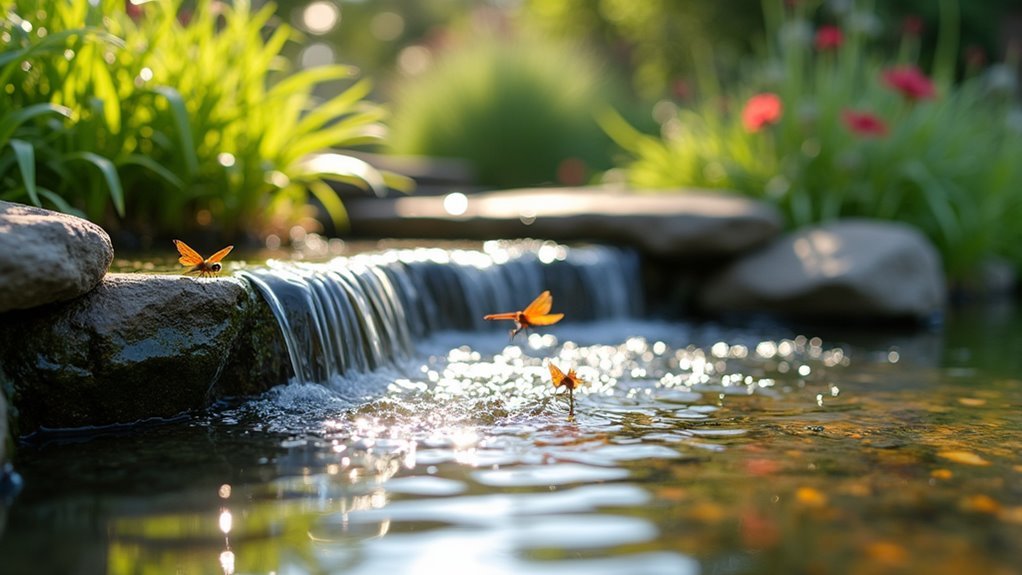
Although mosquitoes can breed in surprisingly small amounts of water, you’ll dramatically reduce their breeding success by designing your water feature with a depth of at least two feet.
Since mosquito larvae need easy access to the water surface for breathing, deeper designs create inhospitable conditions for breeding. You’ll want to incorporate vertical walls that discourage female mosquitoes from laying eggs near your standing water areas.
Adding moving water elements like bubblers or waterfalls disrupts larval development by preventing them from surfacing for air.
Even though male mosquitoes don’t bite, controlling overall populations starts with effective depth modification and design choices.
Remember that consistent water circulation combined with proper depth creates the most effective mosquito control strategy for your water features.
Combining Natural Predators With Moving Water Features
While moving water creates an inhospitable environment for mosquito breeding, you’ll achieve even better results by introducing natural predators that actively hunt mosquito larvae and adults.
Mosquitofish (Gambusia holbrooki) are particularly effective in moving water features, as they constantly prey on mosquito eggs and larvae in what would otherwise become breeding grounds.
The flowing water habitat you’ve created will attract beneficial predators like dragonflies and bats, which consume adult mosquitoes before they can reproduce.
By combining moving water with larvivorous fish, you’re establishing a balanced ecosystem that naturally manages mosquito populations without chemical pesticides.
This dual approach guarantees your water feature remains both beautiful and functional while supporting beneficial bacteria that outcompete remaining mosquito larvae for essential resources.
Maintenance Requirements for Effective Mosquito Control
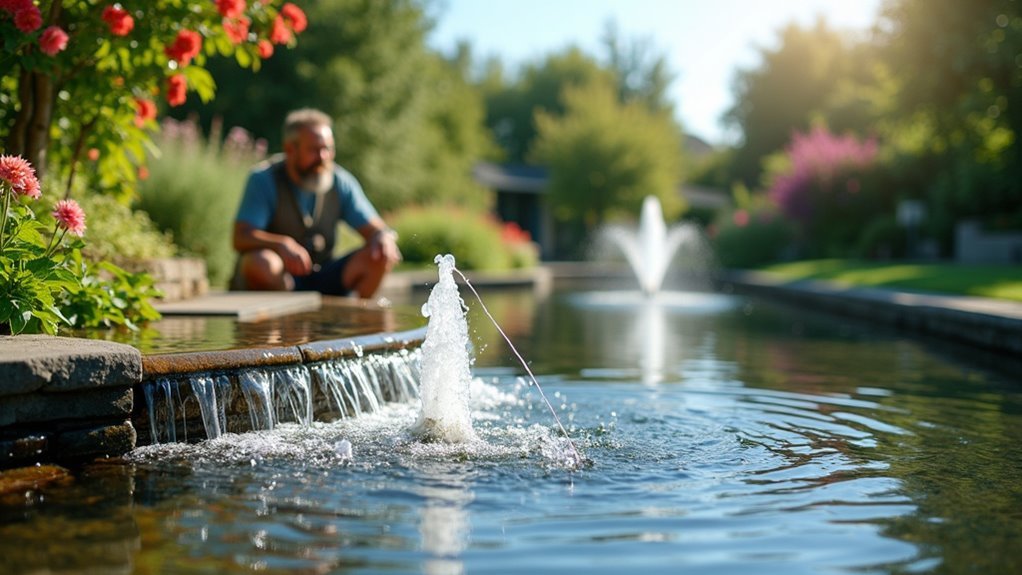
Even the most effective moving water feature requires consistent maintenance to prevent mosquito breeding opportunities from developing.
You’ll need to establish routine maintenance that includes cleaning filters and removing organic debris regularly. Your water features should maintain continuous movement through bubblers or fountains to disrupt surface tension where mosquito larvae typically develop.
Replace water in smaller containers every five days to eliminate any potential mosquito breeding cycles.
Consider maintaining depth of water at two feet or greater, as shallow areas encourage larval survival.
Implement a systematic drain and clean schedule for all ponds and fountains to guarantee ideal cleanliness.
These prevention strategies work best when you’re consistent with your maintenance efforts, keeping mosquito larvae from establishing breeding habitats.
Frequently Asked Questions
How to Prevent Mosquitoes From Breeding in a Water Fountain?
You’ll prevent mosquito breeding by maintaining water circulation, keeping fountains at least two feet deep, removing debris weekly, replacing water every five to seven days, and adding mosquito fish.
Does Moving Water Deter Mosquitoes?
Yes, you’ll find moving water effectively deters mosquitoes. It disrupts surface tension, making breathing difficult for larvae and preventing egg-laying. Water movement creates an inhospitable environment that considerably reduces mosquito breeding and survival rates.
What Can I Put in Water to Stop Mosquitoes From Breeding?
You can add mosquito fish like Gambusia to eat larvae, apply Bti larvicide that’s wildlife-safe, or create an oil barrier with vegetable oil to prevent larvae from breathing properly.
Can Mosquitoes Breed in Slow Moving Water?
Yes, you’ll find mosquitoes can breed in slow-moving water, though they prefer stagnant conditions. If your water moves less than one foot per second, it’s still suitable for their reproduction.
In Summary
You’ve learned how moving water features effectively eliminate mosquito breeding by disrupting their reproductive cycle. You’ll find that fountains, streams, and circulation systems create the constant motion mosquitoes can’t tolerate for laying eggs. You’ll need to maintain proper water depth, incorporate natural predators, and keep systems running consistently. You’re now equipped to transform stagnant water areas into beautiful, mosquito-free features that’ll enhance your outdoor space while protecting your family’s health.


Leave a Reply