

Winter drives rats into your home because cold temperatures trigger their survival instincts to seek warmth and shelter. Snow cover eliminates outdoor foraging opportunities, making your kitchen an attractive food source. Rats can squeeze through quarter-inch openings in foundations, unsealed doors, and damaged screens that winter weather often worsens. They’re drawn to insulated spaces like attics and basements where they can nest safely. Understanding their specific winter behaviors and entry methods will help you protect your home effectively.
How Cold Weather Drives Rats to Seek Indoor Shelter

When winter’s chill sets in, rats don’t simply endure the harsh conditions—they actively search for warmer alternatives, and your home becomes their prime target.
These resourceful rodents can squeeze through openings as small as a quarter inch, making even well-maintained homes vulnerable to entry. Cold temperatures trigger their survival instincts, compelling them to shelter indoors where they’ll find consistent warmth and protection from outdoor predators.
Rats exploit tiny gaps and winter’s harsh conditions drive their relentless quest for indoor warmth and safety.
Winter’s scarcity of natural food sources intensifies their motivation to invade human dwellings. Your pantry items, pet food, and kitchen leftovers become irresistible attractions.
Once inside, rats quickly establish nesting sites in attics, basements, and wall cavities. The combination of warmth, abundant food sources, and safety creates perfect conditions for a rodent infestation to develop and multiply rapidly throughout the cold season.
Winter Food Scarcity Forces Rats Into Human Homes
When winter arrives, you’ll notice rats become desperate as their usual outdoor food sources like seeds, fruits, and insects vanish under snow and frost.
Your home suddenly becomes an irresistible target because it’s packed with easily accessible food that rats can’t find anywhere else.
This scarcity triggers their survival instincts, forcing them to abandon their outdoor territories and migrate indoors where your pet food, pantry items, and even crumbs provide the sustenance they need to survive the harsh season.
Natural Food Sources Disappear
As temperatures plummet and snow blankets the landscape, rats face a harsh reality: their usual buffet of seeds, fruits, and vegetation vanishes almost overnight.
Winter eliminates the natural food sources rats depend on throughout warmer months. Frozen ground makes foraging impossible, while dormant plants offer no sustenance.
You’ll notice increased rat activity around your property because these resourceful rodents can’t survive on depleted outdoor options.
This scarcity forces rats to become more aggressive in seeking alternatives. They’ll venture farther from their usual territories, targeting your home where warmth and abundant food await.
To protect your property, store food in airtight containers and eliminate access to food sources. These simple steps help keep your home unattractive to desperate, hungry rats searching for winter survival.
Indoor Food Becomes Attractive
Three factors make your home irresistible to rats during winter months: warmth, shelter, and most importantly, an abundance of easily accessible food.
When outdoor resources vanish, indoor food becomes attractive to desperate rodents. Your kitchen offers everything they need: pet food bowls, crumb-filled counters, and unsealed pantry items. Leftovers on dishes and open trash bins create an all-you-can-eat buffet for hungry invaders.
Rats don’t just seek shelter and food randomly—they’re strategic. They’ll target dining areas where warmth and nourishment intersect. Your home’s consistent temperature makes foraging comfortable while providing endless meal options.
To prevent rats from viewing your space as their winter restaurant, store food in airtight containers and maintain spotless surfaces.
These simple steps eliminate the primary attraction drawing them indoors.
Survival Instincts Drive Migration
Winter food scarcity triggers powerful survival instincts that drive rats directly into your home. When temperature drops below comfortable levels, rats face a life-or-death situation that forces them to abandon their outdoor territories.
Their natural survival instincts compel them to seek immediate shelter and reliable food sources, making your warm house an irresistible target.
These desperate creatures become increasingly bold as harsh weather eliminates their usual outdoor options. They’ll squeeze through quarter-inch openings to reach your pantry, garbage, and pet food.
Your home offers everything they need: consistent warmth, abundant food, and protection from predators. This survival-driven behavior explains why winter infestations happen so suddenly.
Professional pest control services report significant increases in calls during colder months when rats’ desperation peaks.
Common Entry Points Rats Use During Winter Months
Rats can squeeze through openings as small as a quarter inch, making even the tiniest cracks in your home’s exterior potential gateways for these unwanted winter visitors. During cold months, these rodents actively seek warm places and target vulnerable areas around your property.
| Entry Location | Common Issues | Prevention Tips |
|---|---|---|
| Utility Lines/Pipes | Poor sealing around entry points | Seal gaps with steel wool and caulk |
| Attic/Garage Openings | Loose doors, damaged screens | Install tight-fitting doors and screens |
| Foundation/Basement | Cracks in walls, unsecured windows | Repair cracks, secure window frames |
| Roofline Areas | Damaged shingles, missing materials | Regular roof inspections and repairs |
Taking proactive measures to identify and seal these potential entry points will effectively keep rodents from establishing winter habitats inside your home.
Identifying Signs of Winter Rat Activity in Your Home
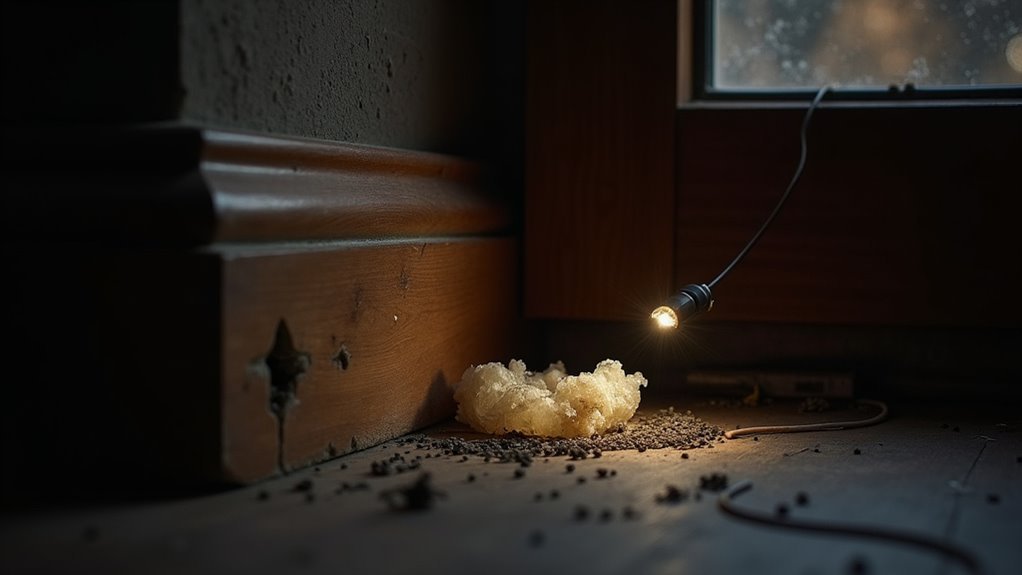
Even after securing potential entry points, you’ll need to stay alert for warning signs that rats have already made their way into your home.
Listen for scratching or scurrying sounds during nighttime hours when rodent activity peaks. Check for rat droppings near food storage areas and along walls – these small, dark pellets are clear signs of a rodent presence.
Examine food packaging, wood, and plastic for gnaw marks, as rats constantly chew while seeking sustenance and nesting materials. Look for oily rub marks along frequently traveled surfaces, indicating regular movement patterns.
Finally, notice any strong urine odors in basements, attics, or storage areas where rats typically establish their winter hideouts.
Health Risks Associated With Winter Rat Infestations
Beyond the property damage and unsettling noises, rat infestations pose serious health threats that intensify during winter months when these rodents spend more time indoors.
These health risks include dangerous pathogens found in droppings that can cause hantavirus, leading to severe respiratory problems through contact or inhalation.
Rats contaminate food and surfaces with salmonella, triggering food poisoning symptoms like diarrhea and fever.
Rodent urine transmits leptospirosis, causing flu-like symptoms and potentially serious liver or kidney complications.
You’ll also face increased allergy and asthma issues from allergens in rodent waste.
Additionally, rats carry parasites like fleas and ticks that spread diseases to humans.
Prevention is key to avoiding these serious health consequences.
Sealing Your Home Against Winter Rat Invasions
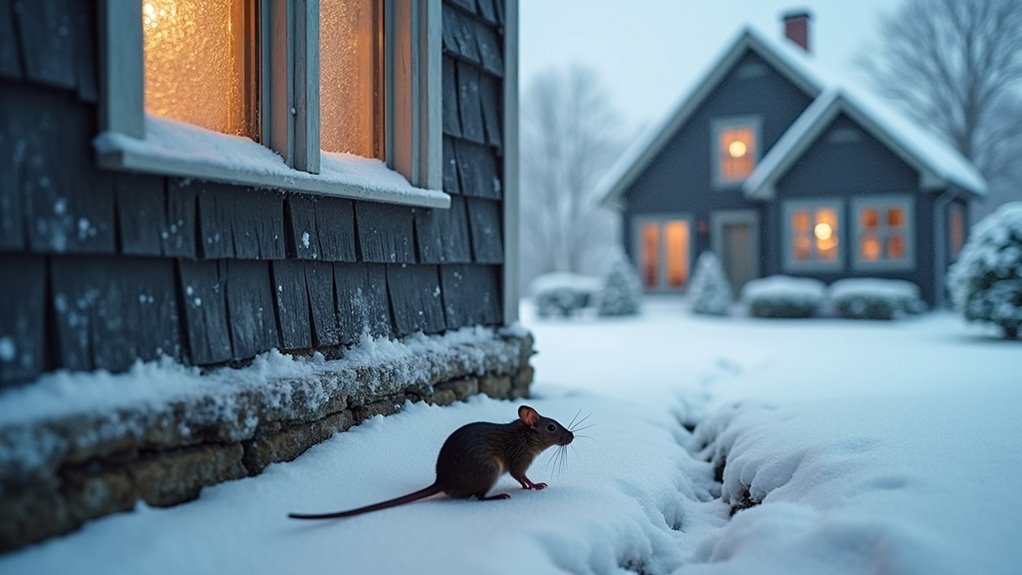
How can you transform your home into an impenetrable fortress against winter rat invasions? Start by sealing your home through systematic identification of entry points. Inspect your home thoroughly for gaps around windows, doors, and foundations—rats squeeze through openings as small as a quarter inch.
| Location | Materials Needed | Action Required |
|---|---|---|
| Windows/Doors | Steel wool, caulking | Seal gaps and cracks |
| Foundation | Weather stripping | Block crevices |
| Utility Lines | Caulking compound | Seal around pipes/wires |
| Roof/Gutters | Repair materials | Fix damaged areas |
Pay special attention to basements and garages where utility lines enter. Remove debris and clutter that provides nesting materials. Regular maintenance of roofs and gutters prevents access to attics and elevated spaces.
Effective DIY Trapping Methods for Winter Rat Control
When rats have already breached your home’s defenses, you’ll need to take immediate action with well-placed snap traps.
Your trap placement strategy should focus on positioning traps perpendicular to walls along known rodent pathways, especially near droppings or gnaw marks where rats are actively traveling.
The right bait selection can make or break your trapping success, so you’ll want to use high-protein foods like peanut butter or nuts that become irresistible to rats during winter’s food scarcity.
Snap Trap Placement
Strategic placement transforms ordinary snap traps into highly effective weapons against winter rat invasions.
You’ll achieve ideal rodent control by positioning snap traps perpendicular to walls with the bait side facing inward, since rats naturally follow edges rather than crossing open areas.
Focus on pathways where you’ve spotted droppings or gnaw marks, as these indicate active travel routes. Target areas near food sources like kitchens and pantries, where hungry rodents seek shelter during cold months.
Use high-protein baits such as peanut butter, dried fruit, or bacon to maximize attraction through strong scents.
Check traps regularly to guarantee proper function and promptly remove captured rats. This consistent maintenance prevents further infestation and keeps your trapping system working efficiently throughout winter.
Bait Selection Tips
Since rats possess keen senses of smell and taste, you’ll greatly increase your trapping success by selecting baits that trigger their strongest feeding instincts.
When food becomes harder to find during winter, rats become less picky and more aggressive in their foraging behavior. Peanut butter works exceptionally well because its strong aroma attracts rats from considerable distances, while dried fruit appeals to their natural sweet tooth preferences.
Commercial rodent baits are specifically formulated to be irresistible to these pests. Position these attractive baits in your bait stations along established rodent pathways where you’ve noticed activity signs.
Keep an eye on your traps regularly, renewing baits every few days to maintain effectiveness. Proper bait selection greatly improves your removal methods during winter infestations.
Natural Repellents That Deter Rats in Cold Weather
Although chemical pest control methods remain popular, natural repellents offer a safer, eco-friendly approach to keeping rats away from your home during winter months. These solutions effectively deter unwelcome guests without harmful toxins.
| Repellent Type | Application Method | Effectiveness Duration |
|---|---|---|
| Peppermint Oil | Cotton balls at entry points | 2-3 days |
| Apple Cider Vinegar | Spray on doorways/cracks | 3-5 days |
| Cayenne Pepper | Sprinkle around baseboards | 1-2 weeks |
| Crushed Garlic Spray | Mist problem areas | 4-7 days |
| Ultrasonic Devices | Plug into wall outlets | Continuous |
You’ll find peppermint oil particularly effective, as its strong scent disrupts rats’ olfactory senses. Combine vinegar applications with cayenne pepper around potential access points for enhanced protection. Remember to clean food to crumbs regularly while implementing these natural deterrents.
Winter-Specific Areas Where Rats Hide and Nest
When temperatures drop, rats transform your home’s warmest spaces into their winter headquarters.
These resourceful rodents squeeze through quarter-inch openings around windows, doors, and foundations to access prime shelter locations. Your attic becomes their penthouse suite, offering insulation and protection from harsh weather.
Rats exploit tiny gaps around your home’s entry points, transforming attics into luxurious winter retreats with ready-made insulation and weather protection.
Basements provide another attractive hideaway, while wall cavities create perfect corridors between rooms.
Rats strategically position themselves near warmth and food sources, particularly behind kitchen appliances where crumbs accumulate.
They’ll raid your storage areas, shredding paper, fabric, and insulation to create cozy nests.
Pantries and cluttered spaces offer both nesting materials and easy meal access.
Since they’re nocturnal, you’ll likely hear scratching sounds in these areas during winter nights when they’re most active.
When DIY Methods Fail and Professional Help Is Needed
You’ll know your DIY efforts aren’t working when you continue finding fresh droppings, hear scratching sounds, or discover new gnaw marks despite your best prevention attempts.
Professional pest control experts can quickly identify hidden entry points and nesting areas that you might’ve missed, giving you a complete picture of your rat problem’s scope.
These specialists use advanced treatment methods and equipment that aren’t available to homeowners, ensuring thorough elimination and long-term prevention.
Signs DIY Failed
How do you know when your DIY rat control efforts aren’t working? Several clear indicators reveal when it’s time to abandon homemade solutions.
If you’re still finding droppings around your home despite setting traps and sealing entry points, your methods aren’t effective. Persistent scratching or scurrying noises at night mean these unwanted guests remain active in your walls or attic.
When you discover nests made from shredded materials after weeks of DIY attempts, you’re likely dealing with a larger infestation than anticipated. Failed traps and repellents often indicate multiple rodents living in social groups.
If you can’t locate entry points or nests after thorough inspection, professional pest control becomes necessary to address the problem effectively.
Professional Assessment Benefits
After DIY methods prove ineffective, professional pest control services bring specialized expertise that dramatically changes your approach to rat control.
Licensed exterminators conduct thorough professional assessments that reveal hidden problems you’ve likely missed. They use specialized tools to locate secret nests and identify entry points that aren’t obvious to homeowners.
Professional evaluations also assess specific health risks from your rodent infestation, including dangerous diseases like hantavirus and leptospirosis.
These experts develop tailored solutions based on your home’s unique vulnerabilities.
Most importantly, professionals implement extensive long-term prevention strategies. They’ll seal critical entry points and recommend effective products that keep rats out permanently.
When winter increases invasion risks, professional guidance guarantees you maintain a rodent-free environment year-round.
Expert Treatment Methods
When standard traps and store-bought deterrents can’t eliminate persistent rat colonies, professional exterminators deploy advanced treatment methods that target the root of your infestation.
These expert treatment methods include environmentally safe treatments that minimize risks to your family and pets while effectively managing rat populations.
Professionals use specialized tools to locate hidden nests and entry points that DIY approaches typically miss, guaranteeing thorough rodent control when rodents invade homes during winter months.
Exterminators don’t just eliminate current problems—they implement long-term prevention strategies tailored to your home’s specific vulnerabilities.
These customized approaches greatly reduce future infestation risks. Follow-up monitoring visits guarantee complete resolution, giving you confidence that your investment will protect your home against future winter invasions when rats seek warm shelter.
Frequently Asked Questions
Why Is There Suddenly so Many Rats in My House?
You’re experiencing a rat surge because they’re fleeing cold outdoor temperatures to find warmth, food, and shelter in your home. They’ve discovered easy access points and abundant resources like pet food and nesting materials.
What Does It Mean When Rats Are Around Your House?
When rats are around your house, it means they’ve found food sources, water, and shelter. You’re likely dealing with accessible pantry items, pet food, or entry points that’re allowing them easy access indoors.
What Time of Year Is Worst for Rats?
Winter’s the worst time for rat problems. You’ll face peak invasion season as freezing temperatures drive rats indoors seeking warmth, food, and shelter. They’re most desperate and active during cold months, making infestations more likely.
Why Do Rats Keep Coming Back to My House?
Rats keep returning because you’re providing warmth, accessible food sources, and multiple entry points. Once they’ve established your home as safe territory, they’ll breed rapidly and create even more entry points through gnawing.
In Summary
You can’t completely prevent rats from seeking winter shelter, but you’ll greatly reduce your chances of an infestation by sealing entry points, eliminating food sources, and maintaining a clean home. If you spot signs of rat activity, act quickly with traps or natural deterrents. Don’t hesitate to call professionals if DIY methods aren’t working – winter rat problems won’t resolve themselves and will only worsen without intervention.




Leave a Reply