
You’ll need to follow five essential steps to control winter spider invasions. First, inspect and seal all entry points around windows, doors, and foundations using silicone caulk and mesh screens. Second, remove existing webs with a vacuum and apply perimeter treatments with pyrethroid insecticides. Third, eliminate food sources by storing items in airtight containers and maintaining cleanliness. Fourth, set strategic traps in corners and high-activity areas. Finally, establish a consistent monitoring routine with quarterly professional inspections. These thorough strategies will transform your home into a spider-free sanctuary.
Identify and Seal All Entry Points
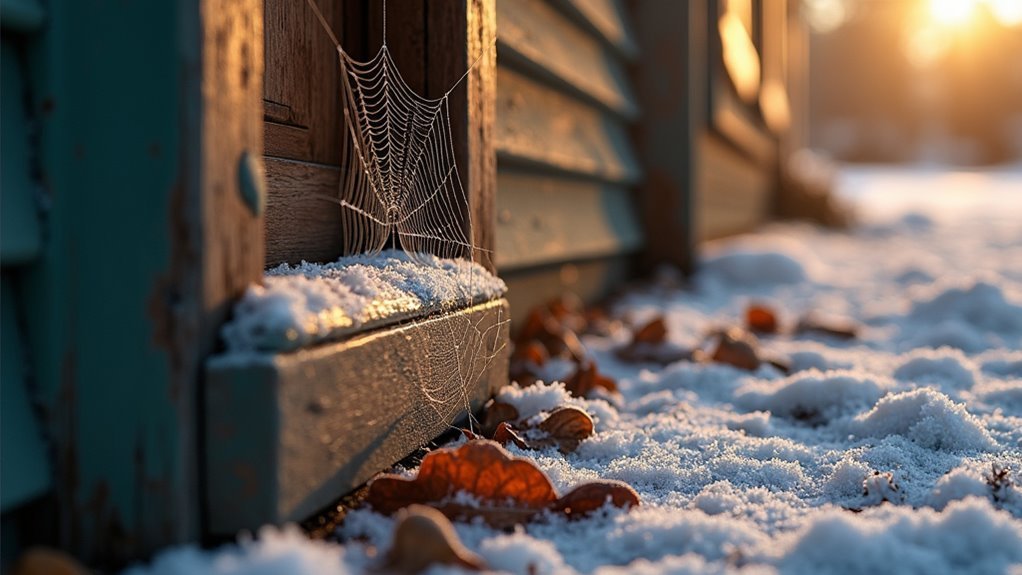
As winter approaches and temperatures drop, spiders actively seek warm shelter inside your home through surprisingly small openings.
You’ll need to inspect and repair your foundation, windows and doors, looking for cracks and gaps that create potential entry points. Use silicone caulk to seal entry areas around window frames and doorways, ensuring tight fits that prevent spiders from accessing your interior spaces.
Install screens on windows and doors to maintain proper ventilation while blocking spider access.
Don’t forget to check vents and utility lines, sealing openings with fine mesh screens or caulk. Monitor and maintain these seals regularly, as new cracks can develop over time.
Regular maintenance of sealed vents and utility openings prevents new spider entry points from developing over time.
Taking these proactive steps will greatly reduce your spider problem without requiring expensive pest control services.
Remove Existing Webs and Apply Perimeter Treatments
Start by eliminating existing spider webs throughout your home using a handheld vacuum or long-handled duster to reach corners, ceiling areas, and outdoor eaves.
For outdoor webs, use a cobweb eliminator spray to treat areas your brush can’t reach. Always dispose of vacuum contents in sealed bags to prevent reinfestation.
Next, apply perimeter treatments using residual insecticides containing pyrethroids, chlorfenapyr, or fipronil around crawlspaces and frequent spider activity zones.
Use pin stream techniques to avoid pesticide mist and target void areas with dust formulations for thorough coverage.
Finally, monitor your progress by placing sticky glue traps in noted spider activity areas.
Replace these traps regularly and keep them dust-free to maintain effectiveness throughout winter.
Eliminate Food Sources That Attract Spiders
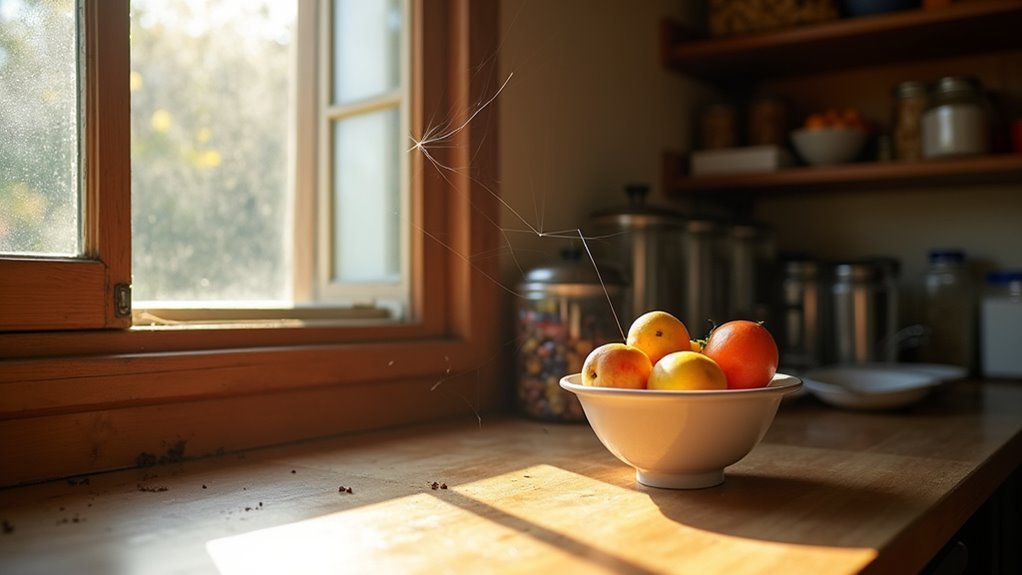
Beyond removing webs and applying treatments, you’ll need to eliminate the insects that spiders feed on by maintaining strict cleanliness standards throughout your home.
Regularly disposing of food waste and crumbs prevents attracting insects that common house spiders hunt. Store food in airtight containers to eliminate spiders’ prey sources effectively.
Keep kitchen and dining areas spotless, as even small spills attract pest infestations that spiders follow.
Regularly vacuuming removes both webs and insects, cutting off food sources that sustain spider populations.
Address other pest issues like cockroaches and flies immediately, as these create abundant food sources for spiders.
This consistent maintenance to guarantee cleanliness in your home will prevent future spider infestation by keeping your home unappealing to both prey insects and predatory spiders.
Set Strategic Traps in High-Activity Areas
While maintaining cleanliness removes spider food sources, you’ll also need to actively capture the spiders already living in your home through strategic trap placement.
Set strategic traps in high-activity areas like corners, attics, and near windows where spiders commonly travel. These locations effectively capture wandering spiders seeking warmth in homes during the colder months.
Monitor traps regularly to assess spider populations and replace them when full. Position traps away from foot traffic while targeting spider pathways for maximum effectiveness.
Use attractants for spiders to enhance capture rates in strategic locations throughout your house.
Combine trapping with other pest control methods to create a thorough approach for pest management, ensuring you’re addressing both existing spiders and preventing new infestations.
Monitor and Maintain Your Spider Control System
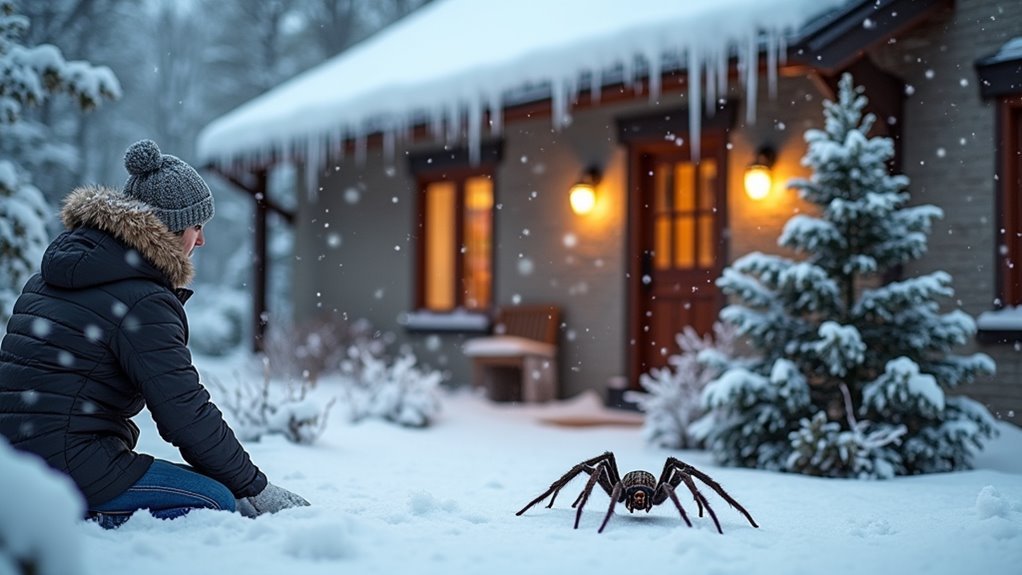
Since effective spider control requires ongoing attention, you’ll need to establish a consistent monitoring routine to guarantee your efforts remain successful throughout the winter months.
Consistent winter monitoring routines are essential for maintaining effective spider control measures throughout the coldest months of the year.
Schedule quarterly inspections with a pest control professional to track spider populations and assess your current measures. Maintain a regular cleaning schedule that includes vacuuming and dusting to eliminate spider webs and reduce their food sources.
Keep track of new entry points that develop from weather changes or settling, and seal them immediately.
Use sticky traps in high-activity areas to monitor ongoing spider activity and measure your control system’s effectiveness.
Regular home inspections should focus on dark corners, attics, and basements where spiders typically hide during colder weather.
Frequently Asked Questions
What Is the Best Deterrent for Spiders in the House?
You’ll find essential oils like peppermint, tea tree, and eucalyptus work best as natural spider deterrents. Spray them around your home’s entry points, corners, and baseboards to effectively repel spiders from entering.
Does Keeping Your House Cold Keep Spiders Out?
Keeping your house cold can temporarily reduce spider activity since they prefer warmth, but it won’t eliminate them completely. Many house spiders survive cool temperatures and will still find ways inside through cracks.
What Scent Will Keep Spiders Away?
You’ll find peppermint, tea tree, and eucalyptus essential oils effectively repel spiders with their strong scents. Vinegar solutions and citrus sprays from lemons or oranges also work well, requiring regular reapplication for best results.
What Is the Best DIY Spider Control?
You’ll get best results combining multiple approaches: vacuum regularly to remove webs, seal entry points with caulk, spray peppermint oil solutions around baseboards, and place sticky traps in corners where spiders commonly hide.
In Summary
You’ve now got a complete winter spider control system in place. These five steps work together to keep spiders out of your home during the colder months when they’re most likely to seek indoor shelter. Remember, consistency is key – you’ll need to maintain your perimeter treatments, check your traps regularly, and stay vigilant about sealing new entry points. With this systematic approach, you’ll enjoy a spider-free home all winter long.


Leave a Reply